Introduction Demographics Causes Clinical features Variation in skin types Complications Diagnosis Differential diagnoses Treatment Prevention Outlook
Scarring is a widely recognised sequelae of acne, an inflammatory dermatological disorder that frequently affects younger adults and can persist for years. Acne favours the face and upper back but can also develop in other sites with well-developed sebaceous glands.
Scarring refers to the fibrous process in which new collagen is laid down to heal a full-thickness injury, such as cutaneous inflammation in acne.
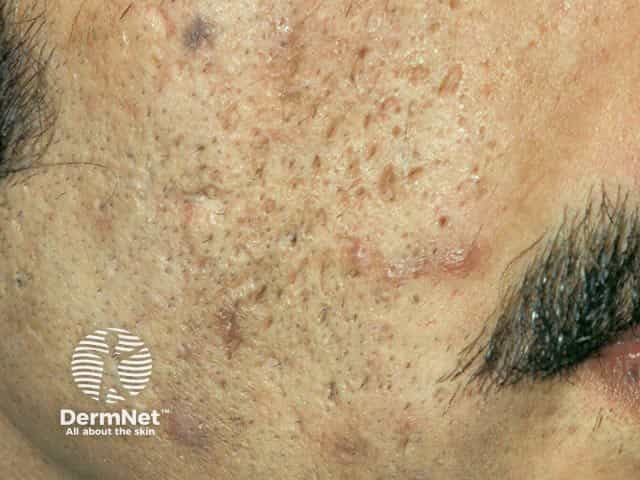
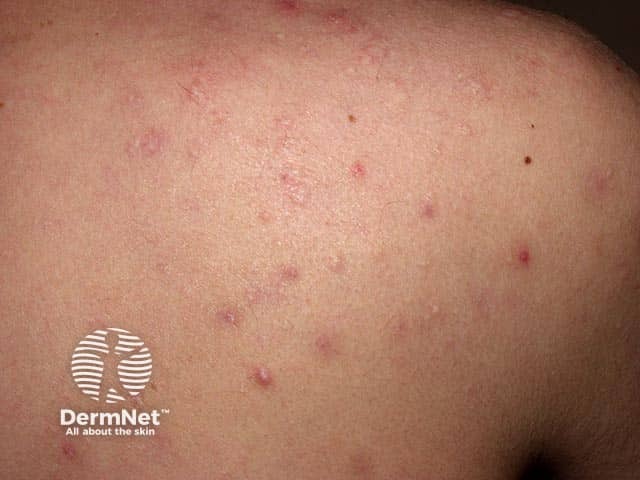
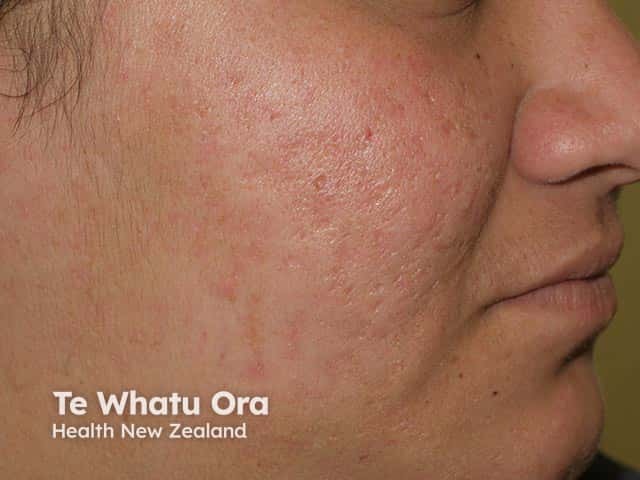
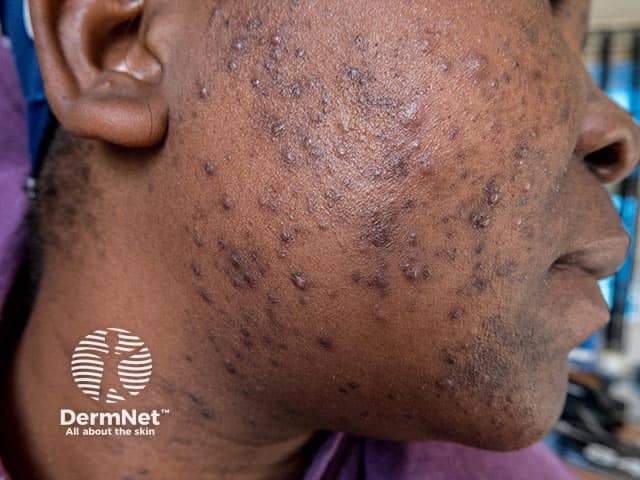
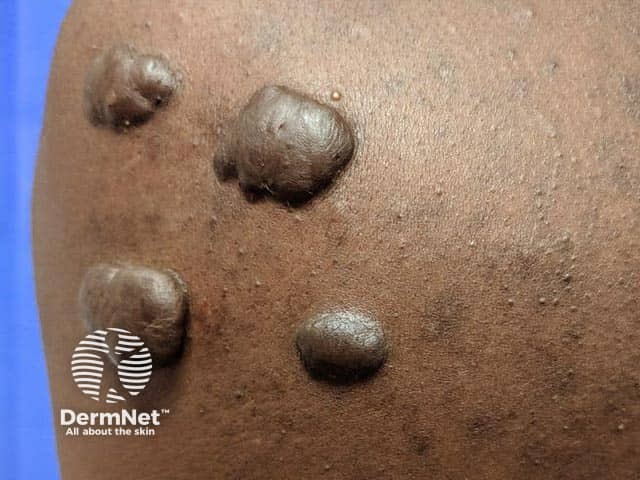
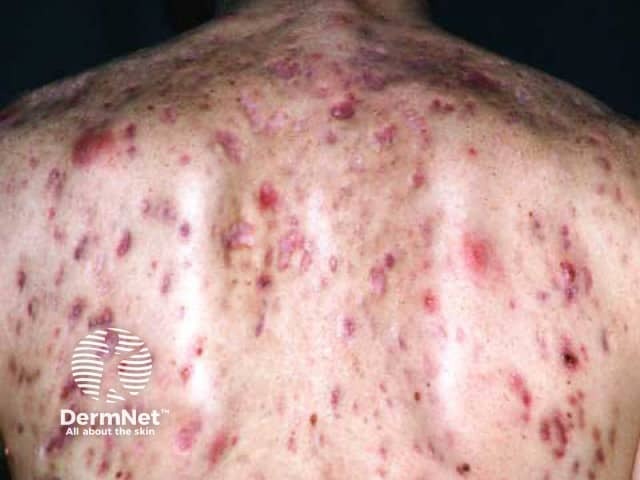
Epidemiological data on the prevalence and incidence of acne scarring varies. The duration and severity of acne often correlates to the degree of resultant scarring.
Scarring is more common in patients with moderate to severe acne vulgaris, or in acne subtypes such as nodulocystic acne, acne conglobata, and acne fulminans. Scarring can also be exacerbated in acne excorie due to picking or squeezing of primary lesions.
Some patients may have a predilection to scarring compared to others. For example, research suggests that smoking increases the risk of more severe acne scarring.
The formation of scars is a normal reaction of the skin in response to inflammation or injury. Further injury such as ‘picking’ at active acne lesions can also increase the likelihood of developing acne scars.
The majority of acne scars result from an overall inflammatory response causing net destruction of collagen fibres in the dermis in an atrophic scar. Underlying fibrosis can also occur. The consequence of a net gain of aberrant production of collagen in turn causes hypertrophic or keloid-type acne scars.
The majority of acne scars are atrophic. Atrophic scars can be classified by three main types: ice-pick scars, rolling scars, and box-car scars.
A secondary anetoderma can sometimes form after acne. This refers to a depression in the skin due to the elastic tissue within the dermis that is lost.
Less commonly, acne scarring can result in a keloid or hypertrophic scar. A hypertrophic scar is the same size as the acne lesion that caused it, while a keloid scar is an excessive scar formation often larger than the causative lesion. They occur more frequently along the jawline, chest, and upper back.
‘Hybrid scars’ exhibit multiple physical characteristics, such as pigmentation or erythema, alongside being atrophic or hypertrophic.
Postinflammatory skin colour changes, a common side effect of acne lesions, may arise prior to or in conjunction with acne scar formation. These can include erythema, hyperpigmentation, and hypopigmentation.
Colour changes associated with acne often improve with time, however this may take months or longer.
Postinflammatory hyperpigmentation and keloid scarring is more common in skin of colour following acne lesions. Keloid scars can continue to evolve over time.
Acne scarring is diagnosed clinically based on a history of acne and scar appearances. If there is diagnostic uncertainty (eg, an evolving hypertrophic or keloid scar), a biopsy may be considered.
Makeup may be helpful for disguising acne scars, particularly those on the face.
Treatments may also improve the appearance of acne scarring. Active acne should be treated prior to commencing scar management.
An individualised approach to treatment is required based on the size, depth, nature, and location of acne scarring; the patient’s baseline skin type; and their concerns, goals, and budget. More than one type of treatment can be used as part of a multi-modal approach to correct scar colour, texture, and volume.
Resurfacing procedures aim to blend acne scars into the surrounding skin by removing epidermis to smooth out scar edges, stimulating growth of new cells, and promoting skin remodelling. These may be best used for more superficial acne scars. Multiple treatments may be required for best results.
Lifting procedures are used to improve the appearance of atrophic scars with volumetric filling of underlying soft tissue loss.
Excisional techniques allow for complete scar removal and might be useful for prominent, deep, fibrotic, or hypopigmented scars. These include:
Hypertrophic or keloid scars are particularly prone to recur even after apparently successful treatment. Options may include:
More inflamed acne lesions are more likely to scar. Timely appropriate treatment for acne during the active phase can reduce the incidence and severity of acne scarring and its associated psychosocial impacts.
Acne scars are usually permanent, although may improve spontaneously over time or with treatment.