Demographics
Clinical features
Acne grading
Complications
Treatment
Acne vulgaris is the common form of acne, characterised by a mixed eruption of inflammatory and non-inflammatory skin lesions (see all the acne types).
You may prefer to call acne "pimples", "spots" or "zits".
Nearly all of us have acne at some time or another. Acne affects both sexes and all races. Although acne mainly affects adolescents, it can affect a wide age range.
Find out more about the causes of acne...
Acne most often affects the face, but it may spread to involve the neck, chest and back, and sometimes even more extensively over the body.
Individual lesions are centred on the pilosebaceous unit, ie the hair follicle and its associated oil gland. Several types of acne spots occur, often at the same time. They may be inflammatory papules, pustules and nodules; or non-inflamed comedones and pseudocysts.
Individual acne lesions usually last less than 2 weeks but the deeper papules and nodules may persist for months. Many acne patients also have oily skin (seborrhoea).
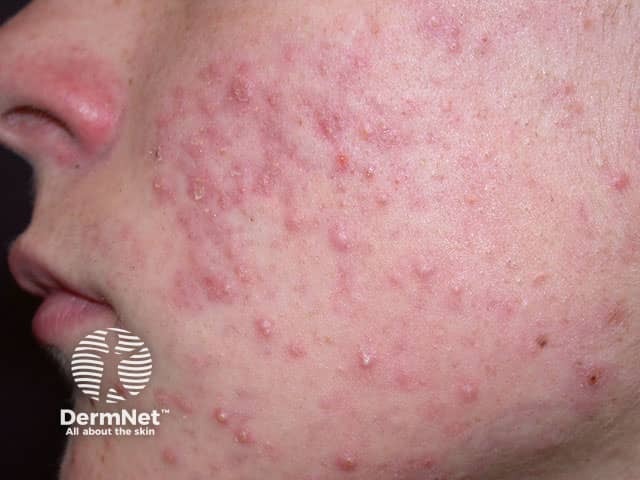
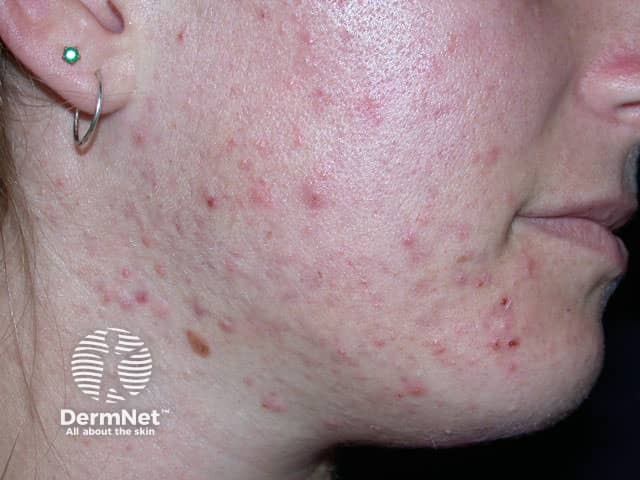
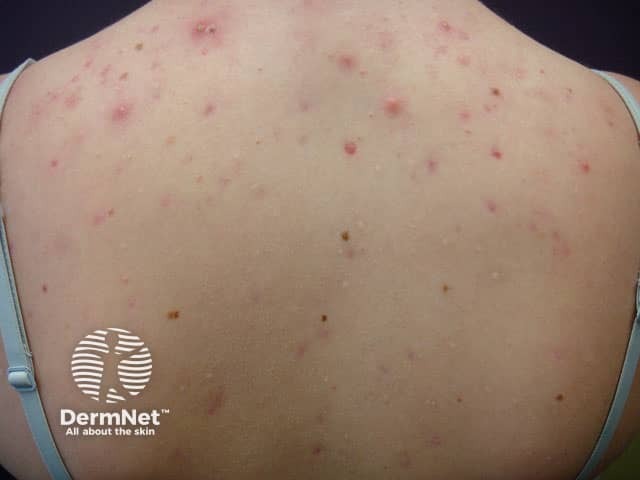
More images of acne ...
All characteristic lesions of acne vulgaris can occur in skin of colour, but it usually presents with less discernible redness and more postinflammatory hyperpigmentation (pigmented macules) which persists long after the acne lesion has gone. Post-inflammatory hyperpigmentation is often the major reason for seeking medical attention, causing significant psychological effects.
Pomade acne occurs more commonly in people with skin of colour due to cultural practices with hair styling products in African American and Hispanic populations. The use of greasy hair products leads to follicular plugging and comedones along the hairline.
Keloid scarring is more common in skin of colour following acne lesions, particularly along the jawline, chest, and upper back.
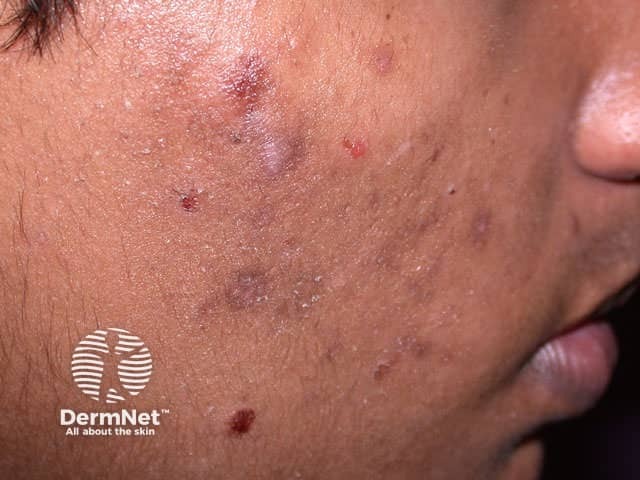
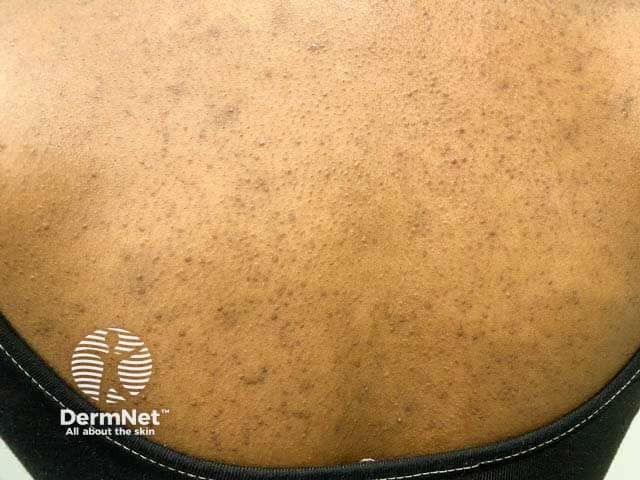
Acne may be classified as mild, moderate or severe. Comedones and inflammatory lesions are usually considered separately.
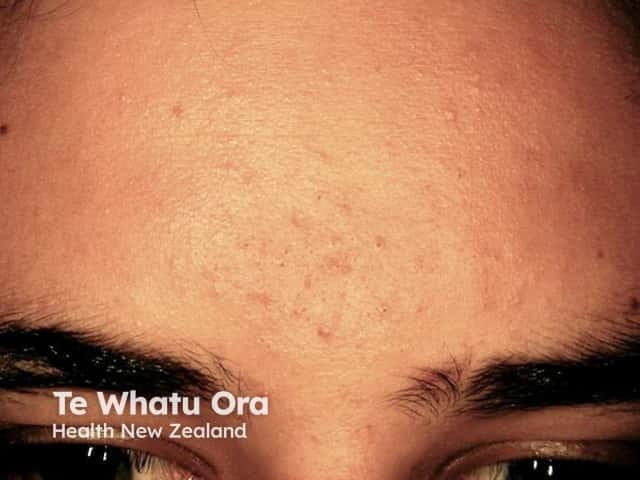
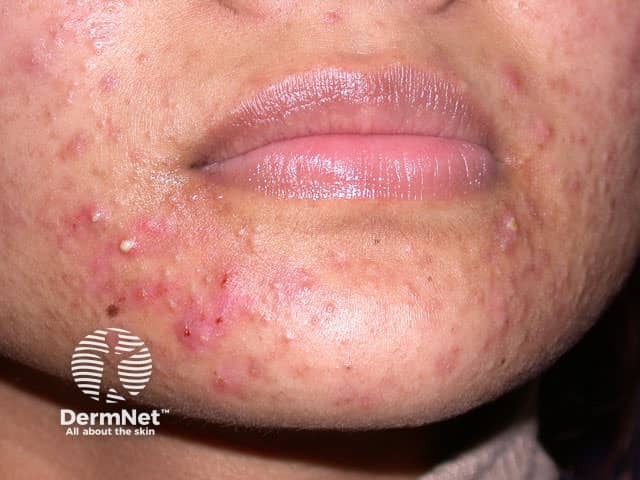
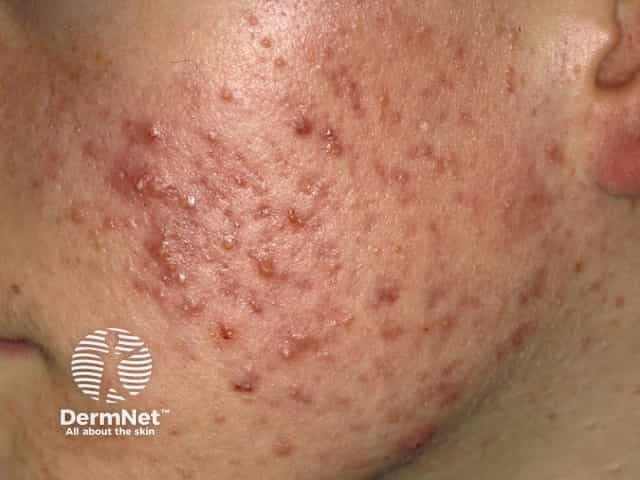
Some dermatologists assess the severity of a patient's acne more precisely by using a grading scale. The inflammatory lesions are compared with a set of standard photographs to determine the grade, which may be 1 (very mild) to 12 (exceptionally severe) for example.
In clinical trials evaluating acne treatment, the numbers of non-inflamed and inflamed lesions are carefully counted at regular intervals. It is remarkably difficult to count consistently.
Treatment for acne depends on the patient's age and sex, the extent and the severity of the acne, how long it has been present, and response to previous treatments.