Introduction
Causes
Hidradenitis suppurativa
Acne conglobata
Dissecting cellulitis
Pilonidal sinus
Other associated conditions
Follicular occlusion syndrome refers to a group of diseases in which hair follicles become blocked with keratin (scale) and then rupture, resulting in inflammatory skin disease. These conditions commonly coexist. They may be severe and difficult to treat.
Three of these diseases are together known as the follicular occlusion triad.
A fourth condition, pilonidal sinus or pilonidal disease, makes up the follicular occlusion tetrad.

The precise cause or causes of follicular occlusion are unknown. There are genetic, hormonal and environmental influences. Environmental factors may include smoking, obesity, high carbohydrate diet, humidity, and bacteria. The body’s innate immune system is also essential, as a trigger must activate it for any blockage to occur.
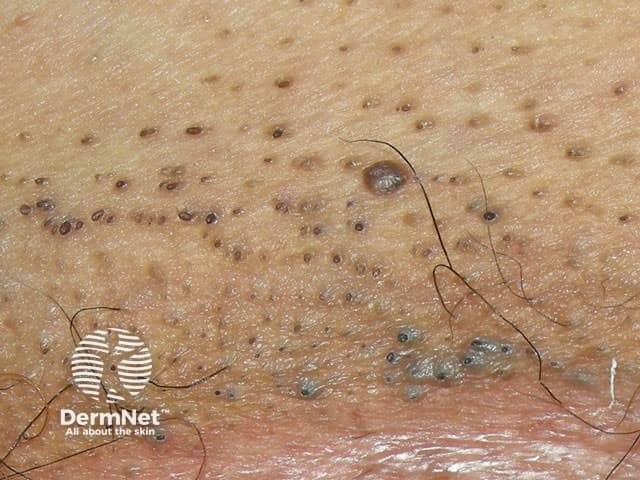
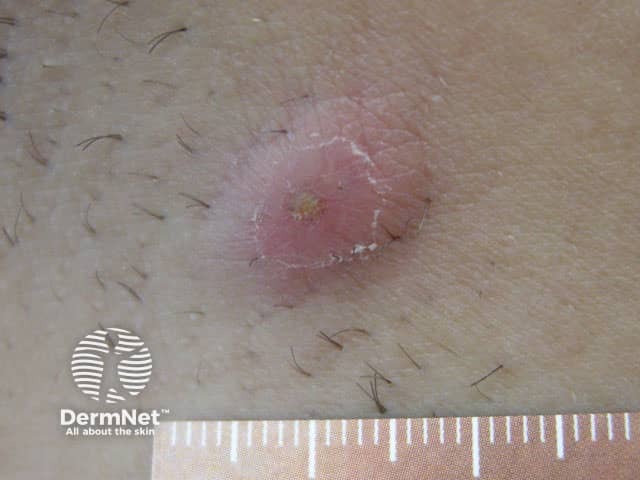
The open comedo is a follicle plugged by dead skin cells. Rupture of the follicle wall results in inflammation, ie nodules, ulceration and abscesses — longstanding inflammation results in scarring.
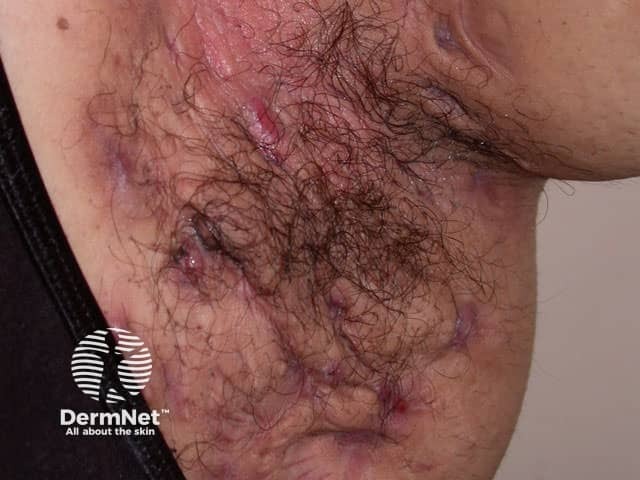
Hidradenitis suppurativa is a chronic inflammatory skin condition in which there are painful boil-like lumps and draining sinus tracts (canals) that leave unsightly scars. It affects the armpits, groin, genitals, buttocks and skin under the breasts.
Hidradenitis suppurativa is three times as common in women as in men; it most affects them between puberty and menopause. Follicles are more likely to block up under the influence of hormones, especially the male type (androgens). Levels of androgens may be normal or raised in women with hidradenitis suppurativa. Hidradenitis suppurativa is much more common in smokers than non-smokers and is also more common in the obese compared to those of normal weight.
Treatment involves:
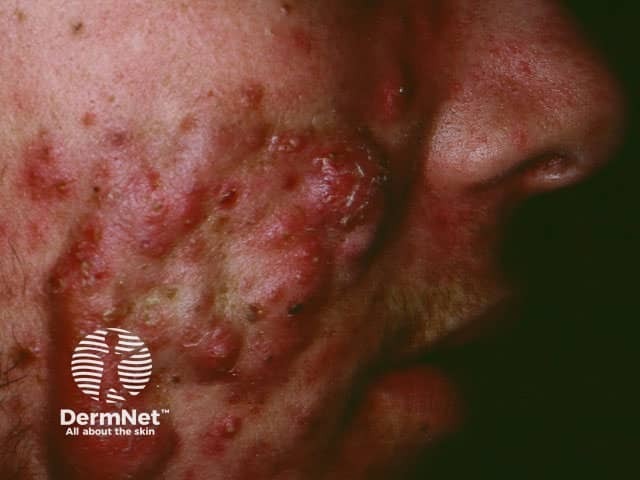
Acne conglobata is an uncommon and unpleasant form of nodulocystic acne in which there are interconnecting abscesses and sinuses, which result in unsightly hypertrophic (thick) and atrophic (thin) acne scars. There are groups of large macrocomedones and cysts that are filled with smelly pus.
Treatment involves:
Dissecting cellulitis or folliculitis is also known as perifolliculitis capitis abscedens et suffodiens. It is a rare and severe form of scalp folliculitis.
Large nodules and cysts accompany smaller follicular papules and pustules, from which purulent material can be expressed. Temporary hair loss over the lesions eventually results in permanent scarring and bald patches.
This condition is very resistant to treatment. The severity may be reduced with:
A pilonidal sinus is a dimple – a sinus tract – found at the base of the spine. This cavity fills up with skin cells and hair shafts. A non-inflamed lump like this is known as a pilonidal cyst. If the sinus tract becomes infected, a painful pilonidal abscess may form.
Pilonidal disease is 2–3 times more common in men than women. It is more common in obese people and those with coarse hair.
Treatment may not be needed in mild cases. Antibiotics and surgery are required for chronically inflamed pilonidal disease or abscesses.
The follicular occlusion triad has also been rarely associated with non-follicular diseases and conditions: