Pubic lice (crab lice) are properly known as Phthirus pubis. Pubic lice are commonly referred to as 'crabs' because of their short, broad body (about 1 mm), and large front claws.
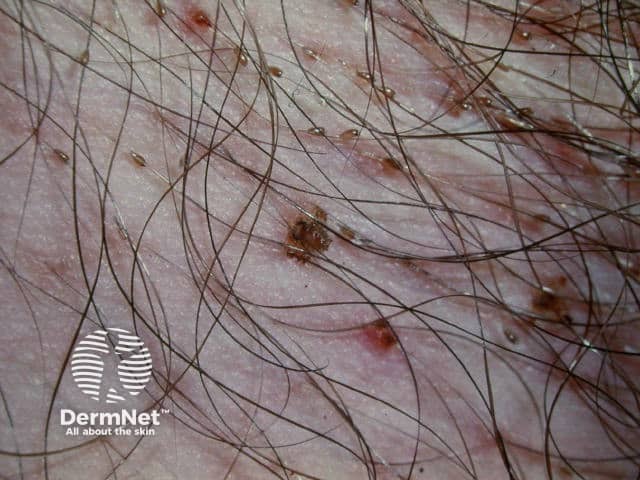
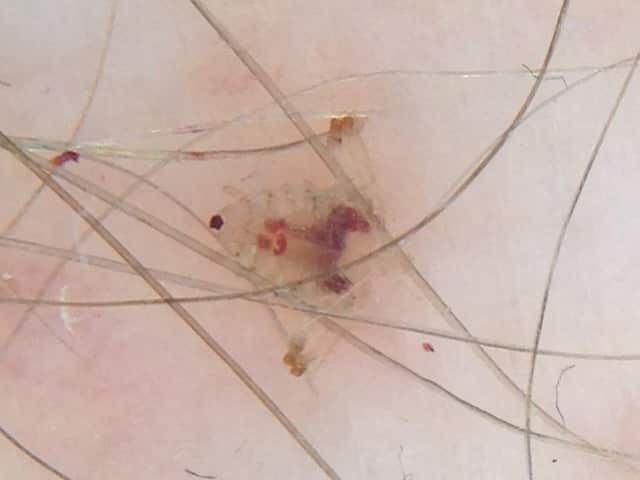

Pubic lice are contracted by close contact and are easily transmitted sexually. Pubic lice have become very uncommon in developed countries since shaving of pubic hair has become popular.
The lice are most often found within the pubic hair but pubic lice can spread to other hairy parts of the body including armpit, beard, chest hair and thigh hair. Eyelashes can also be infested. The large claws of pubic lice allow them to grasp onto coarser pubic hairs in the groin, perianal, and axillary areas. Like other human lice, they use their mouthparts to suck blood for nutrition and at the same time inject saliva that causes itching. Pubic lice cannot survive more than one day without feeding off their human host.
Blood specks are occasionally noted on underclothes and live lice may be seen moving in the pubic hair. Tiny bleeding spots or bite marks may be noted within the pubic hairs.
Pubic lice are killed by insecticides. The insecticides usually contain maldison/malathion, permethrin, or pyrethrin. Topical ivermectin has been used effectively off-label.
Typically, an insecticide cream is applied directly to the skin and hair and lathered up like shampoo. A small portion may be absorbed into the body and for this reason, it is important to follow the manufacturer's advice on the duration of treatment. If you have pubic lice, note the following: