Introduction
Demographics
Signs and symptoms
Introduction - disseminated gonococcal infection
Cutaneous manifestations
Diagnosis
Treatment
Prevention
Gonorrhoea is a disease is due to infection with the bacteria Neisseria gonorrhoeae. The common sites of infection are the mucous membranes of the urethra, endocervix, rectum, pharynx and conjunctiva. Gonorrhoea is a sexually transmitted infection (STI). If the mother is infected, gonorrhoea may also be passed to a newborn delivered vaginally causing conjunctivitis.
People at risk of gonorrhoea are mainly sexually active people that come in contact with an infected person while not practising safer sex.
Safer sex means using a condom or oral dam during sexual activity, which may include vaginal, oral or anal contact.
The incubation period is on average two to seven days.
Gonorrhoea is asymptomatic in 10–15% of men and in up to 80% of women.
The clinical features of localised gonorrhoea are different between males and females
Pharyngeal infection is becoming increasingly common particularly in men who have sex with men (MSM) and is largely asymptomatic.
Complications of gonorrhoea occur when the infection is left undiagnosed and untreated. This is more likely to occur when the infection is asymptomatic or when there is any barrier to access health care.
Ascending infection in females can cause pelvic inflammatory disease (endometritis, salpingitis, tubal-ovarian abscess). Scarring of the female upper genital tract can lead to chronic pelvic pain, ectopic pregnancy and infertility.
Ascending infection in males can cause painful inflammation and swelling of the epididymis and the testicles (epididymo-orchitis).
Gonococcal infection during pregnancy can result in miscarriage, preterm delivery and postpartum endometritis. Vertical transmission from mother to child can cause neonatal conjunctivitis and, more rarely, bacterial sepsis.
Adult conjunctivitis can occur from auto-inoculation and is less common than neonatal conjunctivitis. Conjunctival gonococcal infection can result in scarring, permanent visual impairment and blindness.
Disseminated gonococcal infection results from the spread of the bacteria to the joints and other tissues. It occurs in 0.5–3% of infected individuals. A spectrum of symptoms include:
Risk factors for disseminated gonococcal infection include recent menstruation, complement deficiencies, systemic lupus erythematosus and microbial factors specific to some strains of the bacteria (eg, porin B isoform 1 A of the bacterial outer membrane).
Very rare complications of gonococcal infection include meningitis, endocarditis, osteomyelitis and vasculitis.
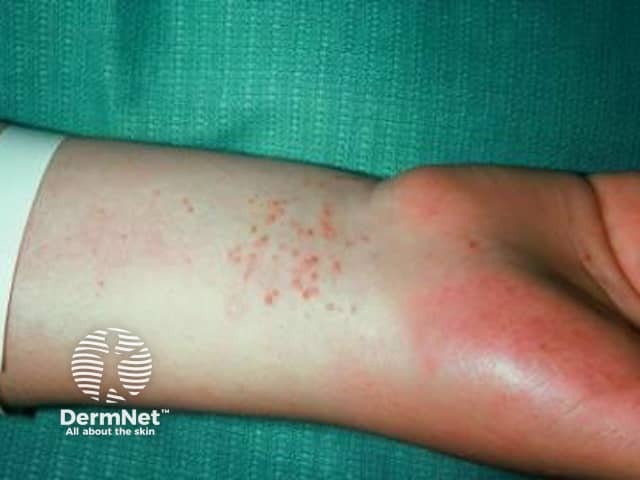
Although gonorrhoea usually affects the mucosal surfaces, it may also affect the skin. A rash is present in the majority of patients with disseminated gonococcal infection. It affects the trunk, limbs, palms and soles, and usually spare the face, scalp and mouth.
Types of lesion include microabscesses, macules, papules, pustules and vesicles. Haemorrhagic lesions, erythema nodosum, urticaria, and erythema multiforme occur less frequently.


The method used to detect gonorrhoea depends on the setting and available resources.
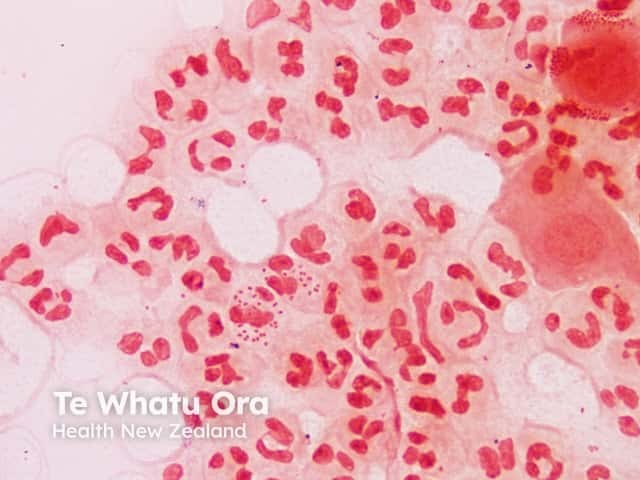
Gram-stain and visualisation of gram-negative diplococci are appropriate in men with urethral discharge (sensitivity 90–95%) and are recommended in people with rectal symptoms (see laboratory investigations for bacterial infections). They are not recommended in women (due to low sensitivity of 20–50% on endocervical and urethral specimens) or for pharyngeal specimens.
Culture involves specimen collection from the appropriate sites (such as endocervical, urethral, rectal, and pharyngeal areas) and then inoculation onto agar plates that are selective for Neisseria gonorrhoea. Neisseria gonorrhoea requires special conditions (a CO2-enriched atmosphere) and rapid transport to a laboratory to ensure the viability of the organisms. The advantage of culture is that it can provide antimicrobial susceptibility testing (which is important as this organism rapidly develops resistance to many antibiotics) and confirmatory testing.
Nucleic acid amplification tests (NAATs) are increasingly available.
The treatment of uncomplicated gonorrhoea should be started as soon as possible to prevent further complications. The recommended empirical regime for the treatment of Neisseria gonorrhoea is ceftriaxone 500 mg by intramuscular injection plus azithromycin 1 g orally. The addition of azithromycin is important, as dual therapy is thought to limit the emerging resistance that is beginning to occur with ceftriaxone alone. Azithromycin will also treat a concurrent chlamydia infection.
Sexual activity should not take place until treatment is completed and until all recent sexual contacts have been tested and treated appropriately.
If ascending infection such as pelvic inflammatory disease or epididymo-orchitis is present, treatment will require longer and more complex antibiotic regimes. It is important to refer to updated local guidelines.
Tests for other STIs should be undertaken In patients with gonorrhoea to exclude co-infections.
Notification and treatment of recent sexual contacts and condom use are important in preventing reinfection of individuals and to help to prevent the spread of gonorrhoea in the population.
Postexposure doxycycline, taken within 72 hours of condomless intercourse, has been shown to reduce the incidence of gonorrhoea, syphilis, and chlamydia in men who have sex with men by two thirds.