Introduction
Demographics
Clinical features
Differential diagnoses
Diagnosis
Treatment
Prevention
Outcome
Syphilis is a sexually transmitted infection caused by the spirochete Treponema pallidum. Syphilis can cause many signs and symptoms similar to other diseases, including human immunodeficiency virus (HIV), and thus is nicknamed ‘the great imitator’.
Syphilis has symptomatic and asymptomatic stages. If left untreated, syphilis can have significant consequences to the infected individual (long-term neurological and cardiac disease), in pregnancy (stillbirth and congenital infection), and to public health (spread in the population).
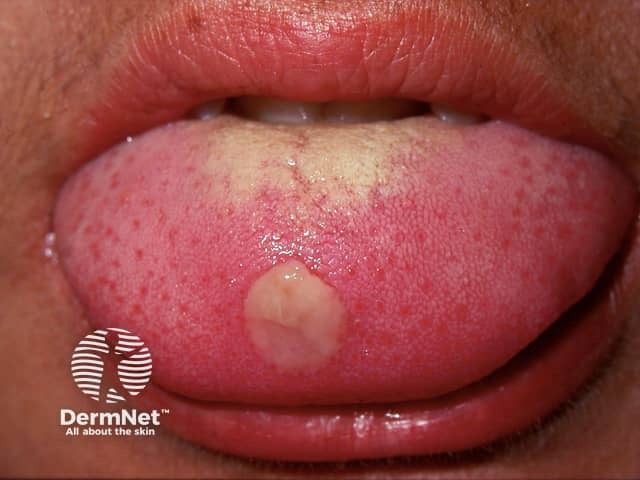
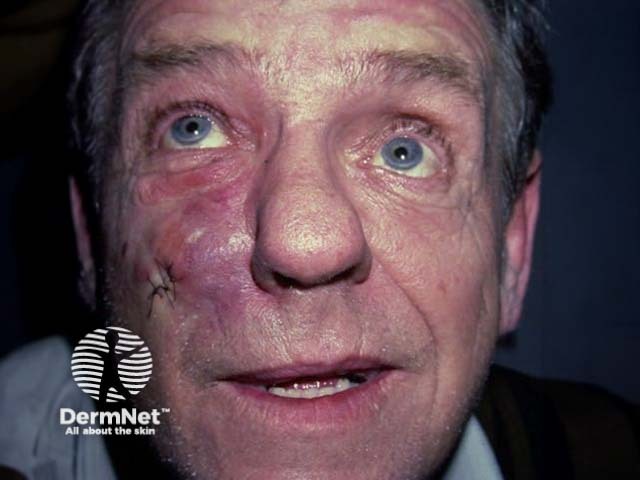
Syphilis is transmitted sexually from person to person, either by direct contact with syphilitic ulcers or by infected blood through microtrauma during sexual intercourse. Syphilis ulcers occur most commonly on the genitals and on the anal area, but can also occur on the lips or mouth. Hence, sex in any form — vaginal, anal, or oral — is the main way of passing syphilis from one individual to another. Syphilis also transmits vertically (infected mother to fetus) during pregnancy. Another potential route of transmission is needle sharing (eg, intravenous drug use).
Reported cases of syphilis increased in New Zealand and worldwide over the last decade, particularly among men who have sex with men (MSM). Most recently, a resurgence is being seen in the heterosexual population. This is a particular concern as untreated syphilis in pregnancy can have serious health implications for the mother, the pregnancy, and the unborn child.
Once infected with syphilis, an incubation period of 10–90 days (average 21 days) ensues before signs become apparent. Untreated syphilis passes through distinct clinical (symptomatic) stages as well as latent (asymptomatic) stages. During latency, diagnosis can only be made by serology. During the clinical stages, signs and symptoms of syphilis differ according to the stage — primary, secondary, or tertiary — as described below.
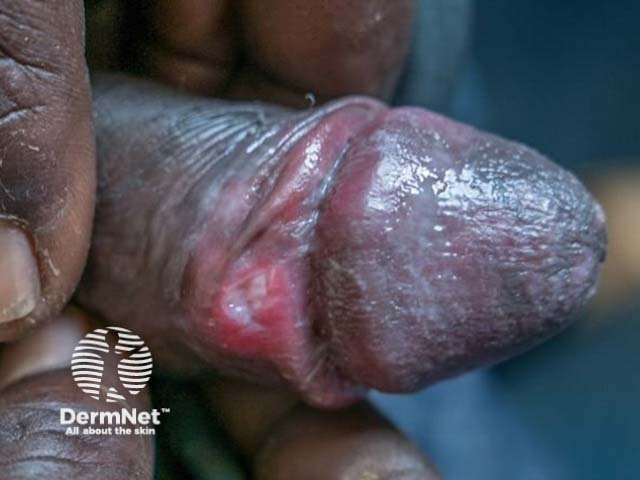
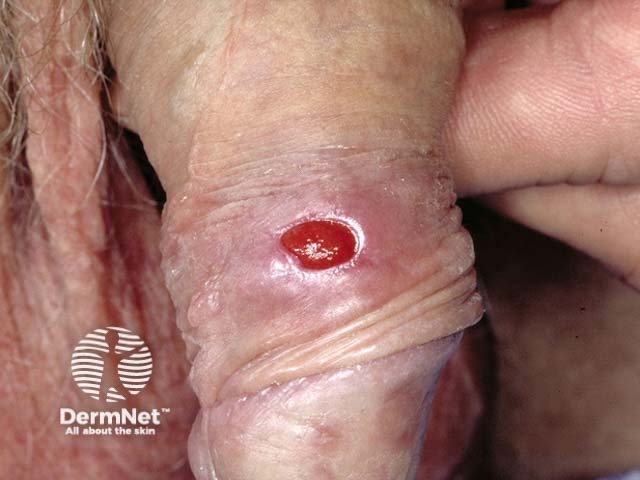
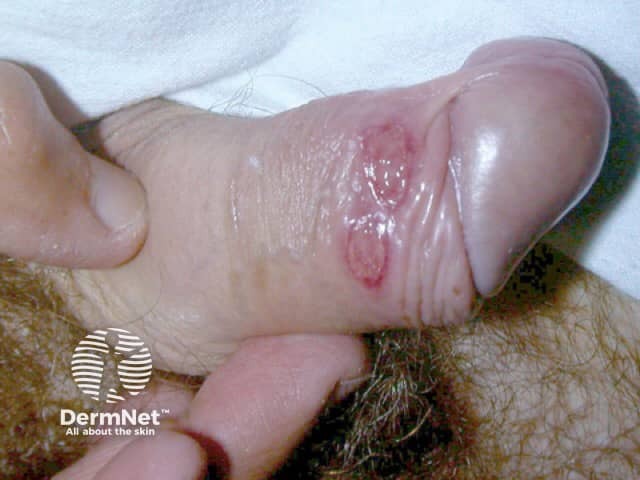
Primary syphilis is characterised by chancre(s) at the point of entry of the T. pallidum spirochete. T. pallidum uses its spiral shape to twist into the skin. A painless ulcer results.
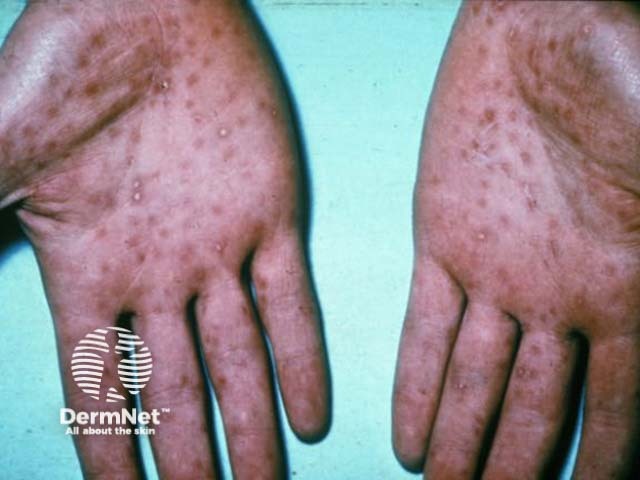
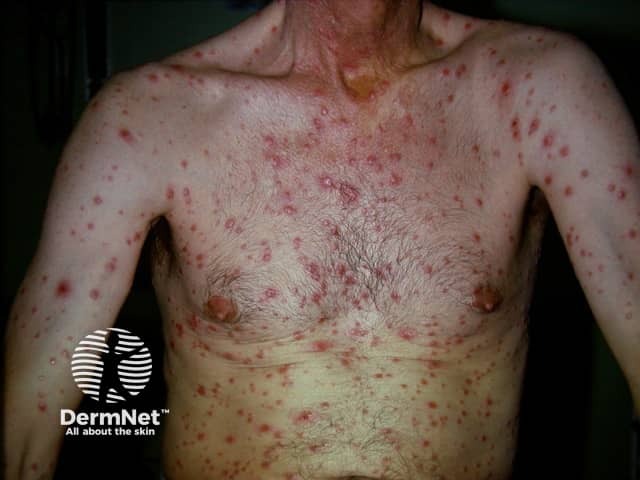
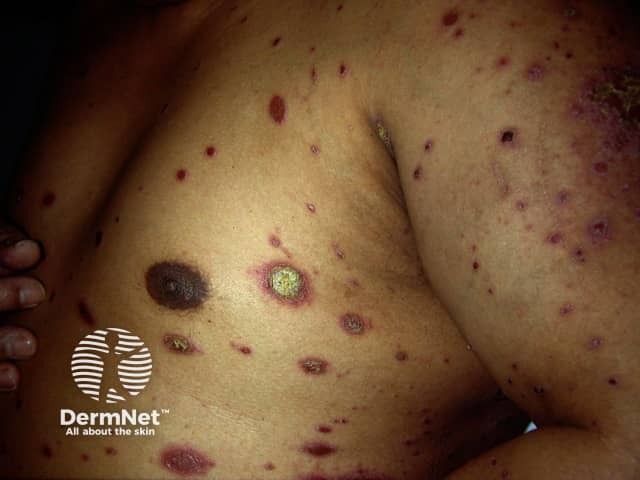
Secondary syphilis is a generalised infection. Secondary syphilis is characterised by rash and systemic symptoms, during which the patient is very infectious. If the patient is untreated, these symptoms will eventually resolve over a number of weeks, but they can recur.
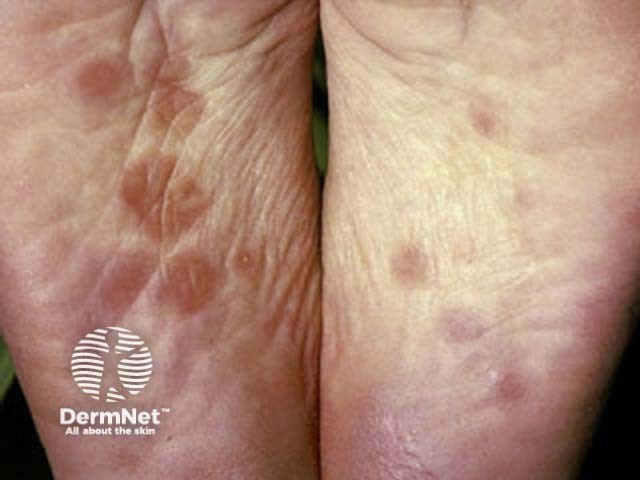
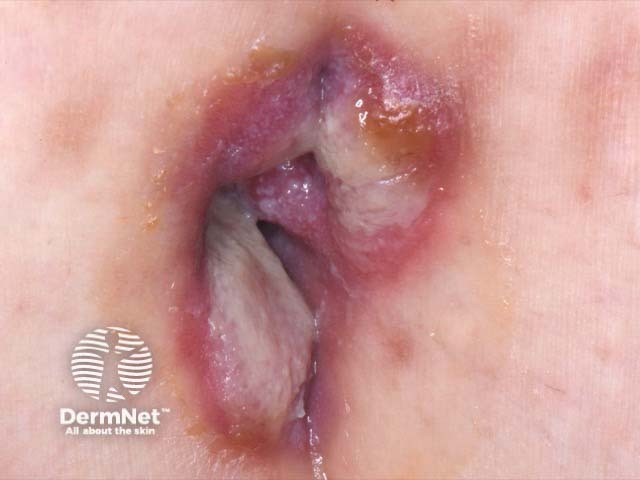

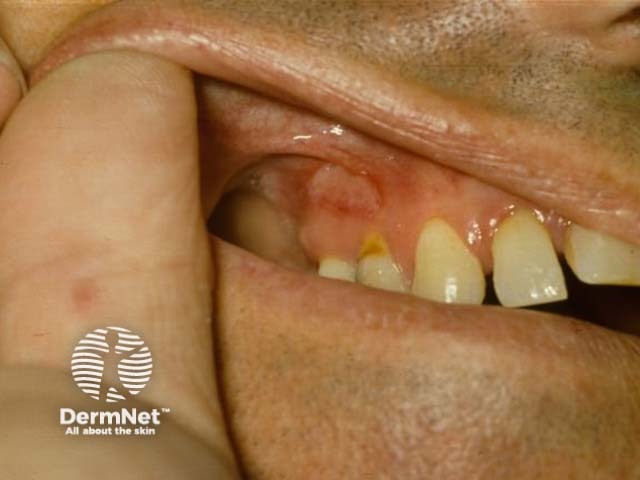
Between the secondary and tertiary clinical stages of syphilis, many years of latency ensue. The latent years are subdivided into early and late. During latency, the patient is asymptomatic with no signs on clinical examination. Therefore, continued syphilis infection will only be found by positive treponemal antibody tests.
The patient is very infectious.
Transmission of syphilis occurs only specific circumstances.
Tertiary syphilis develops decades after the initial infection.

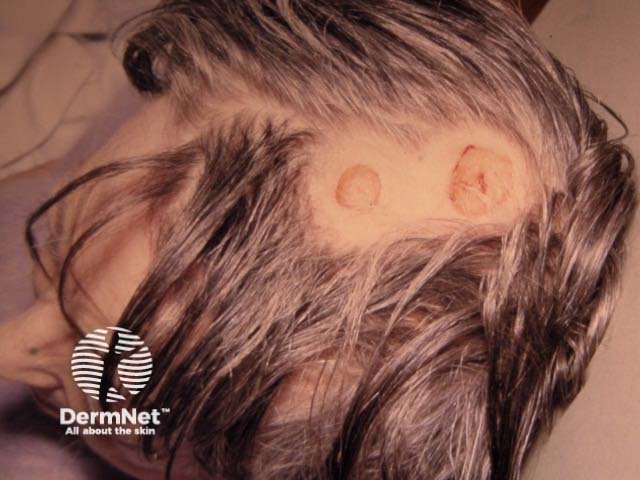
Untreated maternal syphilis can lead to miscarriage, stillbirth, or congenital infection. Many infants with congenital syphilis will be asymptomatic at birth. Congenital syphilis is divided into early and late stages.
In the first few weeks of life, the effects to the infant resemble secondary syphilis with a multi-organ infection.
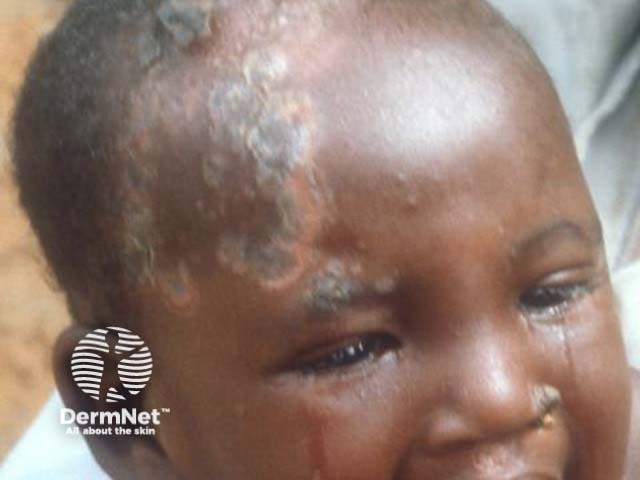
Late congenital syphilis presents similar to the tertiary gummatous syphilis in adult infection with chronic, persisting inflammation.
The differential diagnosis for syphilis depends on which of its many possible clinical features are present.
The diagnosis of syphilis is made from clinical history and physical examination, supported by laboratory and serological testing.
Syphilis can be diagnosed by demonstrating T. pallidum spirochetes in samples from infected lesions or lymph nodes. Spirochaetes can be identified by dark-field microscopy or by treponemal polymerase chain reaction (PCR) testing. These tests are not always readily available to the diagnosing clinician.
Skin biopsy might or might not show characteristic histopathological features. [See Syphilis pathology]
Serological testing to detect antibodies produced from treponemal infection is the most common test used to diagnose infection. Serological testing cannot distinguish between different types of treponemal infection (yaws, pinta, syphilis) or the duration of infection. Reactive treponemal tests will remain positive lifelong, regardless of treatment or disease activity.
The treponemal antibody tests can be divided into non-specific or specific tests. Which test is used depends on what is available at the local laboratory. The non-specific tests include:
The specific tests include:
The sample is screened with a primary test (commonly EIA or TPHA) that detects IgG and IgM and confirmed with a different treponemal test. For example, a positive EIA screen is confirmed with a positive TPHA.
After confirmation, the sample is evaluated for the serological activity of the infection by the RPR/VDRL test.
The patient’s history is therefore important for interpretation. RPR/VDRL titre is also used to monitor the effectiveness of treatment.
After high-risk sexual encounters, repeat screening is advised at both six and 12 weeks post-exposure, as initial serological tests can be negative in primary syphilis. Serological tests are always positive in secondary syphilis but beware of the possibility of the prozone effect, which can lead to a false negative. The prozone effect occurs when high antibody titre interferes with the formation of the antibody-antigen lattice, which is needed to see a positive flocculation test.
False-positive serological tests occur, particularly in autoimmune disease, injecting drug use, pregnancy, and older age, but it is important to obtain a detailed history, test the sexual partner, and follow up with repeat testing, in order to ensure that the suspected false-positive result is truly false.
Other tests that might be required particularly if neurological signs and symptoms include computed tomography (CT), magnetic resonance imaging (MRI), and cerebrospinal fluid (CSF) exam.
A full sexual health screen should be carried out, including — most importantly — HIV testing.
Penicillin by injection is still the mainstay of treatment for all stages of syphilis.
Other antibiotics are less reliable than penicillin, but tetracyclines or cephalosporins can be used in patients who are allergic to penicillin. [See Cutaneous adverse reactions to antibiotics] A pregnant woman who is allergic to penicillin should first be desensitised and then treated with penicillin anyway.
Treatment failures can occur at any stage of the infection, so close follow-up is important, with repeated serology tests for one to two years.
All sexual activity should be refrained from until all syphilis sores or lesions are completely healed and treatment is completed.
Partner notification and management are extremely important to prevent reinfection and to prevent spread in the community. Guidelines are available to guide the clinician on how far back to trace with each stage.
There is no vaccine for syphilis.
Syphilis can be acquired repeatedly; antibodies and treatment do not protect against a new infection.
If you think you are infected, stop all sexual contact and see your doctor or sexual health clinic. Notify all sexual contacts immediately so they can be checked for infection and treated appropriately.
Other measures to prevent the spread of syphilis include:
Postexposure doxycycline, taken within 72 hours of condomless intercourse, has been shown to reduce the incidence of syphilis, gonorrhoea, and chlamydia in men who have sex with men by two thirds.
Early treatment of syphilis has a very good outcome and prevents later complications. Delay of treatment until advanced stages can leave irreversible consequences for example, neurological or problems with vision.