Introduction Demographics Causes Differential diagnoses Diagnosis Treatment
Erythema dyschromicum perstans is a form of acquired dermal macular hyperpigmentation characterised by well-circumscribed round to oval or irregular patches on the face, neck and trunk that are grey in colour. It is a form of acquired dermal macular hyperpigmentation. Erythema dyschromicum perstans is also called ashy dermatosis (of Ramirez), because of its colour.
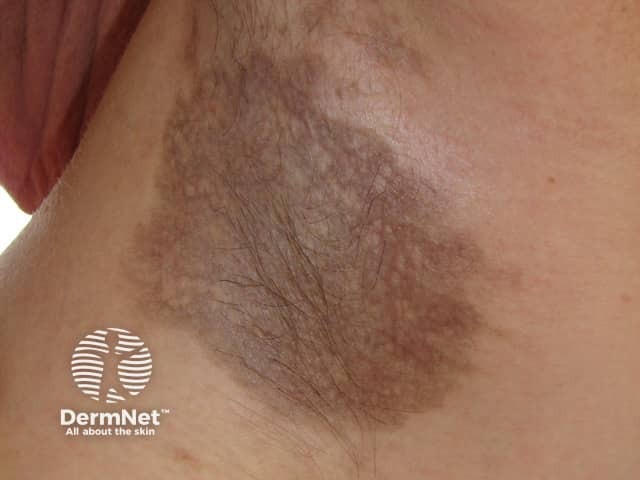
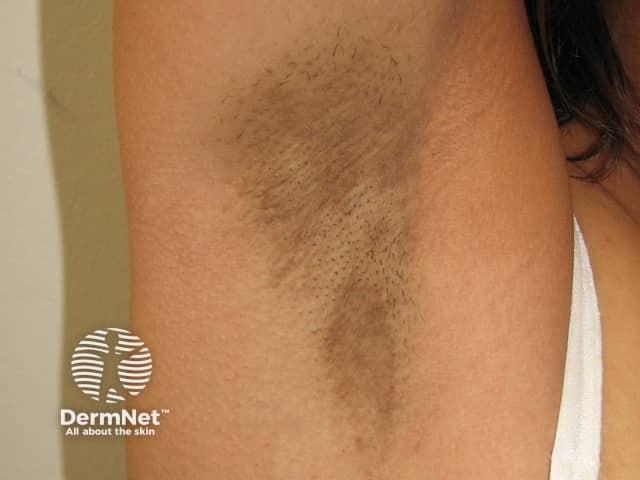
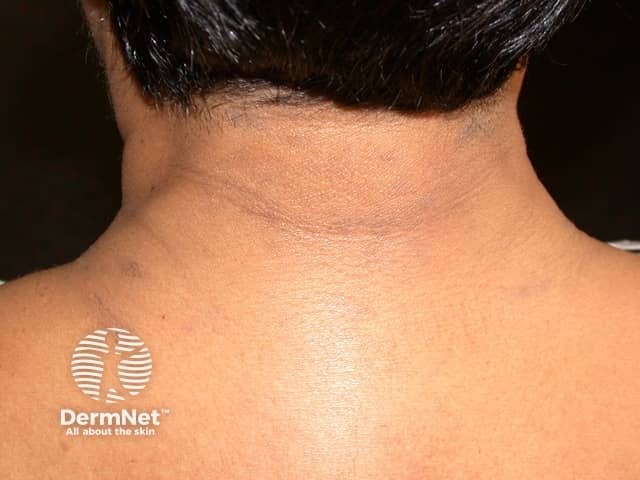
Erythema dyschromicum perstans most often affects darker-skinned patients, most frequently Latin Americans and Indians. It has also been reported in people of lighter skin colour and various ethnicities.
Erythema dyschromicum perstans may occur at any age but it appears to be more frequent in young adults. Women are affected more often than men.
The exact cause for erythema dyschromicum perstans remains unidentified. It is often classified as a variant of lichen planus pigmentosus because of its histopathological features. Over the years, theories have included:
Several other skin conditions may appear similar to erythema dyschromicum perstans because they also result in discoloured skin patches.
In some cases, the clinical picture of erythema dyschromicum perstans may be classical enough to diagnose the condition. A skin biopsy may reveal minor vacuolar degeneration of the basal layer in early lesions, and pigmentary incontinence with dermal melanophages in more established patches.
Erythema dyschromicum perstans is rather resistant to currently available treatments. It may persist unchanged for years although some cases eventually clear up by themselves.
Treatments that may help improve the appearance of erythema dyschromicum perstans include:
The most successful systemic treatment has been clofazimine. Dapsone, griseofulvin, hydroxychloroquine, isoniazid and corticosteroids have been used successfully in a few cases.