Cosmetics allergy
What are cosmetics?
Cosmetics are defined as topically applied products that are used to beautify, cleanse or protect the hair, skin, teeth or complexion. Countries around the world have in place regulatory standards that ensure these products are safe for the workers handling them, the environment, and for use by consumers.
| Region | Regulatory standards |
|---|---|
| New Zealand | Cosmetic Products Group Standard. Environmental Protection Authority (EPA) |
| Australia | NICNAS Cosmetics Guidelines. National Industrial Chemicals Notification and Assessment Scheme (NICNAS) |
| United States | Federal Food, Drug, and Cosmetic Act. FDA U.S. Food and Drug Administration |
| Europe | Cosmetics Directive. European Commission Consumer Affairs |
In essence, cosmetics should not contain any active drug ingredient that may affect the structure or function of the skin. However, the division of cosmetics and drugs is not always clear as there are many products available that have two intended uses, e.g. an antidandruff shampoo is a cosmetic because it is intended to cleanse the hair but it also contains a drug to treat the scalp and dandruff. Such products must comply with the requirements for both cosmetics and drugs.
Cosmetics can be broadly divided into the following groups.
| Cosmetic group | Examples |
|---|---|
| Facial make-up | Eye make-up, lipstick, blushes, foundation |
| Nail care | Varnish, remover, artificial nails |
| Skin care | Cleanser, moisturizer, toner |
| Hair care | Shampoos, hair colour, dye, regrowth treatment |
| Oral care | Toothpaste, mouth wash |
| Body cleansers | Soap, bath additives, shower gel |
| Shaving | Shaving foam/cream, aftershave |
| Fragrances | Perfume, cologne |
| Deodorants | Deodorant, antiperspirant |
| Sun protection | Sunscreen agent |
What is cosmetics allergy?
As you can see cosmetics play an important part in our daily life. It is estimated that on average women are using at least seven types of cosmetics each day, so it is not surprising that reactions to these products are quite common. Although the prevalence of cosmetic allergy in the general population is unknown, several studies suggest that up to 10% of the population will have some type of reaction to a cosmetic over the course of a lifetime. This figure may be much more as many mild reactions occurring at home are self-diagnosed and often self-treated.
An allergy to a cosmetic can produce a range of reactions.
| Reaction | Symptoms |
|---|---|
| Contact urticaria |
|
| Anaphylaxis |
|
| Irritant contact dermatitis |
|
| Allergic contact dermatitis |
|
| Photocontact dermatitis |
|
Some people may suffer from one or more reactions. In particular, atopic individuals are more prone to irritant contact dermatitis, which in turn increases their likelihood of allergic contact dermatitis as their skin barrier function is weakened and more sensitized to the allergen. It is possible for a cosmetic allergy to develop even after years of using a cosmetic without previous problems.
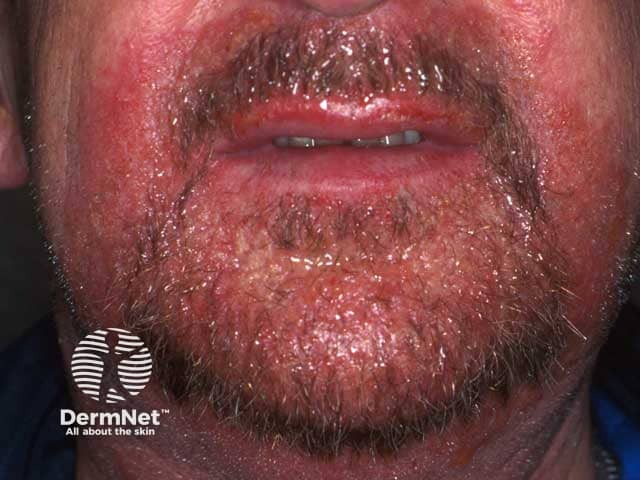
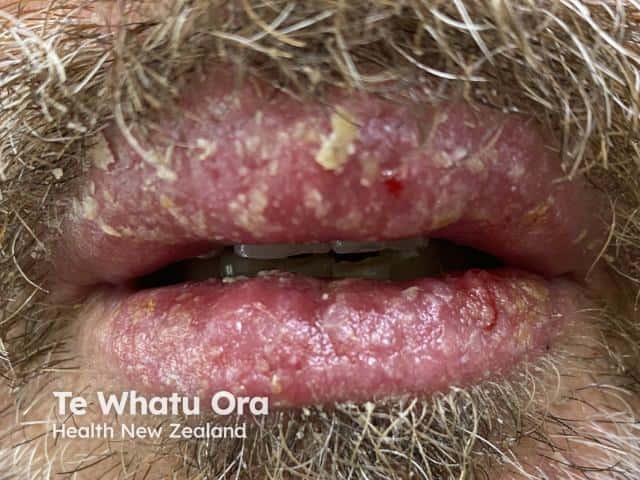
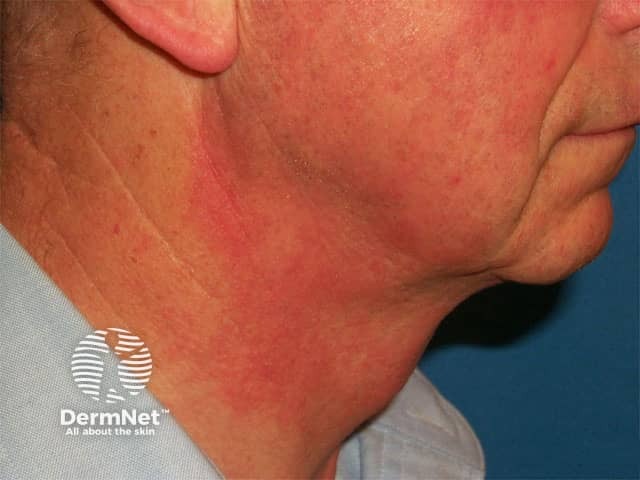
Beeswax in moisturiser |
Hair dye (PPD) |
Fragrance in aftershave |
What are the allergens in cosmetics?
The range of cosmetics is vast so the pool of allergens is infinitely huge. The groups of allergens that appear to most frequently cause cosmetic allergy are fragrances, preservatives, and paraphenylenediamine (PPD) found in hair dyes.
Fragrances
- More than 5000 different fragrances used in cosmetics and skin care products
- Present in most types of cosmetics including perfumes, shampoos, conditioners, moisturisers, facial cosmetics, and deodorants
- The most common cause of contact dermatitis from cosmetics
- 70-80% of fragrance allergy can be picked up by patch testing with Fragrance Mix and Balsam of Peru
- Cosmetic labeled “unscented” does not mean “fragrance-free” as some unscented products may contain a fragrance to mask another chemical odour. Products should be labeled “fragrance-free” or “without perfume” to indicate no fragrances have been used.
Preservatives
- The second most common cause of contact dermatitis
- Cosmetics that contain water have a preservative in them to prevent bacterial or fungal growth
- Some of the preservatives most commonly found in cosmetics include:
- Parabens – used in many facial cosmetics and skin care products
- Formaldehyde – mainly found in shampoos
- Imidazolidinyl urea – said to be less allergenic than other preservatives
- Quaternium-15 – another commonly used preservative found in facial cosmetics and skin care products
- Isothiazolinone
PPD hair dye
- The third most common ingredient after fragrances and preservatives to cause contact dermatitis
- Used widely in permanent hair dyes because it gives a natural look
- Reactions may be mild and involve dermatitis to the upper eyelids or rims of the ears, or may be more severe with swelling of the scalp and face
Other allergens used in cosmetics that can cause cosmetics allergy include:
- Lanolin (wool alcohol)
- Coconut diethanolamide
- Glyceryl monothioglycolate
- Methyldibromo glutaronitrile
- Rosin (colophony)
- Propolis
- Thiomersal
- Sunscreen allergens
- Nail cosmetic allergens
Am I allergic to cosmetics?
Cosmetics allergy is diagnosed by performing special allergy tests, i.e. patch tests. Diagnosis may involve testing against a number of different chemicals due to the many potential allergens that cosmetics are made up of, as well as the person's own cosmetics as is. See individual contact allergens for patch testing recommendations.
|
|
|
What is the treatment for cosmetics allergy?
Contact dermatitis should clear rapidly once the cosmetic allergen is removed. Over-the-counter creams and ointments containing mild topical steroids, such as hydrocortisone 0.5-2.5%, may be used to help control itching, swelling, and redness. In more severe cases, a prescription steroid cream may be required, as well as antibiotic medication if the skin becomes blistered and infected. Bland emollients such as cetomacrogol cream can be used to soothe and relieve dryness.
What should I do to avoid cosmetics allergy?
If you have a cosmetics allergy the best way to prevent any problem is by avoiding all products that contain the allergen you are sensitive to. Some steps you can take to reducing cosmetic allergy reactions include:
- Read the list of ingredients on all cosmetic products and know the names of the allergens you need to avoid
- When trying out a new product, do a mini patch test by placing a small sample of the product on your inner wrist or elbow and wait for at least 24 hours to see if a reaction occurs
- Choose products that don’t have a long list of ingredients to minimize the potential allergens
- Apply perfume to your clothes rather than your skin, and allow the perfume to dry before putting on the clothes
- Look for products that are hypoallergenic, fragrance-free and non-comedogenic. However, be aware that these may still cause reactions.
Your dermatologist may have further specific advice, particularly if you are highly sensitive to particular cosmetic allergens.
Draft 28 August 2012
Related information
Video content:
Embedded external content may include advertising.
References:
- Reactions to Cosmetics. Auckland Allergy Clinic
- Allergies and Cosmetics. MedicineNet.com
On DermNet NZ:
- Dermatitis
- Irritant contact dermatitis
- Allergic contact dermatitis
- Patch testing
- Contact allergens
Other websites:
- Allergic contact dermatitis – Medscape Reference, the online textbook
Books about skin diseases:
See the DermNet NZ bookstore