Introduction
Demographics
Contact or non-contact?
Diagnosis
Treatment
Avoidance
Nickel allergy is one of the most common causes of contact allergic dermatitis. In affected individuals, dermatitis (also called eczema) develops in places where nickel-containing metal is touching the skin.
The most common sites for nickel dermatitis are the earlobes (from earrings), the wrists (from a watch strap) and the lower abdomen (from a jeans stud); the affected areas become intensely itchy and may become red and blistered (acute dermatitis) or dry, thickened and pigmented (chronic dermatitis).
Nickel was declared the Contact Allergen of the Year for 2008 by the American Contact Dermatitis Society (ACDS).
Contact allergic dermatitis to nickel may develop at any age and in males and females. Once this nickel allergy has developed, it persists for many years, often life-long.
Nickel allergy is more common in women, probably because they are more likely to have piercings than men, although this is changing. The degree of allergy varies. Some people develop dermatitis from even brief contact with nickel-containing items, while others break out only after many years of skin contact with nickel.
This has been debated by dermatologists.
Some people develop intermittent or persistent eczema on their hands and feet. It is usually a blistering type of eczema, known as pompholyx or dyshidrotic hand dermatitis. Sometimes it is due to contact with metal items containing nickel, but often there is no obvious reason for it.
It has been suggested that in nickel allergic people pompholyx may be due to nickel in the diet. Unfortunately it is not possible to avoid ingesting nickel as it is present in most foodstuffs. A low-nickel diet is only rarely helpful.
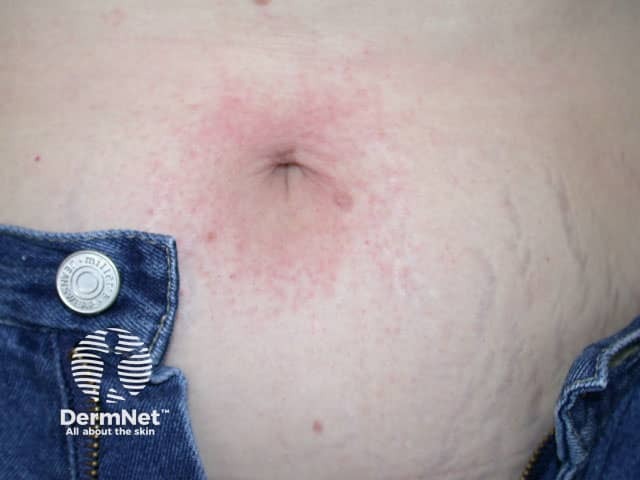
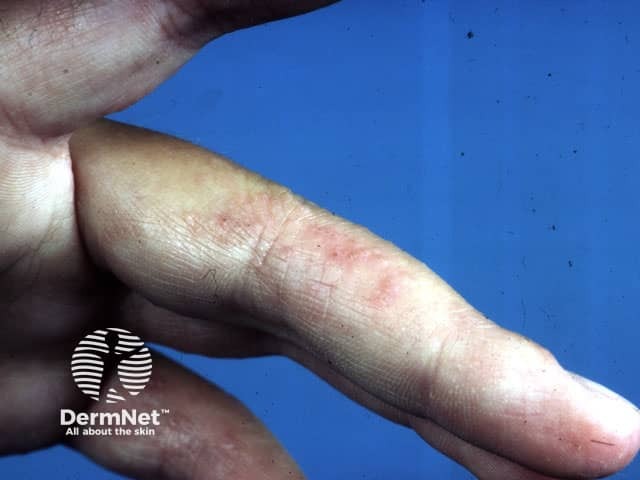
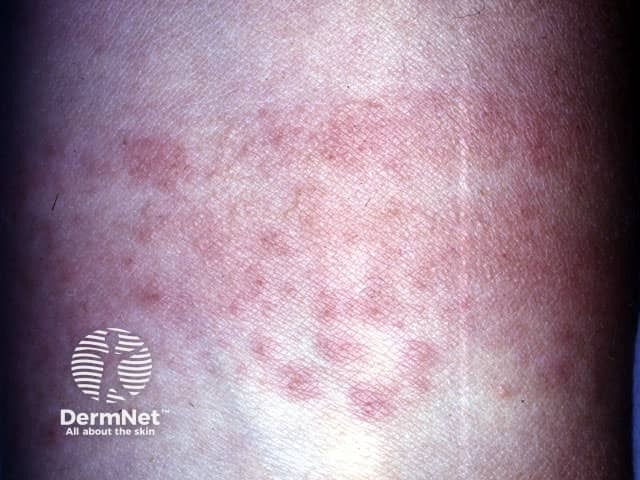
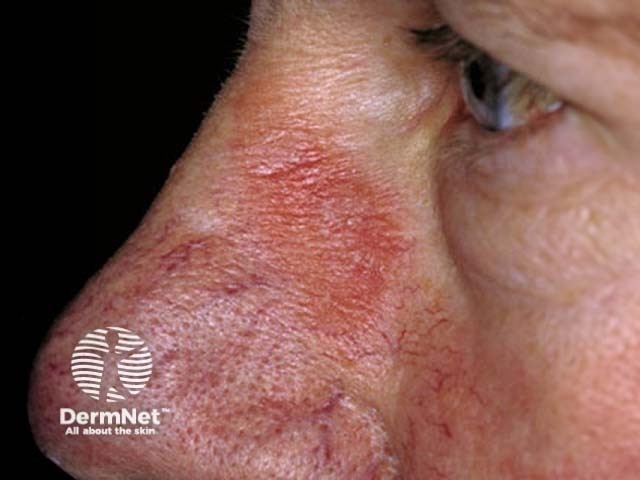
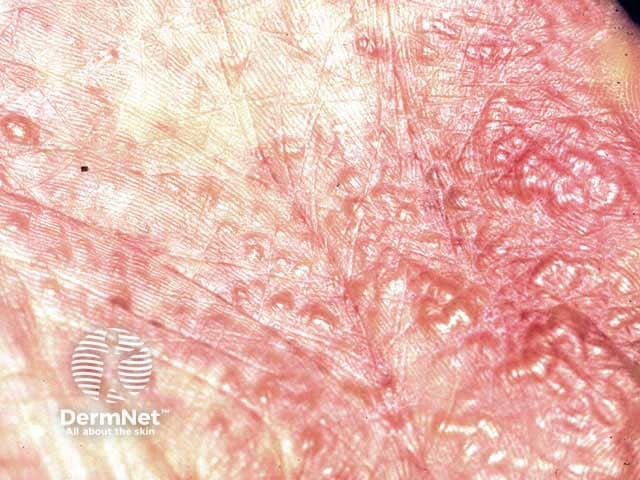
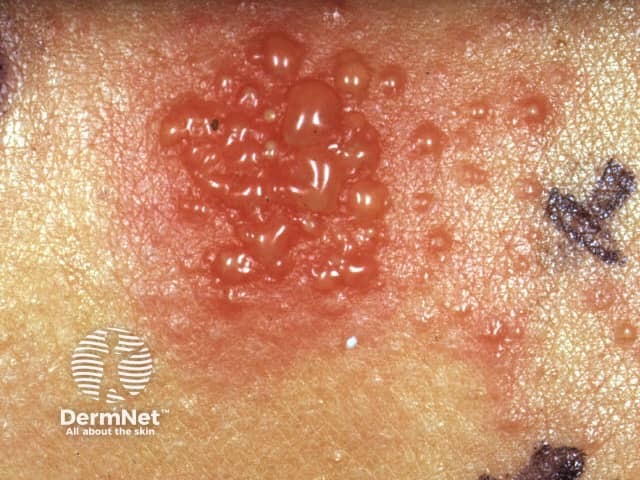
Nickel allergy is diagnosed by the clinical history and by special allergy tests, patch tests.
Subjects undergoing baseline series patch tests are specifically tested to nickel sulphate-hexahydrate. The chemical formula for this is NiO4S.6H2O.
Treatment is often necessary for nickel dermatitis.
Unfortunately, desensitization with injections or pills is not possible so the allergy tends to persist long-term.
It is essential to avoid skin contact with nickel-containing metals.
A nickel-testing kit can obtained from your dermatologist, pharmacist or online supplier. The 2-bottle or single solution formula contain 1% dimethylglyoxime and 10% ammonium hydroxide.
Apply a drop from each bottle (or from the single one) on to the metal item to be tested – first try it on a coin. Use a cotton bud to rub gently – observe the colour on the bud. If it remains clear, the item has no free nickel and will not cause dermatitis. If the cotton bud has stained pink, the item contains nickel and may cause dermatitis if it touches the skin of someone allergic to nickel. The chemicals will not harm jewellery.
Jewellery such as necklaces, necklace-clips, earrings, bracelets, watch-straps and rings, may contain nickel. "Hypoallergenic" stainless steel, solid gold (12 carat or more), and silver jewellery should be safe. Nine-carat gold and white gold contain nickel. Plastic covers for earring studs can be obtained. Coating the stud with nail varnish is not recommended as the varnish soon chips off.
Metal zips, bra hooks, suspender clips, hair-pins, buttons, studs, spectacle frames etc. are likely to contain nickel. Use substitutes made of plastic, coated or painted metal or some other material.
Personal items with nickel that may touch the skin causing dermatitis include mobile phones, lipstick holders, powder compacts, handbag catches, cigarette lighters, razors, keys, key rings, knives, and pens. These may sometimes cause dermatitis when they are within a pocket.
Cupboard handles, kitchen utensils, cutlery, toaster, metal teapots, scissors, needles, pins, thimble, vacuum cleaners, torches, bath plugs and many other items may contain nickel. Choose tools with plastic handles.
Stainless steel does not usually cause dermatitis unless it is nickel-plated.
Silver-coloured coins are composed of cupro-nickel. Cashiers with nickel allergy may develop hand dermatitis from this source. Wear gloves to handle money or pay with a credit card or cheque.
Nickel dermatitis may be aggravated by contact with paper clips, typewriter keys, instruments, metal fragments from a lathe or chain saw.
This diet low in nickel-containing foods has been suggested to patients with severe contact allergy to nickel. Its efficacy is unknown. Nickel cannot be completely avoided from diet. Avoid nickel-plated utensils and metal cooking pots. Avoid drinking the initial flow of water from a metal tap.
Foods allowed
Foods to avoid