Signs of malignancy
Learning objectives
Signs of internal malignancy
Malignancy as a sign of internal disease
Activity
-
Recognise potential cutaneous signs of malignancy
A group of rare cutaneous disorders are associated with internal cancer and are considered paraneoplastic syndromes. However, benign variants are more common for many of these conditions.
|
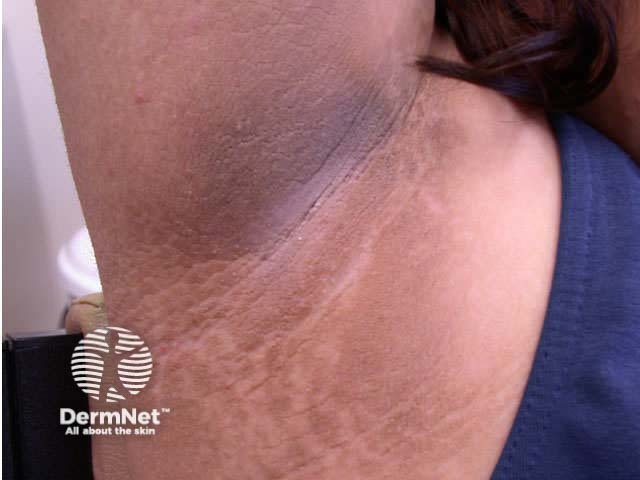
Acanthosis nigricans
|
|
-
Hyperpigmented velvety thickening of neck, axillae and other body folds
-
Associated with insulin resistance, obesity and malignancy of GI or GU tract
-
Malignant variety affects hands & feet
|
|
|
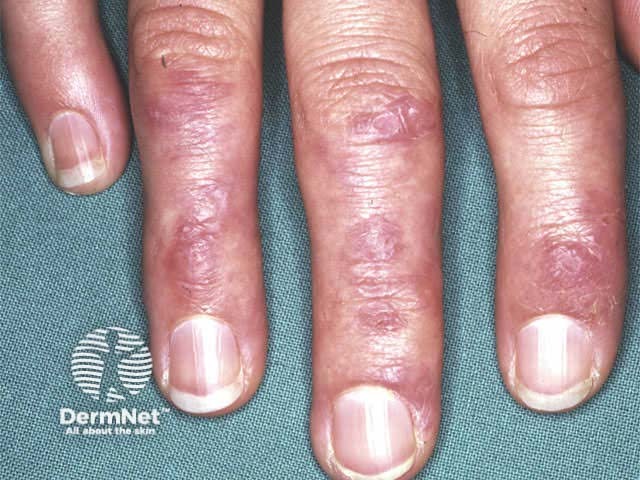
Dermatomyositis
|
|
-
Heliotrope eyelids; erythema face, neck, upper trunk
-
Flat papules on knuckles
-
Associated in elderly with malignancy of breast, lung, GI tract, ovary & uterus
|
|
|
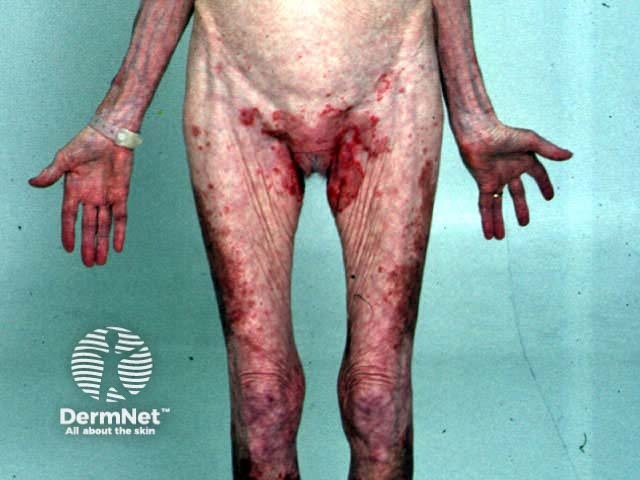
Necrolytic migratory erythema
|
|
-
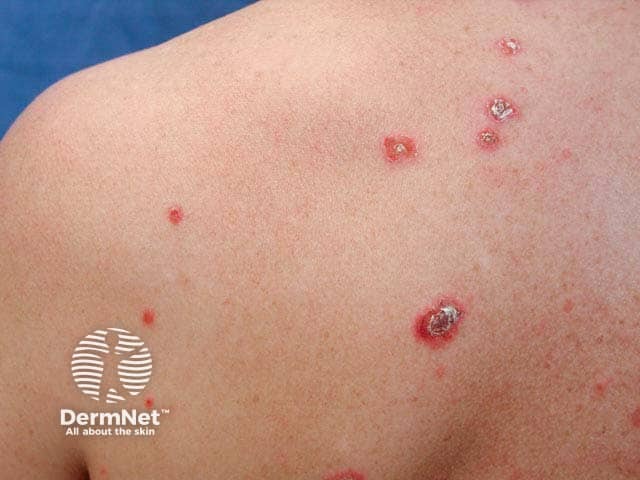
Crusting erosions around mouth, nose and genitals
-
Associated with glucagonoma (alpha-cell tumour of pancreas)
|
|
|
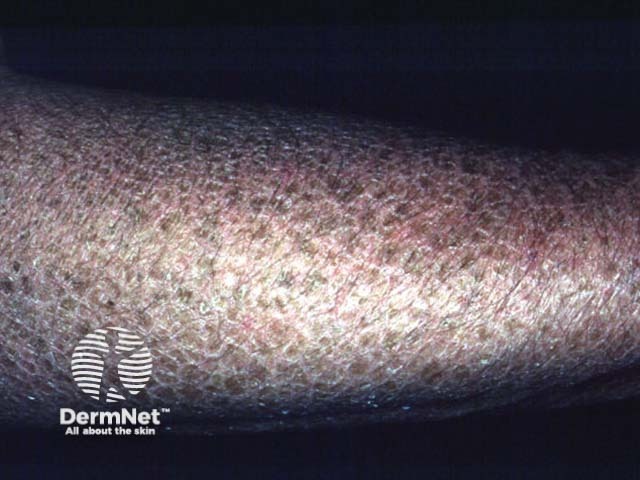
Acquired ichthyosis
|
|
-
Sometimes associated with cachexia and particularly with non-Hodgkin's lymphoma
|
|
|
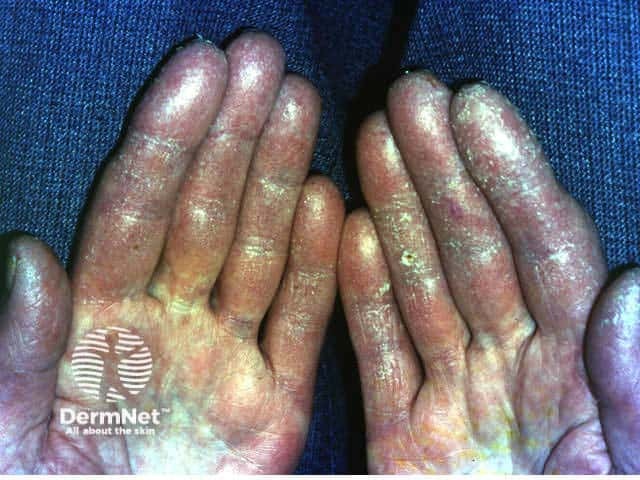
Paraneoplastic acrokeratosis (Bazex syndrome)
|
|
-
Psoriasis-like or honeycomb keratoderma of hands, feet, nose, ear
-
Associated with squamous cell carcinoma of upper respiratory or gastrointestinal tracts
|
|
|
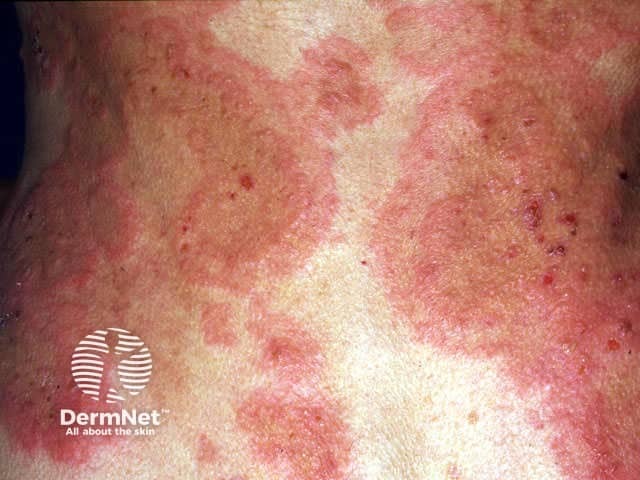
Erythema gyratum repens
|
|
-
Migrating and pruritic annular erythema with concentric whirling rings
-
Associated with lung cancer
|
|
|
Sign of Léser Trelat
|
|
-
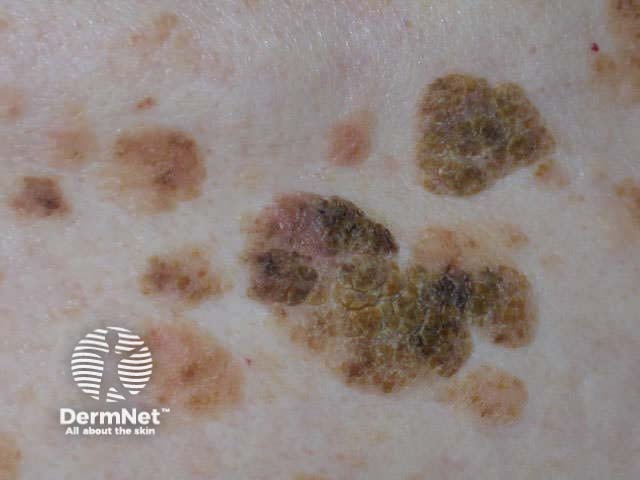
Eruptive seborrhoeic keratoses arising in patient with cancer
|
|
|
Cowden's disease
|
|
-
Autosomal dominant cutaneous hamartomas (esp. tricholemmomas)
-
Associated with breast and thyroid cancers
|
|
|
Paraneoplastic pemphigus
|
|
-
Severe erosions of mucous membranes associated with erythema multiforme-like blistering on trunk and limbs.
-
Characteristic direct immunofluorescence staining.
-
Associated with malignancy especially lymphoma
|
|
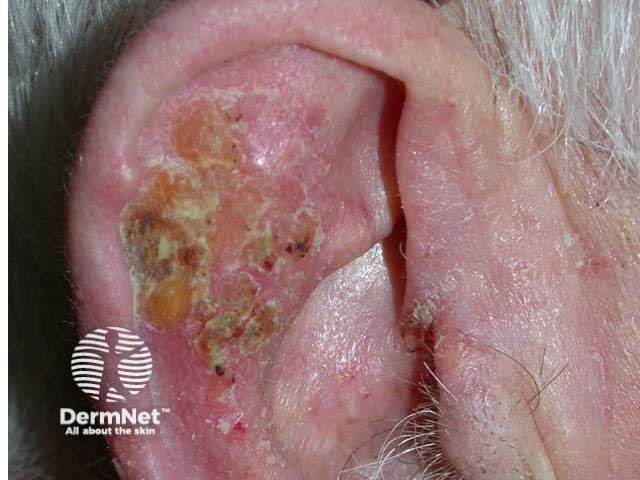
Some malignant skin tumours may indicate the presence of an internal cancer.
|
Bowen's disease (squamous cell carcinoma in situ)
|
|
-
Red scaly plaques
-
When multiple and in non-sun exposed sites, may be due to arsenic ingestion, associated with internal malignancies
|
|
|
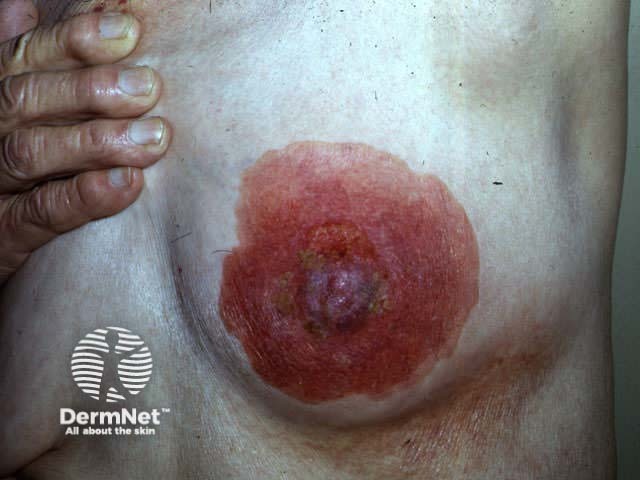
Paget’s disease
|
|
-
Eczema-like red scaly plaque
-
Mammary Paget's is associated with intraductal breast cancer
-
Extramammary Paget's (flexural lesions) is associated with eccrine, apocrine, GI or GU cancer
|
|
|
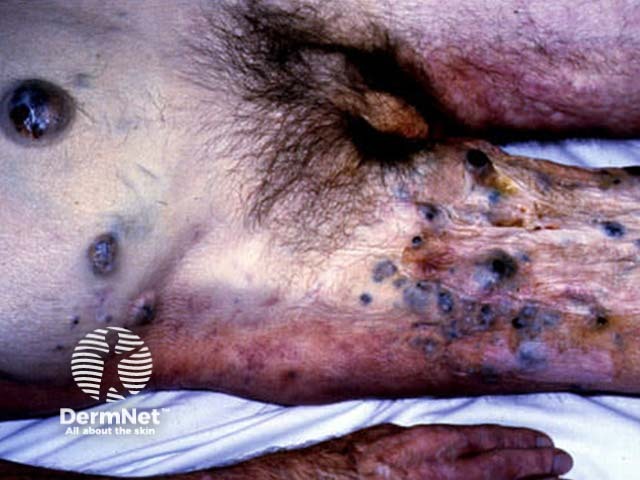
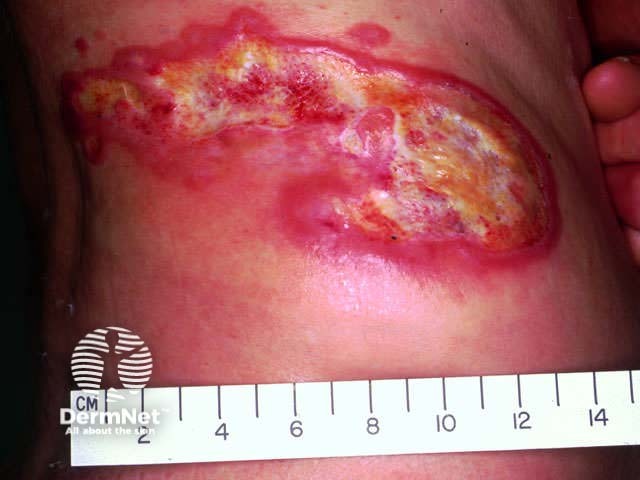
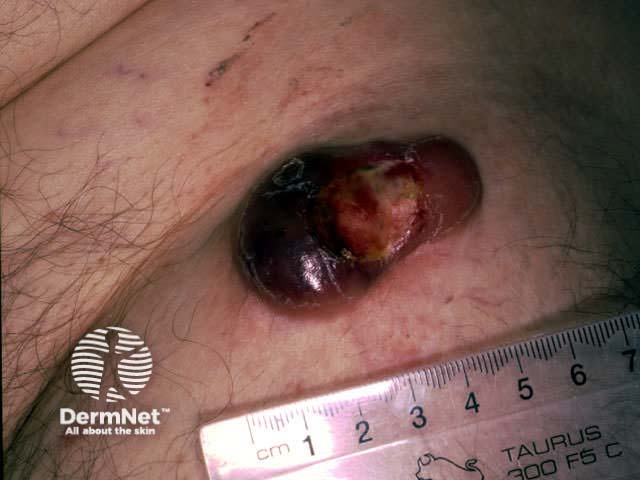
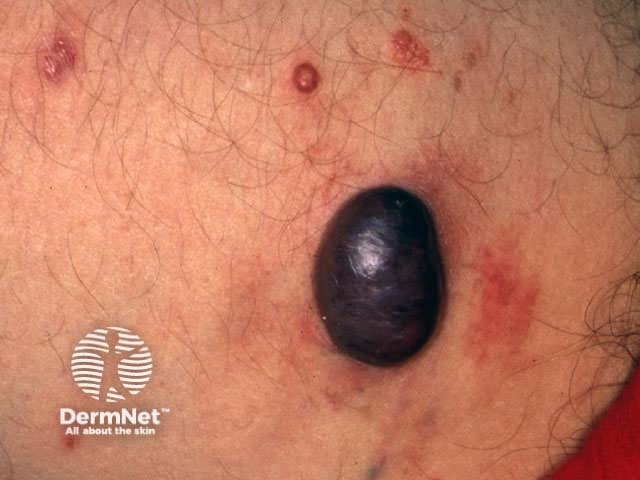
Cutaneous metastases
|
|
-
Solitary or multiple firm or hard dermal nodules deposited via lymphatic or haematogenous spread
-
Most often breast, GI, lung, melanoma, GU origin
|
|
|
T cell lymphoma
|
|
-
Erythematous bizarre-shaped scaly patches, plaques and nodules or erythroderma
-
CTCL is a malignancy of helper T cells (CD4+) and involves entire lymphoreticular system but nearly always first manifests in the skin
|
|
|
B cell lymphoma
|
|
-
Asymptomatic reddish, purple or brown plaques and nodules
-
Sometimes confined to the skin (rare) but more often associated with systemic B cell lymphoma
|
|
|
Kaposi's sarcoma
|
|
-
Mucocutaneous violaceous plaques and nodules
-
Vascular neoplasm in immunocompromised especially acquired immunodeficiency syndrome
-
Often systemic
-
Due to herpes virus 8
|
|
Look for cutaneous signs of malignancy in your patients with cancer.
Page 7 of 7. End of course. Back to: Cutaneous signs of systemic disease course contents.
References:
On DermNet NZ:
Information for patients
Other websites:
Books about skin diseases:
See the DermNet NZ bookstore
Author: Clin Assoc Prof Amanda Oakley