Hyperhidrosis
Hyperhidrosis is the name given to excessive sweating.
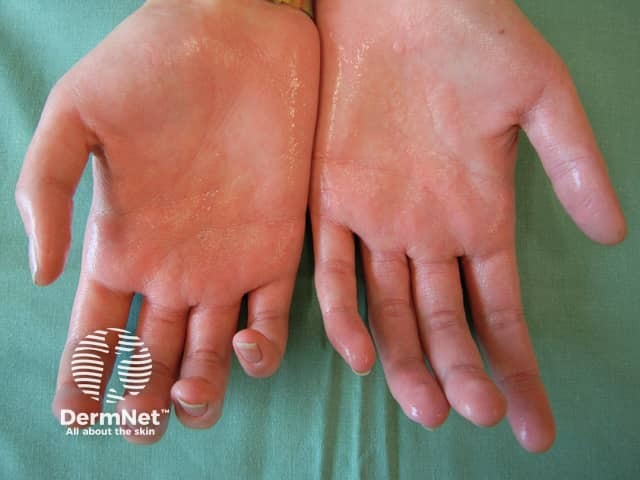
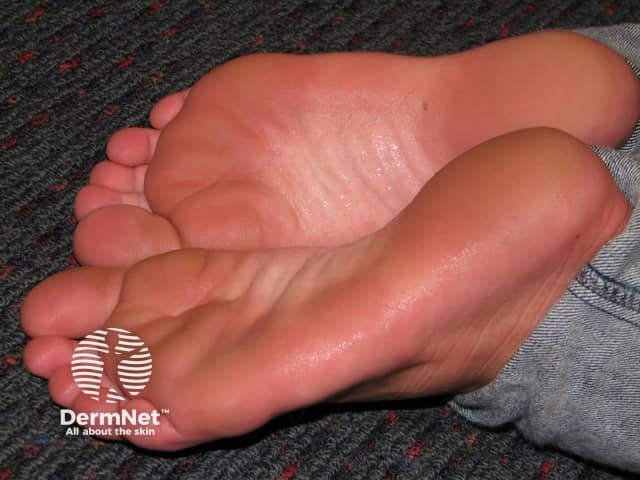
Hyperhidrosis may affect the entire body, or it may be localised to the armpits, palms, soles, face or elsewhere. It is usually symmetrical.
|
|
|
|
What is the cause of hyperhidrosis?
The exact cause or causes of hyperhidrosis are unknown. There are numerous sweat glands distributed over the body. The eccrine sweat glands produce a weak salt solution and are most numerous on the palms (with about 700 glands per square centimetre). The amount of sweat produced is regulated by a body temperature centre in the brain (the hypothalamus) via the sympathetic nervous system. Overactivity of the hypothalamus or the sympathetic nerves can result in hyperhidrosis.
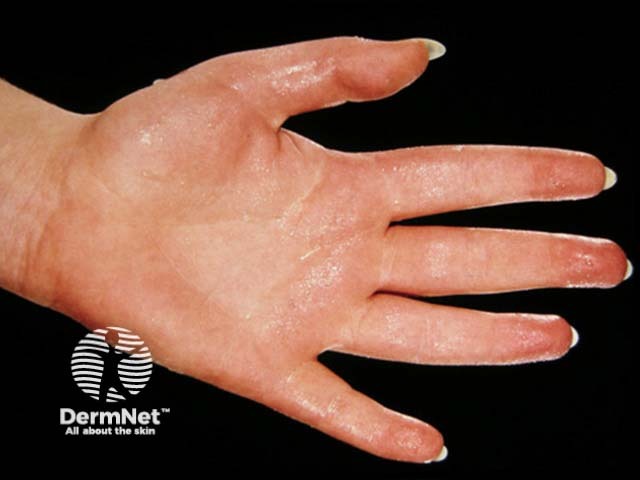
Most often, hyperhidrosis is localised and first appears in childhood or adolescence. Other family members may or may not be similarly affected. An increase in air temperature, exercise, fever, anxiety, or spicy food may set off attacks of sweating. The sweating usually reduces at night time and disappears during sleep.
A few patients have hyperhidrosis as a consequence of a medical condition.
Generalised hyperhidrosis may be due to:
- Drugs
- Cardiovascular disorders
- Respiratory failure
- Overactive thyroid
- Other endocrine tumours
- Parkinson's disease
Localised hyperhidrosis may be due to:
- Stroke
- Spinal nerve damage
- Peripheral nerve damage
- Neuropathy
- Brain tumour
- Chronic anxiety disorder
What is the result of excessive sweating?
Hyperhidrosis is an embarrassing complaint and significantly interferes with many daily activities.
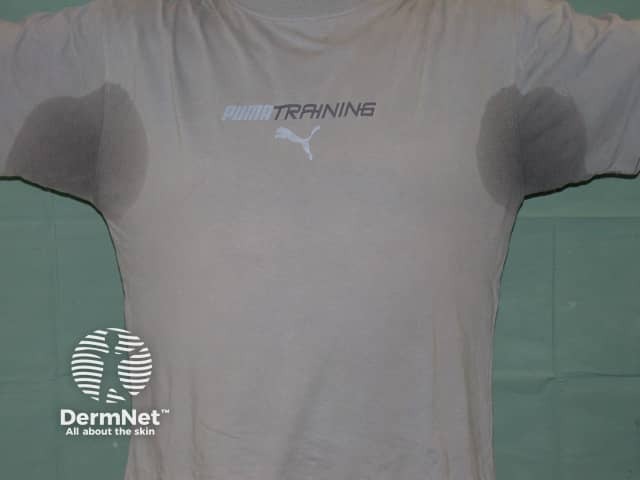
- Clothing becomes damp and unsightly and must be changed several times a day. Wear loose fitting garments made of fabric that does not stain.
- Wet skin folds are prone to intertrigo.
- It is embarrassing to shake hands and it difficult to write neatly.
- Sweaty feet develop an unpleasant smell, ruin footwear and are prone to dermatitis or secondary infection (tinea, impetigo or pitted keratolysis). Expect to change your socks several times a day. Absorbent insoles in shoes are useful, but may need replacing frequently. Don't wear the same pair of shoes two days in a row; leave them to dry out and increase their life span.
- Frequent washing using a deodorizing soap can reduce the smell and discomfort, but overuse of soaps can also result in dermatitis. Choose a non-soap cleanser instead.
What can be done to reduce sweating?
-
Antiperspirant sprays, sticks, roll-ons and paints are available. Choose an unfragranced aluminium salt preparation suitable for hyperhidrosis (10-25% in alcohol or as a gel). Antiperspirants should be applied when the skin is dry, after a cool shower, just before bed. Wash off in the morning. They should be used for several consecutive nights then once or twice weekly. The stronger products can irritate; if so, apply hydrocortisone cream for a few days.
Note: ‘deodorants’ are fragrances designed to disquise unpleasant smells. They don't affect the amount of sweat produced. - Talcum powder and corn starch powder are suitable for mild hyperhidrosis. Apply between the toes, under the breasts and other skin folds.
Treatment available from a specialist
- The anticholinergic drugs, oral propantheline (Pro-banthine®) and oxybutymin (Ditropan®) may reduce sweating, but unfortunately can cause blurred vision, dry mouth, and constipation.
- Beta blockers may also be helpful but are unsuitable for those with asthma or peripheral vascular disease.
- A dusting powder containing diphemanil may be used for mild hyperhidrosis.
- Iontophoresis is available at some hospital departments for hyperhidrosis of palms, soles and armpits. A low electrical current is passed across the skin surface daily for several weeks and stops sweat production. Visits are then required weekly or less often. Iontophoresis may cause irritation or dermatitis.
- Botulinum toxin injections into the armpits are increasingly popular as they can reduce or even stop sweating for three to six months. Botulinum toxin is also effective for the palms and soles. Botulinum toxin may temporarily weaken the small muscles of the hands. Regional or local anaesthesia is desirable in these sites as the injections are painful.
- Overactive sweat glands in the armpits may also be removed by tumescent liposuction, subcutaneous curettage or a combination of these.
- Surgery to remove the sweat gland-bearing skin of the armpits is a major procedure usually requiring skin grafts.
- Chemical or surgical sympathectomy (often done by endoscopic surgery) are operations on the spinal sympathetic nerves, which considerably reduce sweating of the palms. Unfortunately the effect may not be permanent (recurring in up to 15% of cases), and is accompanied by undesirable skin warmth and dryness. There is a low risk of serious complications such as Horner's syndrome, pneumothorax, pneumonia and persistent pain (affecting less than 2% of patients). Compensatory hyperhidrosis on other sites of the body occurs after surgery in many individuals (about 50%). Sympathectomy is therefore reserved for the most severely affected individuals. Lumbar sympathectomy is not recommended for hyperhidrosis affecting the feet as it can interfere with sexual function.
Related information
Other websites:
- Sweat – Medline Plus
- Hyperhidrosis – by Ivo Tarfusser MD
- HyperhidrosisUK – Support Group
- International Hyperhidrosis Society
- Excessive-sweating.net – Excessive sweating resource
- Sweaty-palms.com – Information on Endoscopic Thoracic Sympathectomy from the Center for Hyperhidrosis in Los Angeles
- Hyperhidrosis: Current Understanding, Current Therapy – Medscape
- Hyperhidrosis – emedicine dermatology, the online textbook
- Medsafe BOTOX® injections data sheet
- Medsafe Dysport data sheet