Introduction
Demographics
Causes
Signs and symptoms
Diagnosis
Treatment
Adult-onset Still disease (AOSD) is a rheumatic disorder, characterised by:
Other systemic symptoms include:
Still disease was named after an English physician, George Still (1861–1941). The juvenile form of the disease is now known as systemic-onset juvenile idiopathic arthritis (SOJIA).
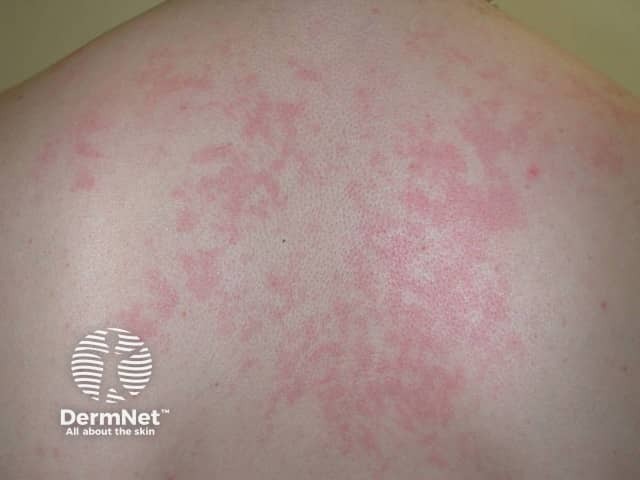
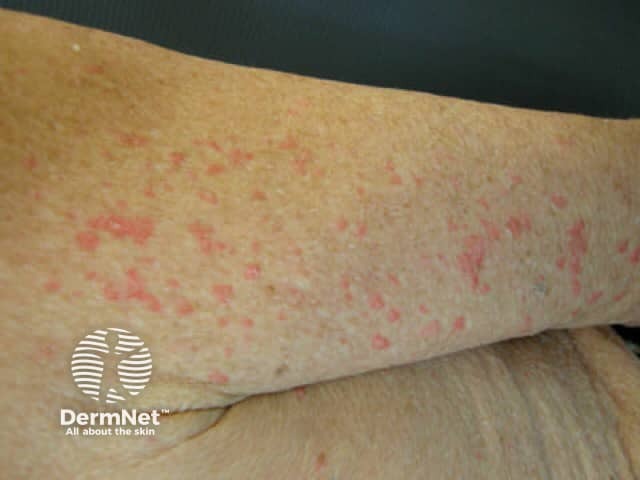
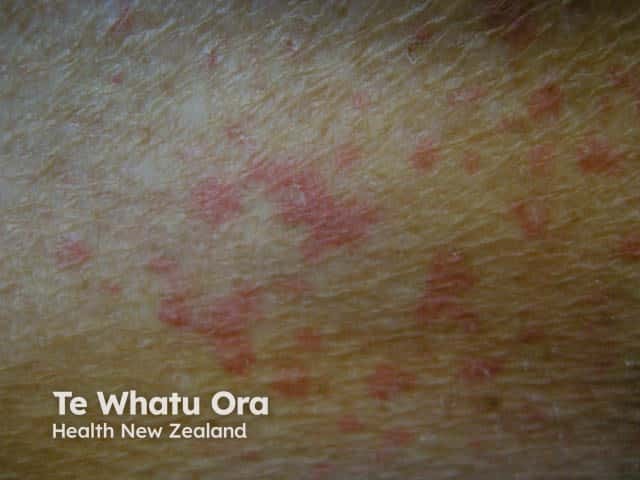
Adult-onset Still disease is rare, with an incidence of less than one in 100,000 people. It usually begins between 16 and 35 years of age.
The exact cause of adult-onset Still disease is not known. One theory is that the disease is caused by infection. Another theory is that Still disease is a hypersensitive or autoimmune disorder (this is where the body's immune system which normally fights off infections or illness suddenly starts to attack the body's cells and tissues it is suppose to protect).
Intermittent high fever occurs in all patients. Temperatures may get up to 39 or 40C before rapidly returning to normal levels. These fever spikes often occur at nearly the same time every day and may be accompanied by a feeling of extreme fatigue.
Rash develops in about of 95% of patients. Characteristics of the rash are:
Other systemic symptoms include:
In many cases, skin rash and fever may occur intermittently for months or even years before joint pain and swelling develop. All patients with adult-onset Still disease eventually develop persistent chronic arthritis even if fever and systemic symptoms have stopped. Stiffness, swelling and pain usually affects many joints but in particular the wrists may become severely deformed.
The diagnosis of adult-onset Still disease is made by the presence of the triad of symptoms: arthritis, fever and rash, and other symptoms described above. The diagnosis is supported by laboratory tests:
There are Yamaguchi criteria for the diagnosis (at least 2 major and 5 in total)
Major criteria
Minor criteria
There is no cure for adult-onset Still disease. The main goals of treatment are to reduce joint inflammation and avoid deformity. Therapy may include both medical and surgical interventions. In addition, the patient and their families need to fully understand the nature of the disease and how to live with it for the rest of their lives.
Drug therapy to control many of the symptoms of Still disease includes:
Non-drug therapy includes physiotherapy, hydrotherapy and simply rest. Patients with Still disease will experience “good” and “bad” days. The number of “bad” days, that is flare-ups or exacerbations of the disease, can be controlled or reduced by careful planning of activities and rest periods. It has been shown that physical and emotional stress can exacerbate symptoms of Still disease.
There are several anecdotal reports in the literature of successful treatment of adult onset Still disease with anakinra. Results of the first open 24 week, comparative, multicenter study in 22 patients randomised to receive anakinra (n=12) or disease modifying antirheumatic drugs (n=10) have shown that anakinra produced significantly more rapid and sustained responses.