Lumbosacral dermal melanocytosis or Mongolian spot is a blue-grey marking of the skin that usually affects the lower back and buttock region of newborn babies It is a common form of birthmark.
Lumbosacral dermal melanocytosis presents as bluish-grey patches on the lower back or buttocks. Dermal melanocytosis may also involve other sites such as the face or limbs. The patches are usually a few centimetres in diameter but larger ones may occur. The affected skin is not thickened or changed in any way other than in colour.
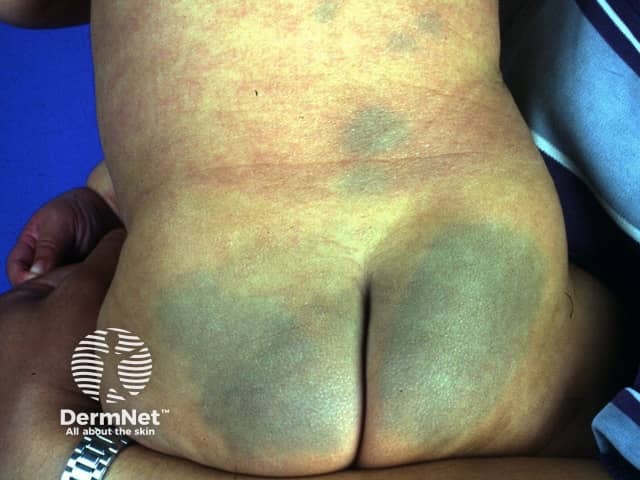
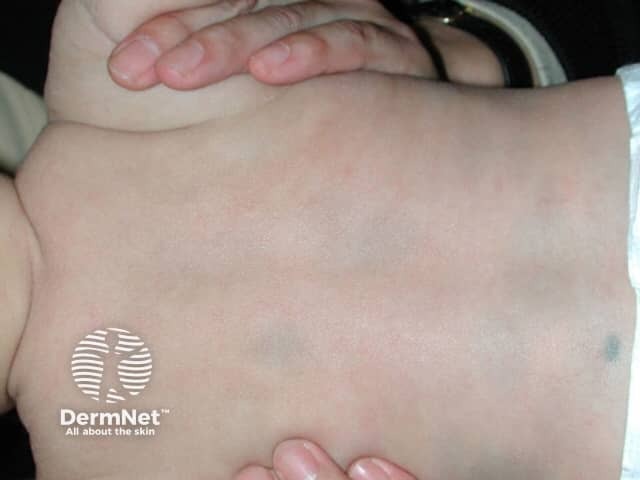
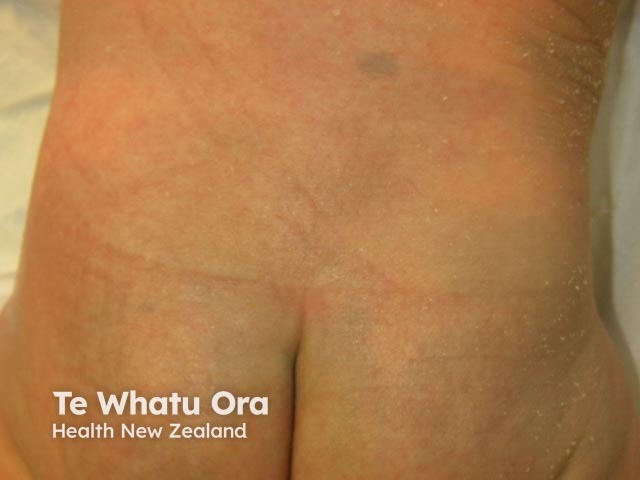
Dermal melanocytosis is thought to be due to entrapment of melanocytes (pigment cells) in the dermis of the developing embryo, when the cells have failed to reach their proper location in the epidermis.
The patches are present at birth and occur in more than 90% of children of Mongoloid race (e.g. East Asians, Polynesians, Indonesians, Micronesians). They occur less frequently in other races.
Dermal melanocytosis is benign and does not require treatment. Usually the discolouration spontaneously disappears by the time the child reaches 4 years old. Persistent dermal melanocytosis tends to be larger and persist for many years or indefinitely.
Book: Textbook of Dermatology. Ed Rook A, Wilkinson DS, Ebling FJB, Champion RH, Burton JL. Blackwell Scientific Publications.