Introduction Demographics Classification Causes Clinical features Complications Diagnosis Treatment Prevention Outlook
Photosensitivity refers to various symptoms, diseases and conditions caused or aggravated by exposure to sunlight.
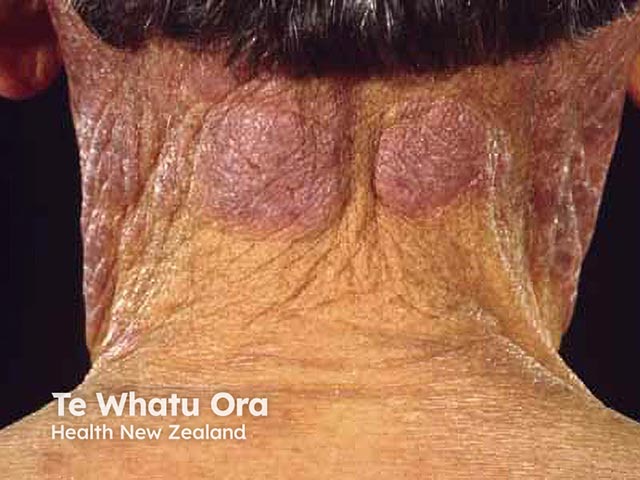
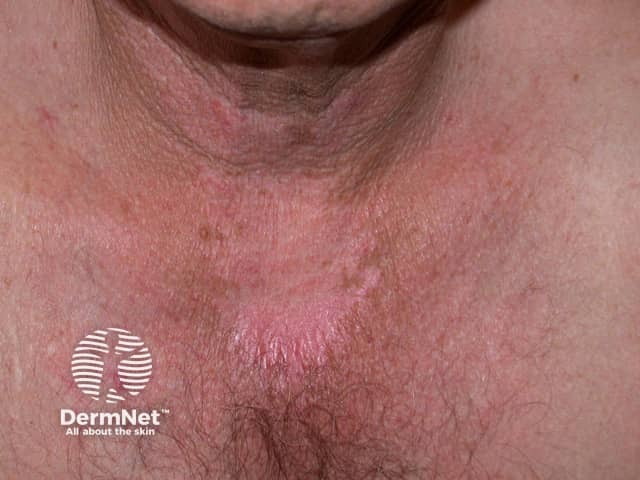
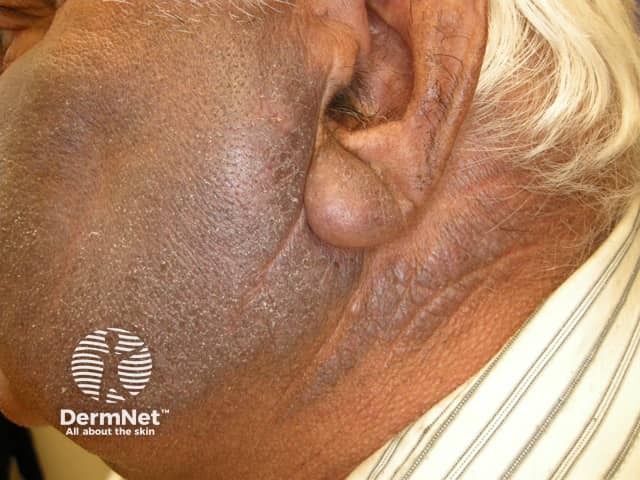
Photosensitivity occurs in males and females of all races and at all ages. Different types of photosensitivity may be prevalent at different times of life. Genetic and environmental factors are involved.
People with very white skin who don’t tan on exposure to the sun (Fitzpatrick skin type 1), especially if they also have red hair and blue eyes, are often considered photosensitive, relative to people with darker skin phototypes who tan more easily. These fair skinned individuals do not have a photodermatosis.
Photosensitivity is classified into the following groups:
The causes of primary or idiopathic photodermatoses have not yet been discovered. Exposure to the sun produces a clearly defined disease entity. These include:
With the exception of polymorphic light eruption and juvenile spring eruption, these disorders are rare.
Exogenous photodermatoses are those in which phototoxic or photoallergic reaction is caused by an external photosensitiser. These include:
Photoexacerbated dermatoses include:
Photosensitivity can be caused by a metabolic defect. The most common disorders of this type are porphyrias, in which phototoxic porphyrins accumulate in the skin. There are genetic defects in various enzymes, and the diseases may be activated by exposure to certain medications or toxins. Clinical presentation depends on which enzyme is defective.
Pellagra, due to vitamin B3 (niacin) deficiency usually presents initially with photosensitivity. It may be primary due to inadequate dietary intake, genetic (Hartnup disease), or secondary such as drug-induced or malabsorption.
Photosensitivity can be associated with a pre-existing genetic disorder. These are rare.
Photosensitivity is caused by an abnormal reaction to some component of the electromagnetic spectrum of sunlight and a chromophore (reactive compound) within the skin.
The electromagnetic spectrum ranges from cosmic rays, invisible rays called ultraviolet radiation (UVR), through visible light, to infrared, microwaves and radio waves. UVR has 3 portions.
Patients can be sensitive to one kind of sunlight (i.e. only to UVB, UVA or visible light) or to a wider range of radiation. The most common photosensitivity is to UVA. Properties of UVA include:
Porphyria is mainly triggered by exposure to visible light.
The clinical features depend on the specific photodermatosis.
Rashes on exposed sites may be due to another cause. For example:
Clues to photosensitivity include:
Severe photosensitivity can lead to a person being unable to go outdoors during the day unless completely covered (including face). This leads to social isolation and depression.
Some photodermatoses cause permanent scarring.
Photosensitivity is diagnosed by the history of a skin problem arising on exposure to sunlight. The specific type is determined by examination of the skin and specific tests.
Photosensitivity is sometimes confirmed by phototests — artificial light from various different sources and at different doses is shone on small areas of the skin to see whether the rash can be reproduced, or if sunburn occurs more easily than expected. These tests can be difficult to perform and to interpret and are only available in specialised centres.
Contact photosensitivity can be tested by photopatch tests, in association with standard patch tests. Adhesive patches containing known photosensitising materials are applied to the upper back, removed after two days, and light is shone on the area. The reaction is observed two days later.
Investigations may include:
Patients suspected of porphyria cutanea tarda may also have liver function tests and iron tests.
Management of photosensitivity involves sun protection and treatment of the underlying disorder.
Photosensitivity reactions are mainly prevented by careful protection from sun exposure and avoidance of exposure to artificial sources of UVR. However:
When considering sun-protective measures:
Sunscreens are essential.
Patients with photodermatoses also may need to:
Oral antioxidants such as polyphenols have been reported to provide limited extra protection, particularly polypodium leucotomas and carotenoids. Nicotinamide may also provide benefit.
The prognosis depends on the specific disorder, its treatment, where the patient lives, and how carefully they protect their skin from exposure to sunlight.
For the most severely light-sensitive patients, normal activities may be severely curtailed. Some find night work and sleep during the day, others put up with the rash.