Focal keratodermas are palmoplantar keratodermas (PPK) that involve only some areas of the palms or soles, usually over pressure points. Some types are associated with abnormalities in organs other than the skin.

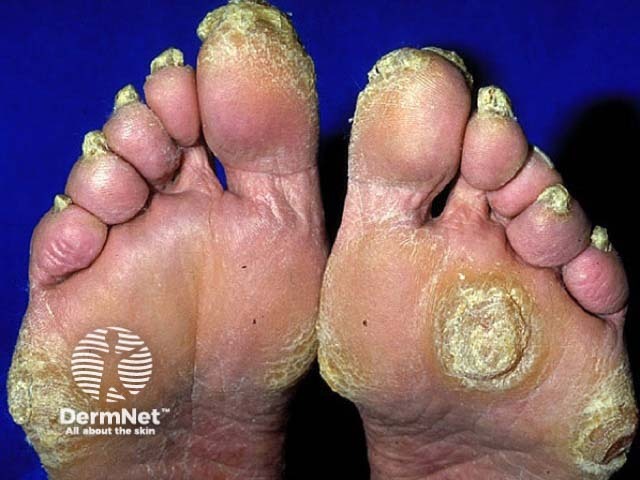

Hereditary focal palmoplantar keratodermas are caused by a genetic abnormality. They may be inherited from one affected parent (autosomal dominant inheritance) or from both parents, who are generally unaffected (autosomal recessive inheritance). Several family members may be affected. Some types of keratoderma are associated with abnormalities of internal organs.
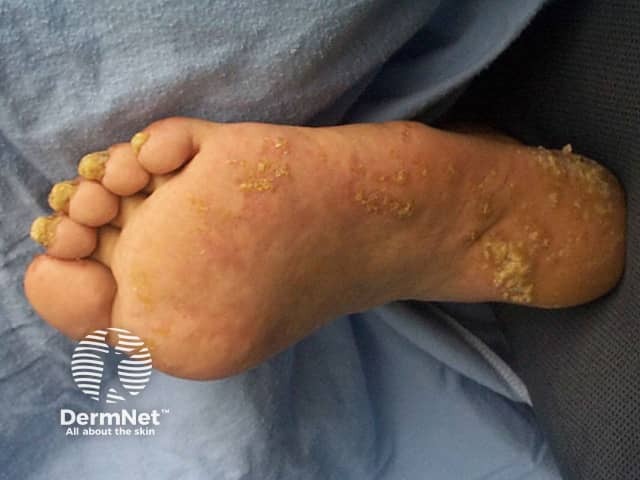
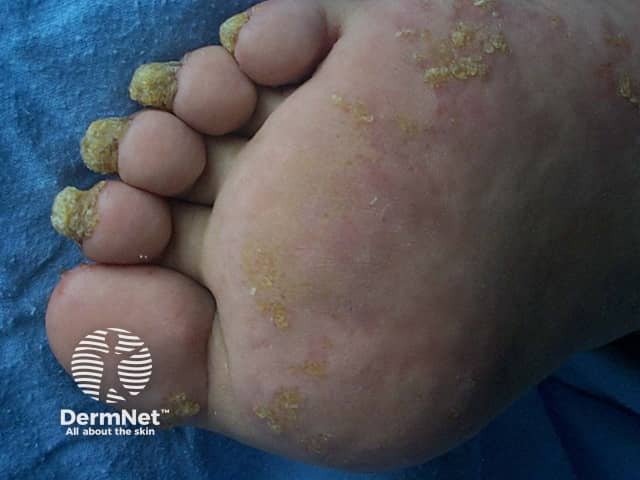
The many different types of focal hereditary palmoplantar keratoderma look very similar. Some are associated with abnormalities of organs other than the skin.
PPK striata/areata type |
|
Howel-Evans syndrome |
|
Richner-Hanhart syndrome |
|
Pachyonychia congenita |
|
Striate PPK with woolly hair and dilated cardiomyopathy |
|
The following therapies soften the thickened skin and make focal keratoderma less noticeable.
Focal hereditary keratodermas persist for life and may be passed on to the next generation.