Introduction
Demographics
Causes
Clinical features
Variation in skin types
Complications
Diagnosis
Differential diagnoses
Treatment
Prevention
Outcome
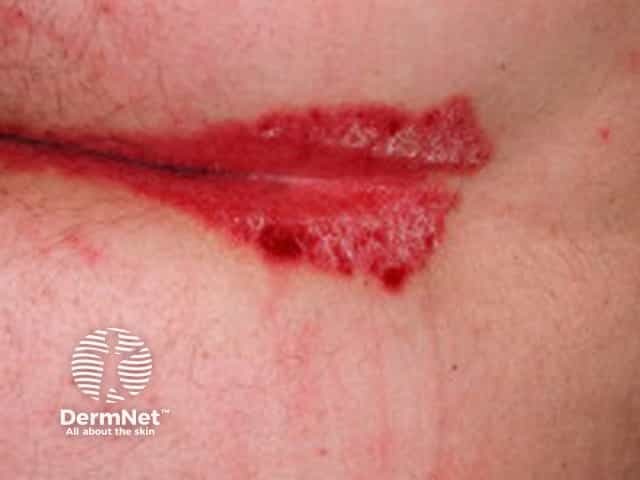
Chronic plaque psoriasis is the most common form of psoriasis, accounting for more than 80% of cases. It is a chronic relapsing and remitting condition that presents as symmetrical, well-demarcated, erythematous thickened plaques with overlying silver scales.
Appearance can vary depending on skin colour, ranging from pink on lighter skin to brown, purple, or grey on darker skin. It commonly affects the extensor surfaces (elbows and knees), scalp, trunk, and gluteal fold, but may arise on any part of the body. Plaques may coalesce to involve extensive areas of the skin, especially on the trunk and limbs.
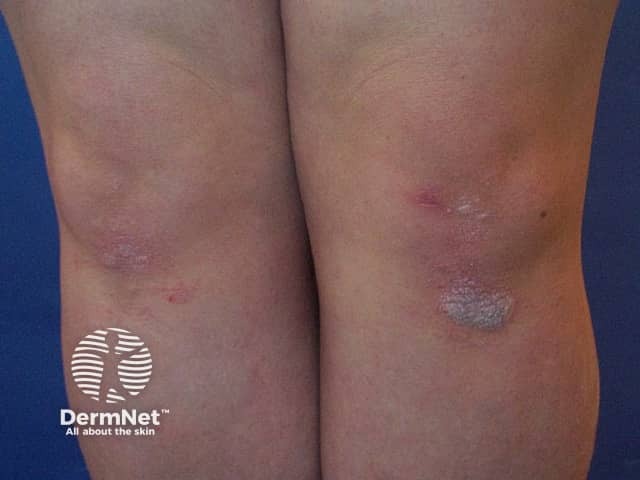
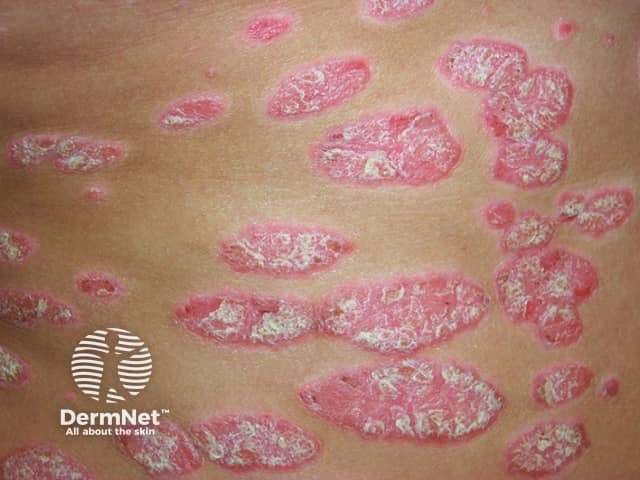
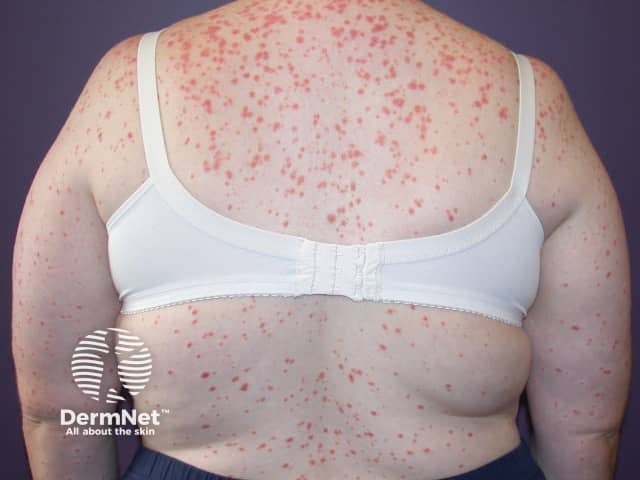

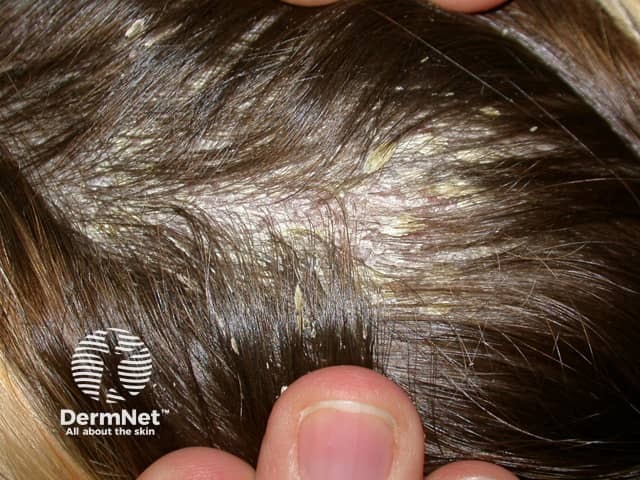
Psoriasis affects approximately 125 million people worldwide. It can affect all ages and has no clear sex predilection. Its prevalence ranges from 0–1.4% in children and ranges from 0.5% of adults in Asia to as high as 8% of adults in Norway.
Chronic plaque psoriasis often presents as ‘large plaque’ or ‘small plaque’ psoriasis.
Genetic, environmental, and behavioural factors contribute to psoriasis development, with genetics being the largest risk factor.
Multiple genetic alleles and susceptibility loci that confer risks have been identified, including (but not limited to):
The human leukocyte antigen (HLA) Cw6 allele is associated with early onset and severe unstable disease.
In susceptible individuals, environmental and behavioural factors such as infections (including streptococcal infections and HIV), smoking, medications (eg, lithium, antimalarials, beta-blockers, terbinafine), skin trauma, and stress can exacerbate psoriasis. Studies have found that psoriasis is more prevalent in Caucasians and in countries at higher latitudes. Psoriasis typically worsens over winter and improves during summer, suggesting that ultraviolet index plays a role, although a small proportion of sufferers experience light-induced exacerbations (photosensitive psoriasis).
The pathogenesis of psoriasis is due to excessive activation of the innate and adaptive immune system. The interaction between T lymphocytes, dendritic cells, neutrophils, and cytokines such as interleukin (IL) 23, IL-17 and tumour necrosis factor (TNF) initiate and perpetuate inflammation. This results in keratinocyte proliferation and immune cell infiltration into lesional skin.
Patients often give a history of itch, especially during flares. Pain occurs when plaques are thickened and cracked.
Typically plaques are well-demarcated, erythematous, scaly, and often symmetrical.
Chronic plaque psoriasis can affect anywhere on the body, such as:
The plaques may be localised (eg, to elbows and knees) or generalised (involving the scalp, trunk, and limbs).
Other features:
Most cases of plaque psoriasis are described as ‘large plaque’ or ‘small plaque’.
Other (uncommon) subtypes or descriptions of chronic plaque psoriasis include:
Plaque appearance can vary depending on skin phototype, for example:
Patients with psoriasis are more likely to have associated health conditions such as:
Chronic plaque psoriasis is diagnosed based on its clinical features. Categorisation includes localised vs. generalised and large plaque vs. small plaque.
The extent and degree of psoriasis is often assessed by Psoriasis Area and Severity Index (PASI) score.
Dermoscopy of typical plaques may show dotted vessels on a pale red background with uniform white scaling.
Classic histopathological features of plaque psoriasis demonstrate:
Treatment goals include symptom management and reducing psychosocial impact.
General considerations when choosing treatment:
Mild psoriasis is generally treated with topical agents alone, such as:
If topical therapy is insufficient (eg, in moderate to severe psoriasis), next steps may involve phototherapy, systemic therapy, and biologics.
Most psoriasis centres offer phototherapy, often in combination with topical or systemic agents:
Common systemic treatments include:
Other medicines occasionally used:
Biologics or targeted therapies are reserved for severe psoriasis resistant to conventional treatment. They are useful in treating concurrent psoriatic arthritis. These include:
Other molecular therapies with evidence for use in psoriasis are:
A meta-analysis of systemic pharmacological treatment for chronic plaque psoriasis found that compared to placebo, biologic agents infliximab, bimekizumab, ixekizumab, and risankizumab were the most effective in achieving 90% improvement in PASI score from baseline at 6 months follow up in patients with moderate to severe psoriasis.
There is no way to prevent psoriasis but there are ways to minimise symptoms and reduce flare-ups. This includes:
While there is no cure for psoriasis, the therapeutic advancements in biologics have transformed care for patients with moderate to severe disease, making complete clearance a realistic goal.
However, most patients have mild to moderate psoriasis and unfortunately, there have been a limited number of new therapeutic developments for these patients. Topical treatment remains the mainstay of treatment, and it is hoped that new agents such as tapinarof, the PDE4 inhibitor roflumilast, and small molecule topical JAK inhibitors may be more accessible for patients with moderate disease in the future.