Introduction - porphyrias
Introduction - erythropoietic protoporphyria
Demographics
Causes
Clinical features
Diagnosis
Treatment
The porphyrias are a group of genetic diseases in which there are enzyme deficiencies in the haem pathway; haem is the part of haemoglobin that gives blood its red colour. An enzyme deficiency results in a build-up of precursors in the blood and other organs. The precursor chemicals can cause acute attacks in the acute hepatic porphyrias and photosensitivity and skin lesions in the cutaneous porphyrias.
Erythropoietic protoporphyria (EPP) is one of the cutaneous porphyrias. EPP is due to an inherited deficiency of the enzyme ferrochelatase. Reduced activity of this enzyme causes a build-up of protoporphyrin in the skin resulting in photosensitivity.
Abnormally high levels of protoporphyrin can rarely cause liver disease.
Erythropoietic protoporphyria (EPP) is the second most common of the skin porphyrias. It occurs in approximately 1:100 000 of the population. It is inherited in the vast majority of patients, but most will not have a family history of the disease as it is not common to be passed down; the risk of developing EPP is approximately 1 in 10 to the offspring of an affected parent. Males and females are equally affected.
First symptoms usually appear in infancy or early childhood
EPP is thought to be due to a compound loss-of-function mutation in the gene encoding ferrochelatase (FECH; 612386) found on chromosome 18q21. Typically, there is a mutation on one gene as well as a second, low-expression allele. Rarely, there is a gain in function mutation in ALA synthase (ALAS)-2 (X-linked dominant inheritance). Thus, inheritance can be autosomal recessive or autosomal dominant with incomplete penetrance (96% of patients in the UK).
In very rare instances, EPP has been reported to have been caused by myelodysplasia or myeloid leukaemia due to associated chromosomal instability, including knock-out loss of chromosome 18.
EPP causes skin pain on exposure to sunlight, most often on the tops of the hands and feet, face and ears. Pain can be severe and last days after sun exposure. There may not be anything to see at the time. Prolonged exposure can result in some redness and swelling, and uncommonly in blistering and crusting.
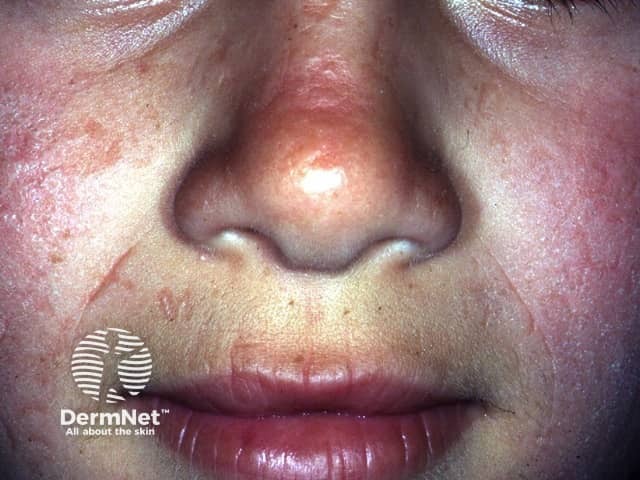
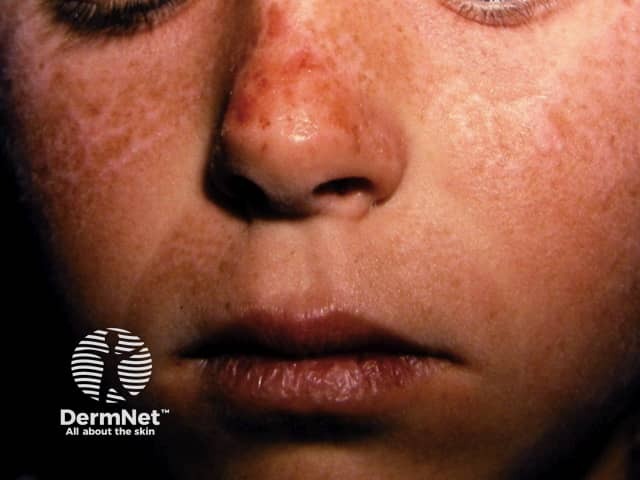
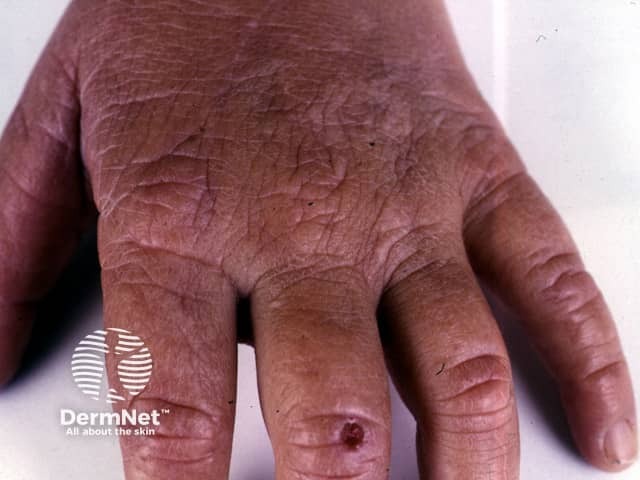
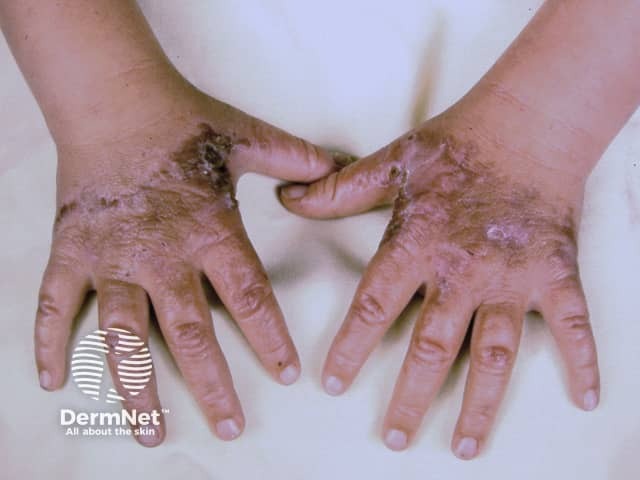
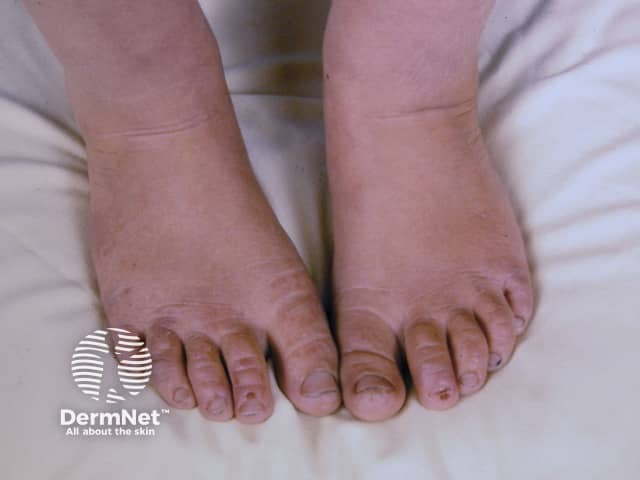
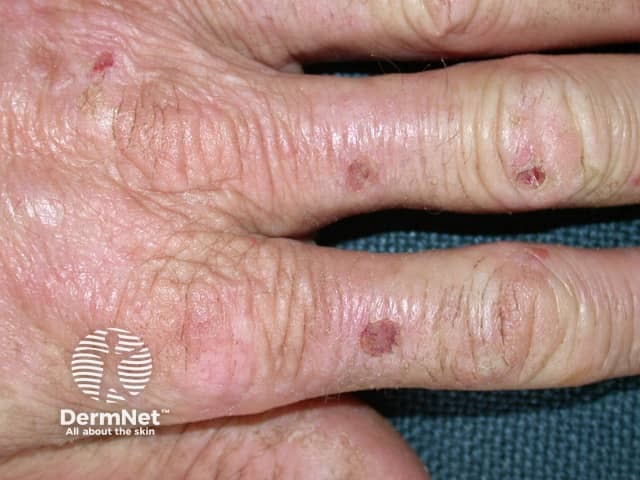
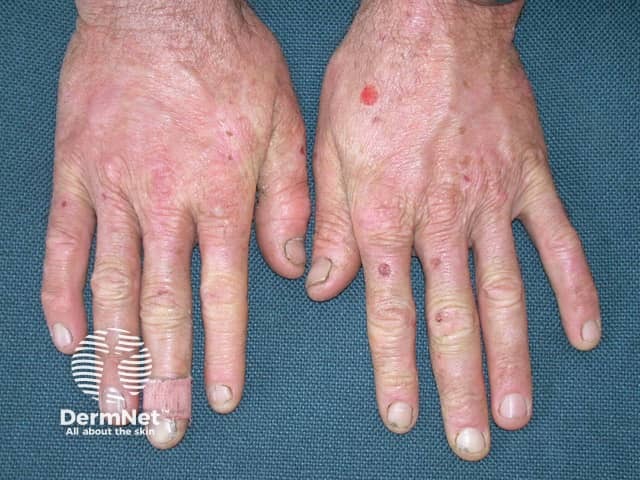
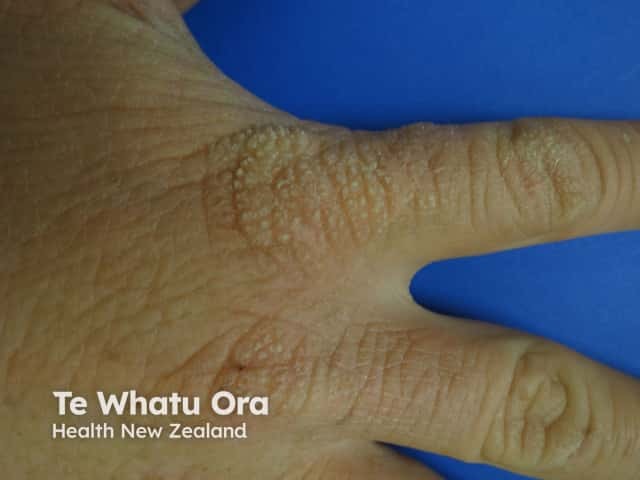
People with EPP-induced liver disease often have mild changes in liver blood tests. About 10% develop more severe liver disease, presenting with malaise, right upper abdominal pain, jaundice and eventually, liver failure (with increasing sun sensitivity).
Gallstones are common in patients with EPP.
A clinical diagnosis of EPP is often made during childhood. The blood needs to be sent for porphyrin analysis in a tube protected from light with aluminium foil.
Once the diagnosis has been made, regular checks of liver function are required and intermittent liver imaging.
There is no cure for EPP.
Lifelong photosensitivity is the main problem.
Avoidance of alcohol is important to reduce the risk of liver damage and liver failure.
Trials of treatment for EPP have been difficult to assess. Effective treatment should reduce pain and increase time outdoors without pain.
Another more serious condition, congenital erythropoietic porphyria, is now curable by stem cell transfusion, paving hope for the future, but there is not yet a cure available for EPP.