Focal dermal hypoplasia is a genetically inherited disorder that can affect the development of many different organ systems and was first described by Goltz in 1962. It presents with characteristic abnormalities of the skin, eyes and teeth and may also have effects on the skeletal, gastrointestinal, genitourinary, neurological and cardiovascular systems.
It is a rare condition with fewer than 300 cases reported, most of whom are female.
The name is actually misleading, as thinning of tissues is not confined to the dermis but also involves the epidermis and subcutaneous tissue.
Focal dermal hypoplasia is genetically inherited in an X-linked dominant fashion. It is caused by abnormalities of the PORCN gene on the X chromosome, and most often these arise in the embryo and are not inherited from a parent. The X chromosome is one of the sex chromosomes: females are XX, males are XY. Females with one abnormal X chromosome are affected by FDH, but most males embryos with the abnormal gene do not survive.
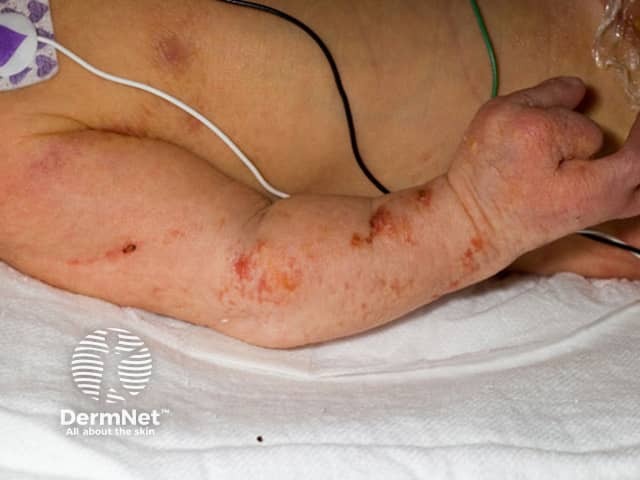
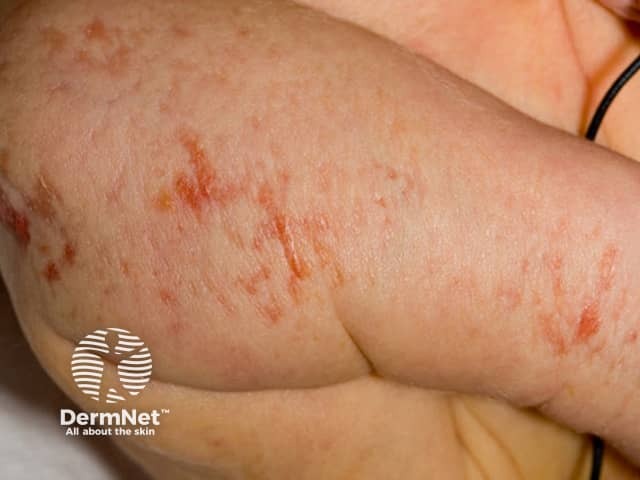
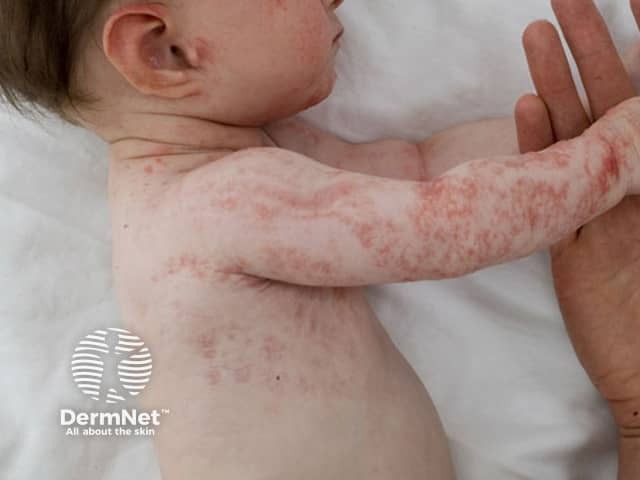
Focal dermal hypoplasia can affect almost any organ in the body. As with some other X-linked dominant conditions the skin manifestations follow developmental lines known as Blaschko lines.
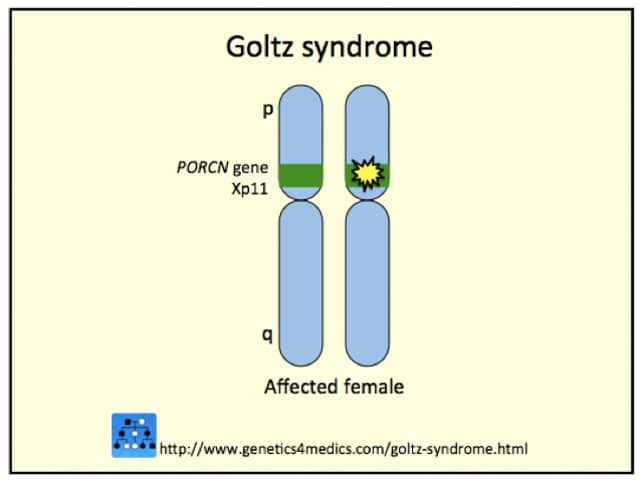
*Image courtesy Genetics 4 Medics
Focal dermal hypoplasia can have a wide range of effects on a variety of organ systems and the severity of the condition can vary greatly between individuals depending on the number of organs involved and the nature of the abnormalities.
Skin signs
Eyes
Musculoskeletal
Renal
Gastrointestinal
Cardiac
Neurological
Treatment will depend on the specialty care required for each specific problem. Often there will be specialists from multiple disciplines involved.
For cutaneous issues: telangectatic areas and papillomas may respond to vascular lasers; papillomas may be surgically removed if problematic.