Vemurafenib
In August 2011, the US Food and Drug Administration (FDA) approved vemurafenib (Zelboraf®, Plexxikon/Roche) for the first-line treatment of both metastatic and unresectable (inoperable) melanoma. Vemurafenib was registered by MedSafe for use in New Zealand in February 2012 but is not currently funded by PHARMAC (March 2012).
Vemurafenib is the second new cancer drug approved that demonstrates an improvement in overall survival in melanoma patients.
In March 2011, the FDA approved ipilimumab (Yervoy®), another new treatment for late-stage melanoma, that also showed patients lived longer after receiving the drug.
How does vemurafenib work?
Vemurafenib is a threonine kinase inhibitor, one of a new class of medicines known as epidermal growth factor receptor (EGRF) inhibitors.
- Vemurafenib blocks a critical protein molecule called B-RAF, which is mutated (changed) in up to 50% of patients with melanoma.
- B-RAF is a protein that is part of the cell signalling pathway that controls cell growth in a number of different tissues in the body.
- Mutations that lock the B-RAF protein in an active state can cause excessive signalling in the pathway, leading to uncontrolled growth of melanocytes (pigment cells).
- When the activity of mutant B-RAF is blocked, cancer cells stop growing and die.
Which patients benefit from vemurafenib treatment?
- Vemurafenib is specifically indicated for patients with melanoma whose tumours express a gene mutation called BRAF V600.
- The BRAF protein produced as a result of this gene mutation, has the amino acid (building blocks of protein) glutamate instead of the amino acid valine at position 600.
- Vemurafenib is not indicated for use in patients without the V600 mutation.
How are BRAF-600 mutations detected?
Melanoma tumours that carry the BRAF V600 mutation can be identified by a companion diagnostic test developed by the pharmaceutical company Roche, USA, and approved by the FDA.
The test is called the cobas® 4800 BRAF V600 Mutation Test and must be performed on melanoma biopsy samples from all patients before starting treatment with vemurafenib.
The test has several advantages including:
- use of formalin-fixed paraffin-enbedded samples (i.e. existing biopsy tissue)
- sensitivity and reliability for detecting BRAF V600 mutations
- gives quick results, allowing doctors to know whether a person with metastatic melanoma is eligible for treatment with vemurafenib.
Key clinical-trial evidence
The FDA approval of vemurafenib was based on results from two clinical studies (BRIM3 and BRIM2) in patients with BRAF V600E mutation-positive, inoperable or metastatic melanoma as determined by the cobas® BRAF Mutation Test.
BRIM3
BRIM3 (B-RAF Inhibitor in Melanoma phase 3) is a global, randomized, open-label, multicenter, advanced (phase III) study that compared 960mg of vemurafenib given orally twice daily with dacarbazine (standard of care) 1000 mg/m2 given IV on day 1, every 3 weeks in 675 patients with previously untreated BRAF V600E mutation-positive, unresectable (inoperable) or metastatic melanoma. Treatment continued until disease progression, unacceptable toxicity, and/or consent withdrawal.
Key results are tabulated below:
| Vemurafenib (No. of patients = 337) |
Dacarbazine (No. of patients = 338) |
|
|---|---|---|
| Overall survival (OS) | ||
| Number of Deaths | 78 (23%) | 121 (36%) |
| Median OS (months) | Not reached | 7.9 |
| Estimated OS at 6 months (% patients) | 84% | 64% |
| Median Follow-up (months) | 6.2 | 4.5 |
| Progression-free survival (PFS) | ||
| Median PFS (months) | 5.3 | 1.6 |
| Complete tumour shrinkage (% patients) | 1% | 0 |
| Partial tumour shrinkage (% patients) | 47.4% | 5.5% |
- Improvement in OS, PFS and tumour shrinkage with vemurafenib was seen in patients regardless of age, gender, or disease risk factor.
- The median length of time patients lived (median OS) could not be reliably estimated because of the small number of patients in long-term follow-up.
- In January 2011, median OS estimates were 9.2 months for patients receiving vemurafenib and 7.8 months for those receiving dacarbazine.
- An additional two months of follow-up showed an estimated median OS of 10.5 months for patients receiving vemurafenib compared with 7.8 months for patients receiving dacarbazine.
BRIM2
BRIM2 is a global, single-arm, multicentre, open-label early-phase (phase II) study that enrolled 132 patients with previously treated BRAF V600 mutation-positive metastatic melanoma. The primary endpoint of the study was best overall response rate.
Data showed that:
- 53 percent of patients treated with vemurafenib had tumour shrinkage.
- Three patients (2.3%) showed complete tumour shrinkage and 66 (50.0%) showed partial tumour shrinkage.
- Patients who participated in BRIM2 lived a median of 6.7 months without their disease getting worse (median PFS).
- Median OS has not yet been reached after a median follow-up of 10 months.
Dosage and administration
- Each tablet contains 240 mg of vemurafenib.
- Recommended dose: 960 mg orally twice daily, approximately 12 hours apart with or without a meal.
- Tablets should be swallowed whole with a glass of water and should not be chewed or crushed.
- If a dose is missed, it can be taken up to 4 hours prior to the next dose to maintain the twice daily regimen. Both doses should not be taken at the same time.
- Patients are treated with vemurafenib until disease progression or unacceptable toxicity occurs.
Adverse events
There is only limited data about safety and efficacy of vemurafenib due to small patient numbers treated up to now.
The following adverse reactions have been reported:
- cutaneous squamous cell carcinoma
- hypersensitivity reactions
- rash
- QT prolongation
- liver function abnormalities
- photosensitivity
- ophthalmological reactions
- new primary malignant melanoma
- keratoacanthomas
- joint pain
Most common adverse reactions (≥30% treated patients) reported are:
- arthralgia
- rash
- alopecia (hair loss)
- fatigue
- photosensitivity reactions
- nausea
- pruritus
- skin papilloma
Management of symptomatic adverse drug reactions may require dose reduction, treatment interruption, or treatment discontinuation. Dose reductions resulting in a dose below 480 mg twice daily are not recommended.
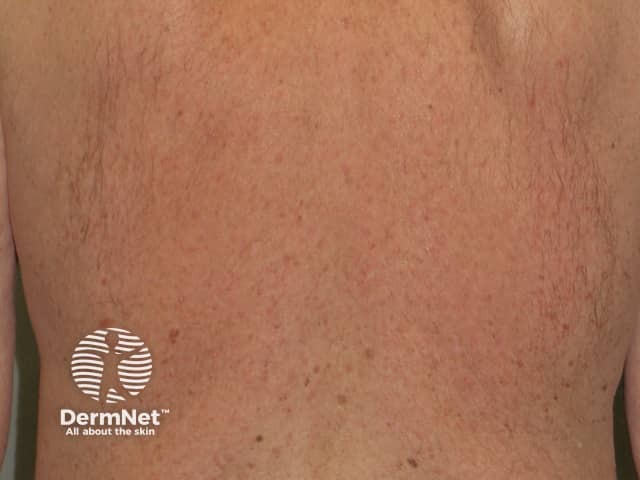
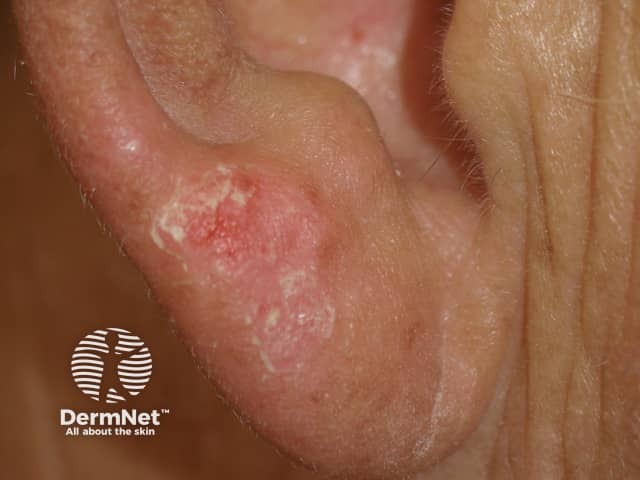
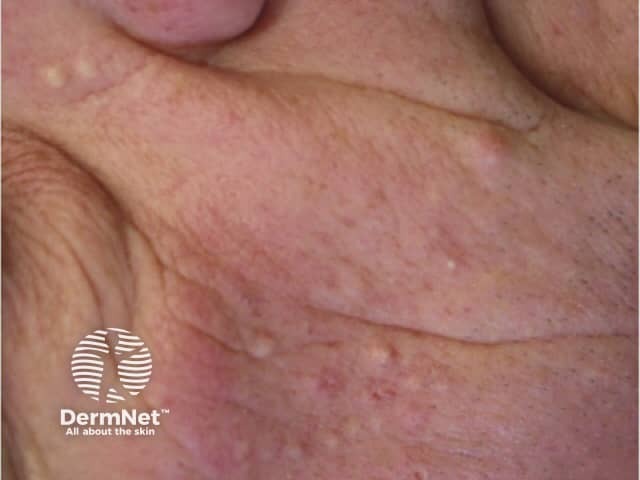
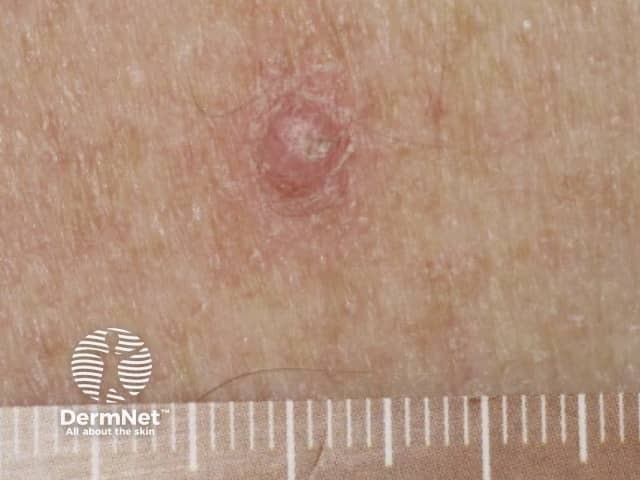
Cutaneous adverse reactions from vemurafenib
Some of the cutaneous side effects of vemurafenib are similar to those described with other EGFR and protein kinase inhibitors, but SCC appears to be a specific problem. Concern has been expressed that they may also lead to more melanocytic lesions, including common moles and perhaps new primary melanoma. The reactions are dose-related and may settle down even with continued therapy. Cutaneous side effects include:

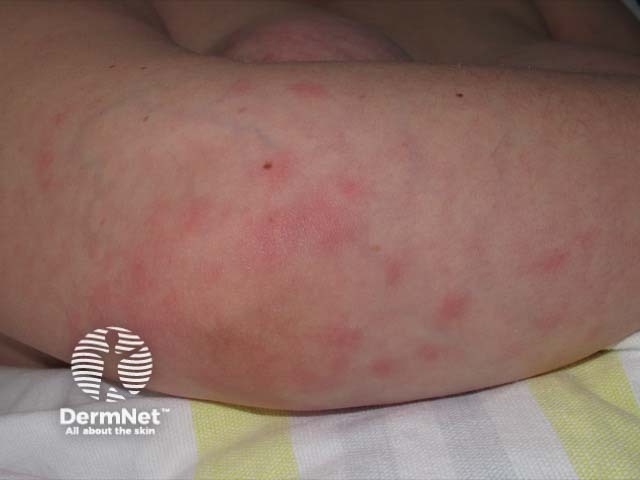
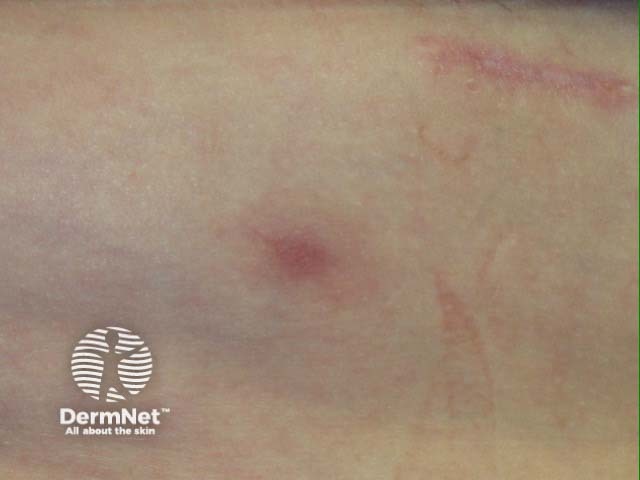
- Toxic erythema (morbilliform or scarlatiniform drug rash)
- Photosensitivity, including rapid-onset extreme sunburn on minimal exposure to the sun or other sources of UVA even through window glass
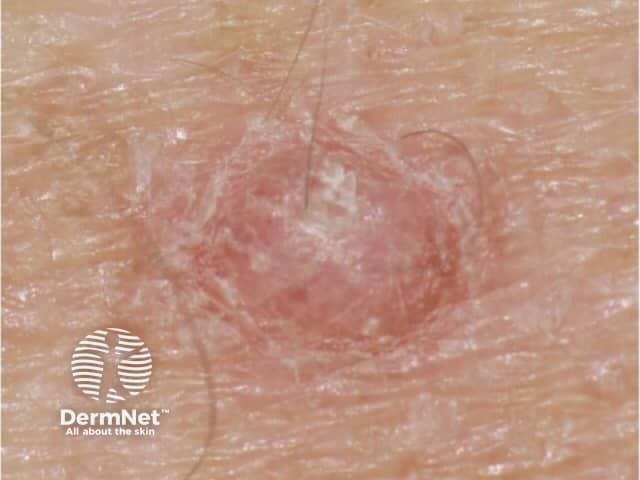
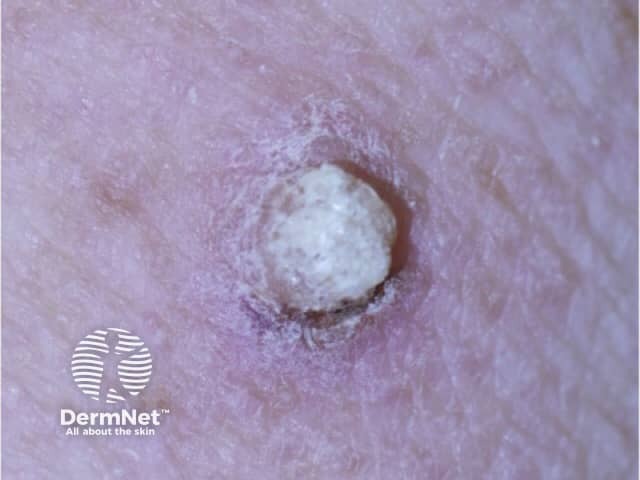
- Scaly skin lesions, ranging from papillomas to keratoacanthoma and other types of squamous cell carcinoma
- Panniculitis, resulting in painful red nodules on the lower limbs
- Folliculocentric rash, i.e. red dry bumps corresponding with hair follicles, including keratosis pilaris
- Painful, red, scaly palms and soles
- Hair loss on scalp and body (alopecia from drugs)
- Acne-like eruptions and milia
- Involution of melanocytic naevi (moles), particularly papillomatous dermoscopically globular-pattern moles; and; enlargement of other flat, mainly dermoscopically reticular-pattern naevi.
- New primary melanoma has been reported.
Papilloma |
Close-up of papilloma |
Papilloma |
Alopecia |
Photosensitivity |
Folliculitis |
Nonspecific rash |
Keratoderma |
Dry skin |
Drug interactions
- Vemurafenib levels can be altered when administered together with CYP3A4 (a liver enzyme involved in drug metabolism) inhibitors (e.g., ketoconazole, itraconazole, clarithromycin, atazanavir, nefazodone, saquinavir, telithromycin, ritonavir, indinavir, nelfinavir, voriconazole) and inducers (e.g., phenytoin, carbamazepine, rifampicin, rifabutin, rifapentine, phenobarbital).
- If coadministration cannot be avoided, a dose reduction of the concomitant drug should be considered.
- Vemurafenib may increase exposure when administered together with warfarin.
- When vemurafenib is used together with warfarin, consider additional INR (international normalised ratio – a measurement of blood coagulation) monitoring.
Use in specific populations
- Nursing mothers: Discontinue nursing when receiving vemurafenib.
- Paediatric use: Safety and efficacy in patients below the age of 18 have not been established.
- Geriatric use: In clinical trials, the overall survival, progression-free survival and best overall response rate were similar in the elderly as compared with younger patients.
- Hepatic impairment: No adjustment to the starting dose is needed for patients with pre-existing mild and moderate hepatic impairment.
- Renal impairment: No adjustment to the starting dose is needed for patients with pre-existing mild and moderate renal impairment.
Future considerations
- Research trials are on-going.
- One of the challenges of B-RAF inhibition is that the responses, while dramatic and rapid in onset, last on average approximately 6-7 months.
- Resistance quickly develops and this is now an active area of investigation.
- Combinations of vemurafenib with other medications may prove useful in melanoma patients.
Related information
References:
- Paul B. Chapman, Axel Hauschild, Caroline Robert, John B. Haanen, Paolo Ascierto, James Larkin, Reinhard Dumme, Claus Garbe, Alessandro Testori, Michele Maio, M.D, David Hogg, M et. al. Improved Survival with Vemurafenib in Melanoma with BRAF V600E Mutation. N Engl J Med 2011; 364:2507-2516.
- Russo AE, Torrisi E, Bevelacqua Y, Perrotta R, Libra M, McCubrey JA, Spandidos DA, Stivala F, Malaponte G. Melanoma: molecular pathogenesis and emerging target therapies (Review). Int J Oncol. 2009 Jun:34(6):1481-9.
- A. Ribas, K. B. Kim, L. M. Schuchter, R. Gonzalez, A. C. Pavlick, J. S. Weber, G. A. McArthur, T. E. Hutson, K. T. Flaherty, S. J. Moschos, D. P. Lawrence, P. Hersey, R. F. Kefford, B. Chmielowski, I. et. al. BRIM-2: An open-label, multicenter phase II study of vemurafenib in previously treated patients with BRAF V600E mutation-positive metastatic melanoma. J Clin Oncol 29: 2011 (suppl; abstr 8509).
- Sinha R, Edmonds K, Newton-Bishop JA et al. Cutaneous adverse events associated with vemurafenib in patients with metastatic melanoma: practical advice on diagnosis, prevention and management of the main treatment-related skin toxicities. Br J Dermatol 2012:167;987-994
- Haenssle HA, Kraus SL, Brehmer F, Kretschmer L, Völker B, Asper H, Kapp A, Gutzmer R. Dynamic changes in nevi of a patient with melanoma treated with vemurafenib: importance of sequential dermoscopy. Arch Dermatol. 2012 Oct 1;148(10):1183-5.
- Belum VR, Fischer A, Choi JN, Lacouture ME. Dermatological Adverse Events from BRAF Inhibitors: A Growing Problem. Curr Oncol Rep. 2013 Jun;15(3):249-59.
On DermNet NZ:
Other websites:
- Vemurafenib – Melanoma foundation of NZ
- Zelboraf prescribing information – DailyMed
- 'Time to Celebrate'; New Metastatic Melanoma Agent Wows ASCO – Medscape Medical News from 2011 Annual Meeting of the American Society of Oncology®
Books:
See the DermNet NZ bookstore