Introduction
Demographics
Causes
Clinical features
Diagnosis
Treatment
Outcome
Acute haemorrhagic oedema (hemorrhagic edema with the American spelling) is a rare type of cutaneous small vessel vasculitis with a characteristic presentation in infants.
It consists of a clinical triad of:
Acute haemorrhagic oedema of infancy was originally described by Snow in the USA in 1913. Finkelstein described it in Europe in 1938 and it has been recognised in the European literature under various terms since:
Acute haemorrhagic oedema generally develops in children between the ages of 4 months and 2 years of age.
There is uncertainty whether acute haemorrhagic oedema of infancy is a mild variant of Henoch-Schoenlein purpura (HSP) that occurs in infancy or a distinct clinical entity. Clinically it is similar to, but milder than HSP. It occurs in a more restricted age range and has different skin lesions.
The cause of acute haemorrhagic oedema is unknown. It is an immune-mediated process, possibly an immune complex disorder. Immune complexes are made up of aggregates of antibodies and the particles that these antibodies are directed against.
Many possible triggers for this immune-mediated disease have been reported.
Infectious agents |
|
||
Medications |
|
||
Immunisations |
|||
Acute haemorrhagic oedema of infancy is frequently preceded by a prodromal illness such as a viral upper respiratory tract infection. The striking characteristic features appear as described in the table below; however, the child remains in good general health.
Rash |
|
||
Oedema |
|
||
Fever |
|
||
Internal organ involvement |
|
||
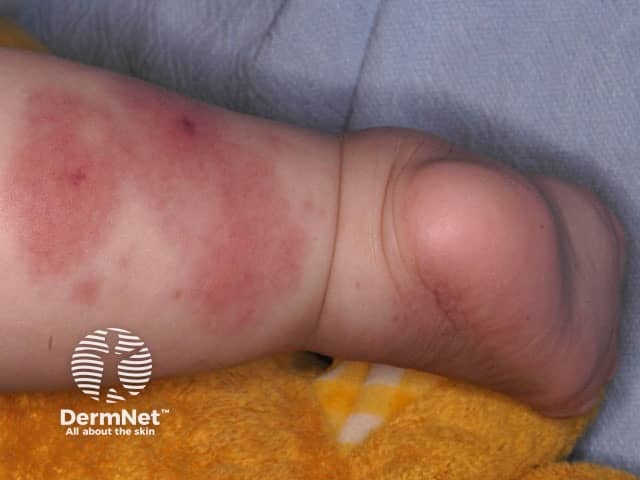
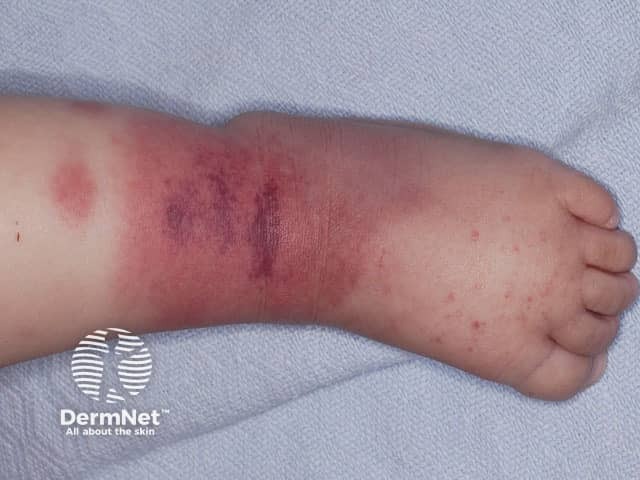
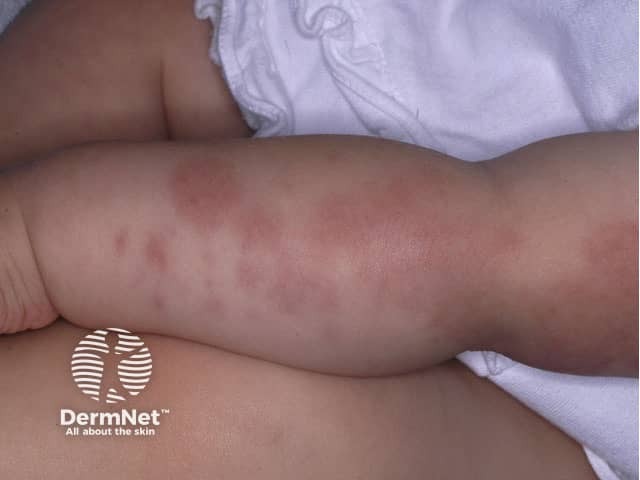
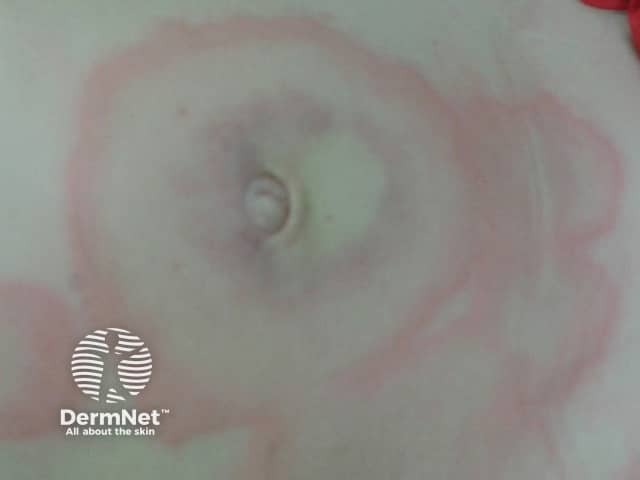
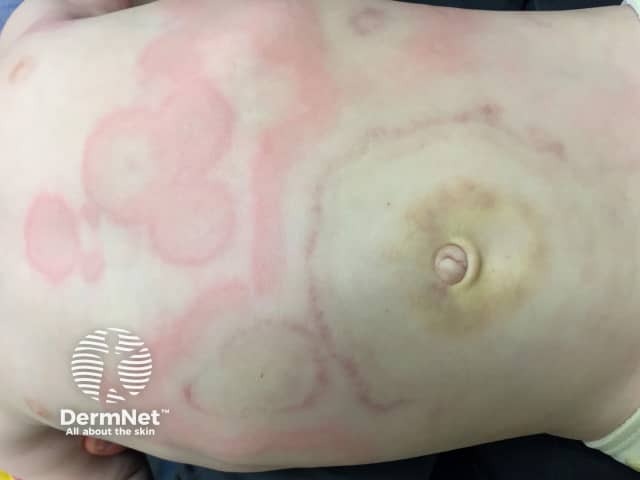
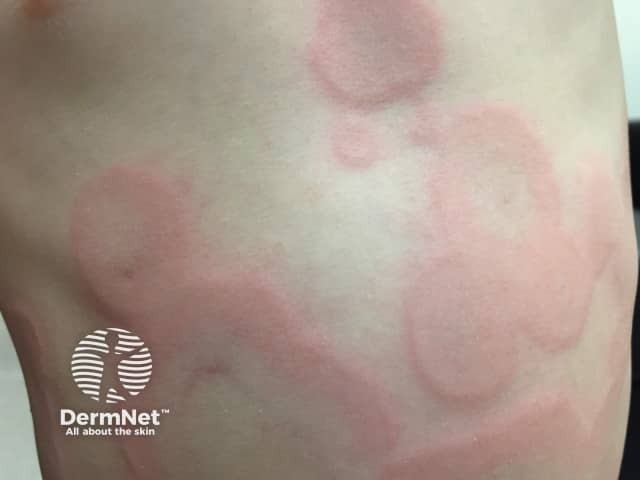
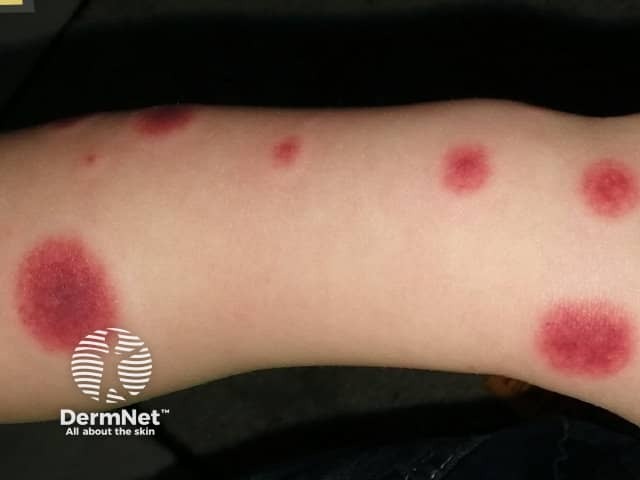
Acute haemorrhagic oedema of infancy is usually diagnosed on clinical grounds alone. Other causes of purpura may first need to be excluded, as well as rashes that have a similar cockade pattern, like erythema multiforme, urticaria and Kawasaki disease. An inflicted injury should also be considered.
It is not usually necessary to perform skin biopsy if the diagnosis is thought of. Histopathology reveals a leukocytoclastic vasculitis (this means there are broken-up white cells involved with inflamed small blood vessels). Histopathologic findings are identical to HSP. However, the pattern of antibody staining on direct immunofluorescence of a skin biopsy is different; IgA is found in only one-third of patients with haemorrhagic oedema.
No treatment is required as it resolves spontaneously. Systemic steroids and antihistamines do not alter the disease course.
Acute haemorrhagic oedema of infancy usually resolves spontaneously over 1–3 weeks with complete recovery. Recurrence may occur but is uncommon, and usually occurs early.