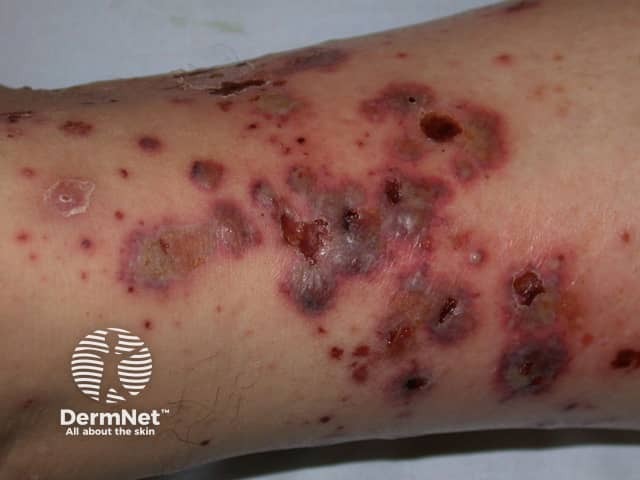
Cutaneous vasculitis
Introduction
Cutaneous vasculitis is a term for inflammation of the blood vessels in the skin. The inflammation can affect any of the vessels in the skin including capillaries, venules, arterioles and lymphatics. Cutaneous vasculitis can be due to any of several different causes and can have a wide variety of clinical presentations.
In most cases an underlying cause is not found and the disease is self-limiting. In a minority of patients, cutaneous vasculitis can be part of a more severe vasculitis affecting other organs in the body. This is known as systemic vasculitis.
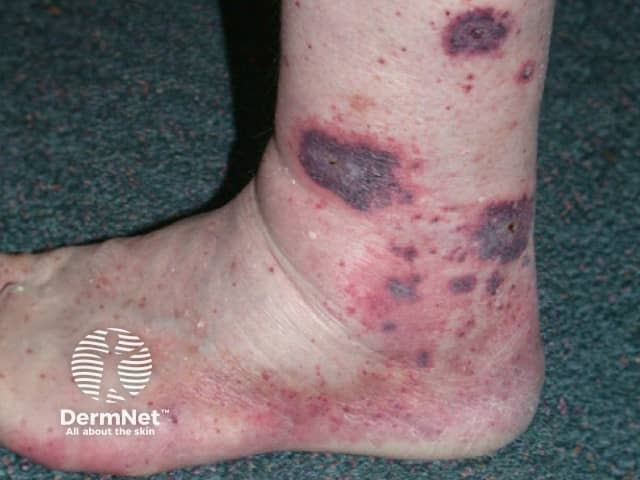
Ecchymoses & petechiae |
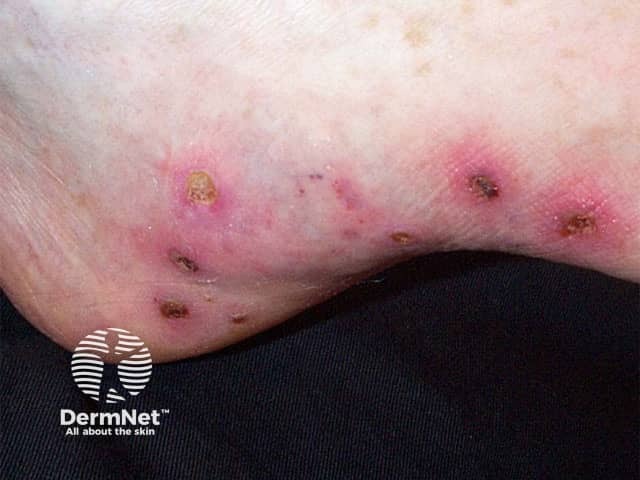
Ulceration (systemic sclerosis) |
Petechiae |
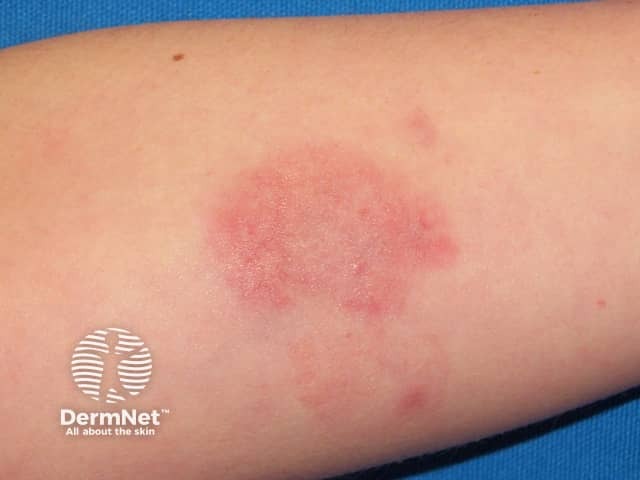
Lymphocytic vasculitis |
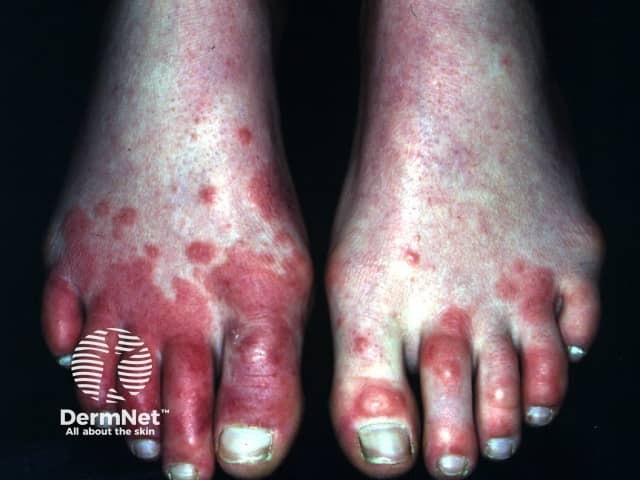
Hypersensitivity vasculitis (streptococcal) |
Bullous leukocytoclastic vasculitis |
More images of cutaneous vasculitis ...
How does vasculitis arise?
Many different insults may cause an identical inflammatory response within the blood vessel wall. This inflammation is thought to arise through one or more of three main mechanisms.
- Direct injury to the vessel wall by bacteria or viruses
- Indirect injury by activation of antibodies, which then generate inflammation within the vessel wall
- Indirect injury through activation of complement.
Complement refers to a group of proteins in the blood and tissue fluids that attack infection and foreign bodies and can damage the vessel wall.
Vasculitis can be triggered by one or more factors.
Bacterial, viral or other infection
Vasculitis due to infection can occur through any of the above mechanisms. Treatment of the infection can clear the rash. Any virus can be implicated, particularly hepatitis B and C and haemorrhagic fever.
Drugs
Drugs are a common cause of vasculitis particularly when in combination with other precipitants such as infection, malignancy (cancer) or autoimmune disorders. Vasculitis usually clears up when the responsible medication is stopped.
The medications that most frequently cause vasculitis are:
- Antibiotics
- Thiazide diuretics
- Thiouracil
- Oral anticoagulants such as warfarin and coumarin.
- Nonsteroidal anti-inflammatory drugs (NSAIDs)
Food
Some foods and food additives (e.g. tartrazine) may cause a vasculitis, but this is uncommon.
Reduced blood flow
Vasculitic reactions are more likely if the blood flow is reduced. For example:
- Stasis: gravity pooling and slowing blood flow in the lower legs
- High fat content reduces blood flow in thighs and buttocks relative to leaner areas
- Medications that constrict the blood vessels, such as beta blockers
- Varicose veins
- Poor arterial blood supply to the legs (peripheral vascular disease)
- Cold weather
- High blood viscosity causing sludging of the blood cells
- Fibrin deposition blocking the blood vessels due to pre-existing inflammation.
Mediators of inflammation such as antibodies and complement circulate in the bloodstream. If the blood flow is slowed or poor, these mediators are more likely to stick to the vessel wall resulting in vasculitis.
Malignancy
As the body tries to rid itself of cancer, it makes an increased number of antibodies that circulate in the bloodstream. Extra proteins in the blood make it more viscous and increase sludging. These factors may result in vasculitis.
Autoimmune disorders
Diseases such as systemic lupus erythematosus (SLE), dermatomyositis, polyarteritis nodosa (PAN) and rheumatoid arthritis are termed autoimmune
disorders because affected patients have antibodies in their bloodstream that target the individual's own tissues. Some of these antibodies can target the blood vessels resulting in vasculitis.
Clinical Features
Cutaneous vasculitis can be acute, subacute or chronic but in all forms the rash usually presents on the limbs, especially the lower limb.
Vasculitis can have a varied appearance and there is considerable overlap in clinical appearance of the acute, subacute and chronic forms.
Acute vasculitis
Acute vasculitis may be called leukocytoclastic vasculitis
because of the finding of broken-up leukocytes (white blood cells) under the microscope, and is also sometimes referred to as allergic
or hypersensitivity
vasculitis. It presents with bleeding under the skin (purpura). Small spots of bleeding are called petechiae. Large bruises are called ecchymoses. In severe cases the vasculitis impairs the blood flow to such an extent that the overlying skin is deprived of blood flow; it turns black and then ulcerates within a few days. This is called necrosis. Patients may also experience systemic symptoms with fever, joint pains and stomach upsets at any time during an attack. The acute rash usually subsides within 2-3 weeks but may recur.
Subacute vasculitis
Subacute vasculitis tends to start off less dramatically. It usually results in mild purpura in association with wheals, flat red patches and small bumps (macules and papules). It may resemble urticaria, in which case it is called urticarial vasculitis.
Chronic vasculitis
Chronic vasculitis tends to present with macules and papules but purpura and urticaria may be present. Crops of vasculitic spots may keep appearing for many months but the affected patients usually feel quite well.
Special kinds of cutaneous vasculitis
Some variants of cutaneous vasculitis have unique features and will be considered separately.
Large vessel vasculitis
- Polyarteritis nodosa
- Temporal arteritis
- Takayasu's disease
- Nodular vasculitis
- Granulomatous vasculitis (Churg-Strauss syndrome, Wegener granulomatosis, Lymphomatoid granulomatosis)
Small vessel vasculitis
- Livedo vasculitis
- Henoch-Schonlein purpura
- Acute haemorrhagic oedema of infancy
- Urticarial vasculitis
- Erythema elevatum diutinum
- Degos disease
- Capillaritis
Diagnosis
In many cases the diagnosis of vasculitis can be made on the basis of its appearance without requiring any further tests. Sometimes a skin biopsy is performed to confirm the diagnosis but this rarely explains what caused it, as vasculitis is the common endpoint of many different events.
Screening tests are requested in most cases of vasculitis to identify any underlying cause and to determine the extent of involvement of internal organs.
Routine investigations
Patients will usually have blood tests to check liver and kidney function and a urine test looking for protein or bleeding, which could indicate vasculitis in the kidneys.
The following blood tests may also be requested:
- Full blood count and ESR: detects some blood disorders and reflects general health
- Anti-nuclear antibodies (ANA) and extractable nuclear antigens (ENA): may indicate lupus or other autoimmune disorder
- Anti-streptococcal antibodies: indicates recent streptococcal infection
- Hepatitis B and C serology
- Protein and immunoglobulin electrophoresis: detects blood disorders such as multiple myeloma
- Cryoglobulins: detect abnormal antibodies in the blood that precipitate in the cold
- Antineutrophil cytoplasmic antibody (ANCA) may be present when small to medium sized vessels are involved. c-ANCA is characteristic of Wegener granulomatosis.
If this initial screen indicates an abnormality or if there is clinical suspicion of a more widespread vasculitic process further investigations will be requested. In the majority of patients no underlying cause is found in spite of extensive investigations.
Treatment
In most cases general measures are all that is required to keep the patient comfortable until the rash spontaneously resolves.
- Rest and elevate affected limb, simple analgesics
- Protect fragile skin from injury
If an underlying cause is found, removing the trigger usually clears the rash.
- Treat infection
- Discontinue responsible medication
Some patients have a more persistent vasculitis limited to the skin. Medications used to control severe cutaneous vasculitis include:
- Corticosteroids (e.g. Prednisone)
- Colchicine
- Non-steroidal anti-inflammatory drugs (eg. indometacin)
- Dapsone
- Hydroxychloroquine
If cutaneous vasculitis is a manifestation of systemic vasculitis then treatment of the systemic disorder is required.
Prognosis
Vasculitis limited to the skin has a good prognosis with most cases resolving within a period of weeks to months. The vasculitis may recur at variable intervals after the initial episode.
The prognosis of systemic vasculitis is dependent upon the severity of involvement of other organs. If vasculitis affects the kidneys, lungs or brain it can be life-threatening.
Related information
References:
On DermNet NZ:
Other websites:
Medscape Reference