Introduction Demographics Causes Clinical features Variation in skin types Complications Diagnosis Differential diagnoses Treatment Advice on school leave Outcome
Hand, foot, and mouth disease (HFMD or HFM) is a common, self-limiting, viral infection that causes blisters on the hands, feet, and inside or around the mouth. It mainly affects children under the age of 5 years.
HFMD, also called enteroviral vesicular stomatitis, occurs sporadically worldwide. Epidemics are most common during warm weather, usually in the late summer or early autumn.
It is important to note that HFMD is NOT related to foot and mouth disease of animals.
HFMD mostly occurs in children under 10 years of age with 95% of the cases occurring in toddlers aged under 5 years. However, it can also affect older children/adolescents. Adults, especially those who are immunocompromised, may also be affected. However, HFMD only rarely affects healthy adults.
Hand, foot, and mouth disease is very common. The average annual incidence of HFMD has been reported as 90–2400 cases per 100,000 people in some countries.
Enteroviral vesicular stomatitis (HFMD) is usually caused by the Coxsackie virus, most commonly the A16 subtype. It may also be caused by other viruses such as:
Enterovirus 71 infection is associated with more severe infections that may involve the heart, lungs, and can also cause inflammation of the lining of the brain (meningitis).
Transmission occurs via direct contact with blister fluid or droplets spread from the mouth. It can spread very rapidly among family members or within a school. The virus can be shed in faeces and saliva for several weeks.
The illness usually begins with one or all of the following: fever, sore throat, loss of appetite, and lethargy. However, many children remain well in themselves despite the rash. The blisters usually appear 1–2 days following the fever.
The incubation period is typically 3–6 days and children remain infectious until the blisters have ruptured and healed (usually 7–10 days).
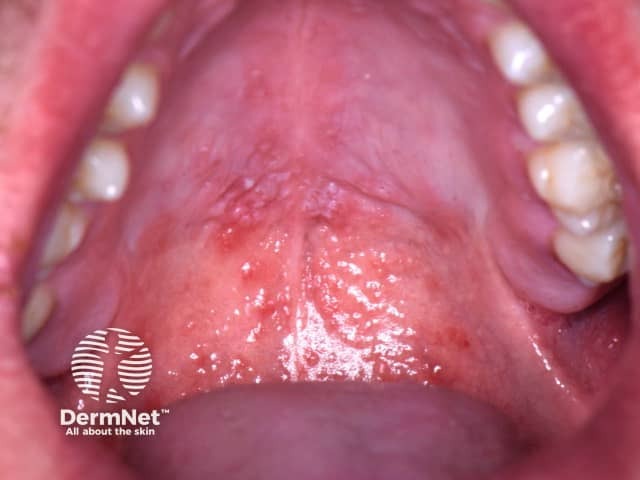
Skin findings typically include:
Atypical HFMD can result in a more widespread rash and blistering. Features may include:
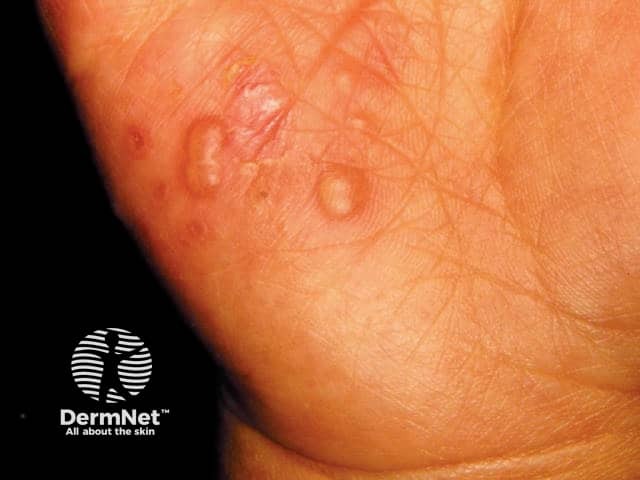
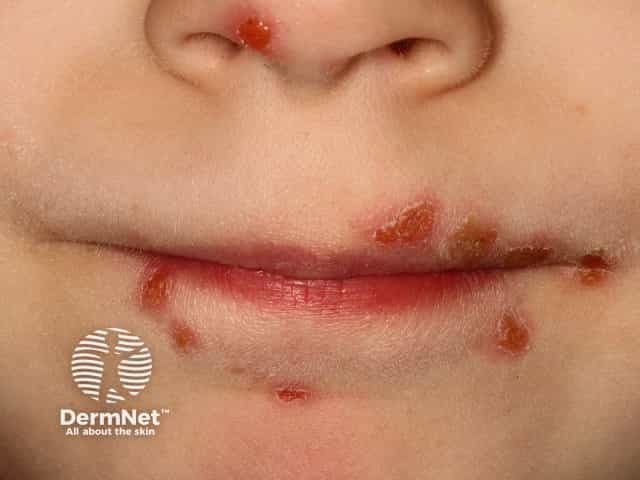
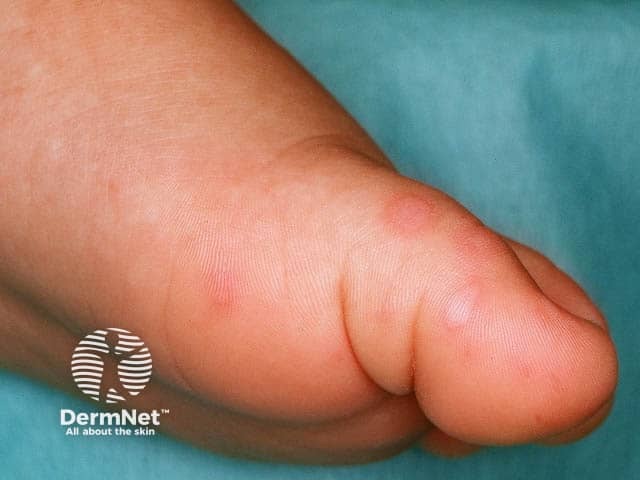
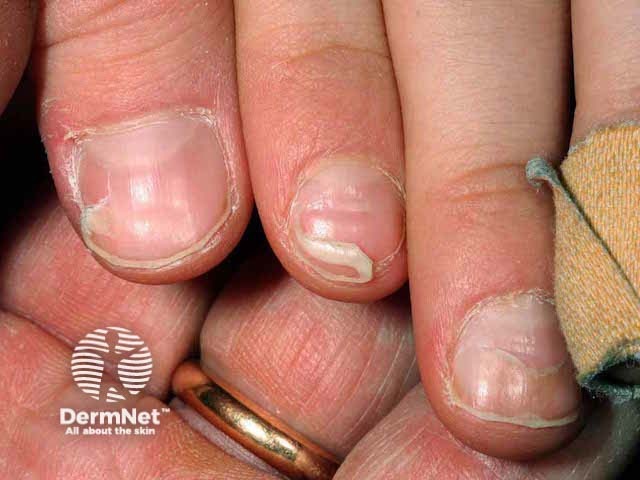
In children with pre-existing eczema (atopic dermatitis), HFMD lesions may be localised in eczematous areas (eczema coxsackium).
Severe complications are very uncommon in people that are otherwise healthy. They include:
Serious enteroviral infection can lead to:
HFMD is usually diagnosed clinically. Cutaneous lesions are typically distributed symmetrically over common sites of the skin such as the hands, feet, and in and around the mouth in a child.
Other diagnostic tools include:
See hand, foot, and mouth disease pathology for more information.
Specific treatment is not usually required for HFMD, and the focus is symptomatic care. HFMD rarely causes serious complications. Antibiotics do not work and should not be given to children with HFMD.
No vaccines or specific antiviral medications are available.
Pain relief
Hydration
Blister care
In the vast majority of cases, HFMD is a mild illness and there is no need to keep children from school once they are well enough to attend.
The blisters remain infective until they have dried, which is usually within a few days. However, the virus sheds through faecal stools and these remain infective for up to a month after the illness. Therefore, it is impractical to keep children who are well away from school.
General preventative measures include:
HFMD infection is usually mild and complete resolution is seen within 7–10 days. Infection often results in long-term immunity to the specific virus, however a second episode can occur following infection with a different member of the enterovirus group.