Introduction Demographics Causes Clinical features Variation in skin types Complications Diagnosis Differential diagnoses Treatment Prevention Outcome
Drug-induced pigmentation is a change in skin pigmentation due to a change in melanin synthesis, or the accumulation of drugs or their metabolites in the skin.
Common causes include chemotherapy, antimalarials, and nonsteroidal anti-inflammatory drugs. Hyperpigmentation is more common and results from the deposition of melanin or the implicated drug in an uneven manner, while hypopigmentation develops from melanin deficiency.
Drugs are responsible for 10–20% of acquired hyperpigmentation. Other causes include sun damage, hormonal changes, or inflammation.
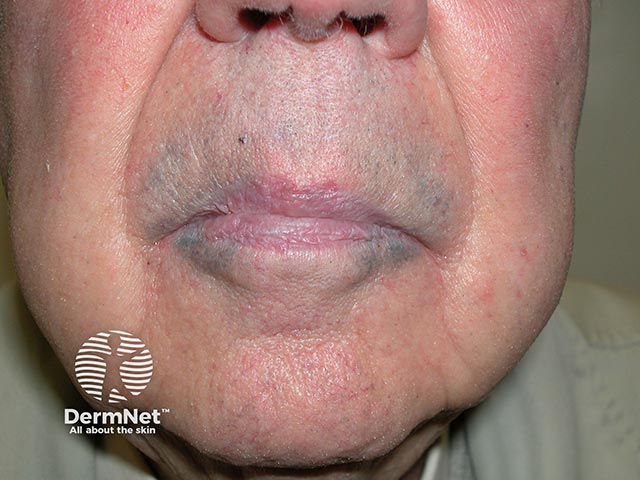
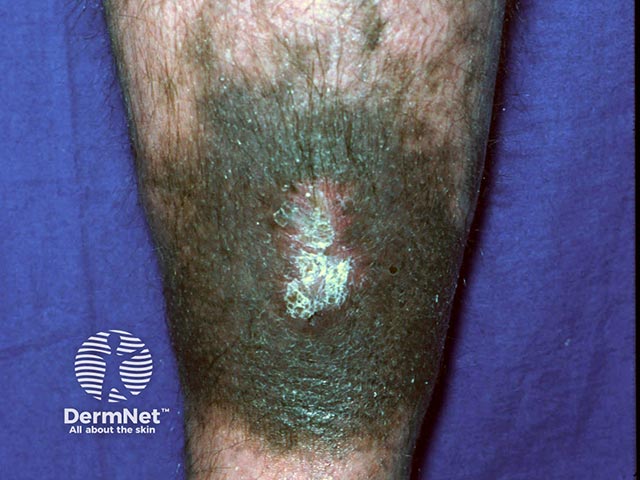
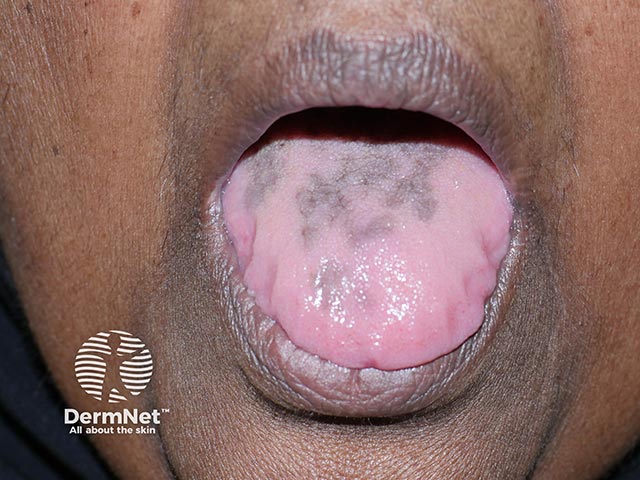


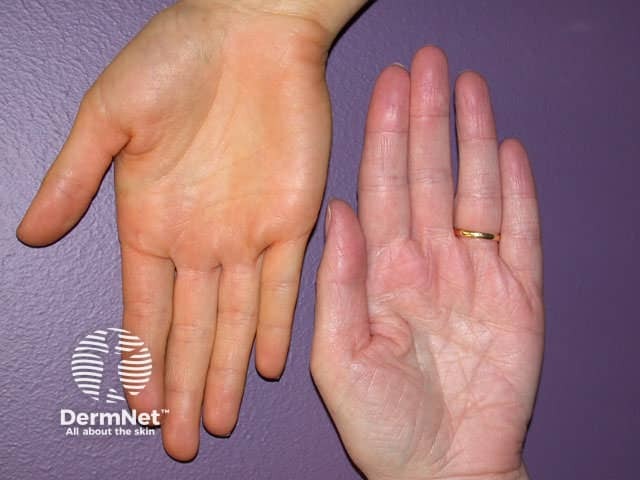
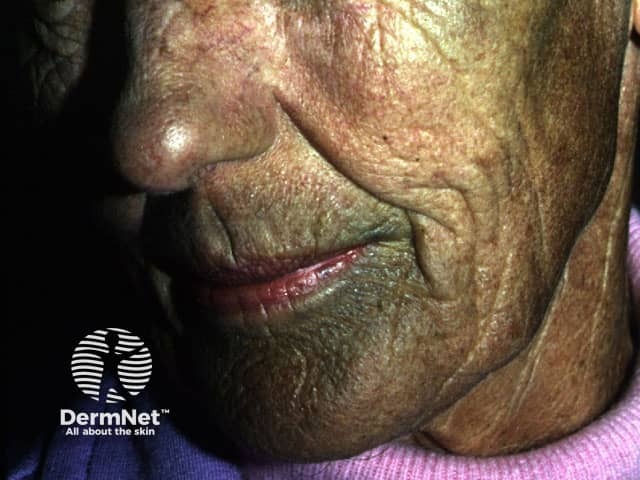

Drug-induced pigmentation affects all skin types and ethnicities, but certain combinations of skin types and medications may experience more significant pigmentation effects.
Medications that can cause drug-induced pigmentation include:
Kratom, a herbal substance used historically most often in South East Asia, can cause photodistributed hyperpigmentation. Its use in other parts of the world is increasing.
The pathophysiology is not completely understood and varies depending on the drug; proposed mechanisms for hyperpigmentation include:
Drug-induced pigmentation may also be dictated by genetic variables. Those with polymorphisms in the UGT1A4 gene, for instance, may be more vulnerable to chloroquine-induced pigmentation.
Clinical features vary widely depending on the drug involved, duration of treatment, and individual patient characteristics.
Cutaneous features include:
Non-cutaneous features include:
The pattern of pigmentation may suggest a particular implicated drug; localised pigmentation on the face, lip, or genitalia may suggest a resolved fixed drug eruption. Flagellate pigmentation is a feature of a bleomycin eruption.
The following table details the clinical features with reference to each class of drug.
Drug/drug group |
Clinical features |
Heavy metals (iron, gold, silver) |
|
Tetracyclines (minocycline, doxycycline) |
|
Antipsychotics (chlorpromazine and related phenothiazines) |
|
|
|
|
|
Cytotoxic drugs |
|
Amiodarone |
|
|
Drug-induced pigmentation images
Drug-induced pigmentation can affect any skin type, especially those with Fitzpatrick skin phototypes IV to VI.
Complications are largely cosmetic. Some pigmentation changes may be irreversible, even after the causative medicine has been discontinued. However, some skin changes may represent serious underlying illnesses, such as drug-induced lupus erythematosus.
Prognosis is generally good, as drug-induced pigmentation typically fades over time after discontinuing the causative medication. In rare cases, the pigmentation may be permanent.