Introduction
Demographics
Causes
Clinical features
Complications
Diagnosis
Differential diagnoses
Treatment
Outcome
Acquired keratoderma refers to non-inherited forms of palmoplantar keratoderma and presents with excessive epidermal thickening of the palms and soles. It can arise from various causes, including other skin conditions.
This condition is also called acquired palmoplantar keratoderma.
Acquired keratoderma typically affects patients in adulthood and does not involve a family history. However, it may occur secondary to a hereditary skin condition.
Acquired keratoderma is uncommon, and its exact incidence and prevalence are unknown. However, it is more common than hereditary forms of palmoplantar keratoderma.
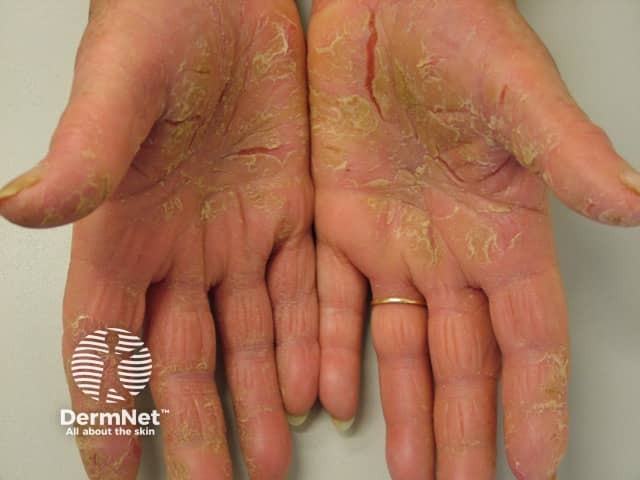
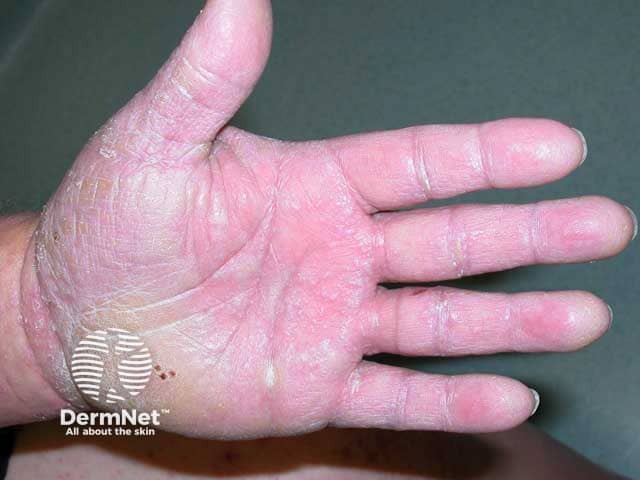
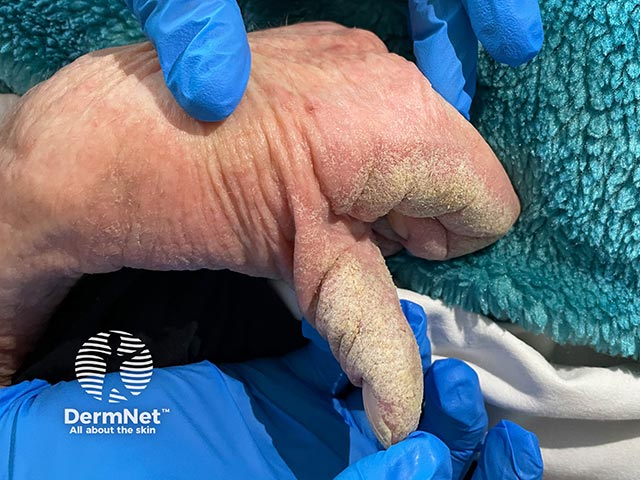
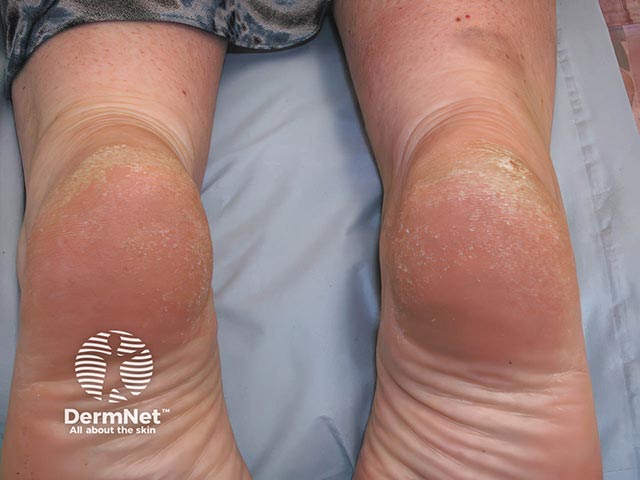
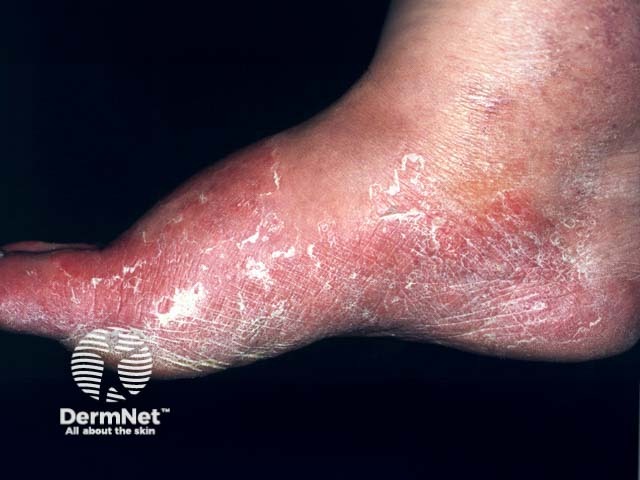
Features are typically confined to the palms and/or soles and include:
Features in association with malignancy:
Acquired keratoderma is a clinical diagnosis based on a detailed medical history and physical examination. If hereditary palmoplantar keratoderma is suspected, genetic consultation and genetic screening should be considered.
Underlying causes should be investigated and treated. Blood tests, skin biopsy, mycology, bacterial testing, and imaging studies should be considered on a case-by-case basis. Investigations for malignancy may include serum tumour markers and PET/CT imaging studies.
Key histological features include:
Acquired keratoderma is best managed by treating any underlying condition(s).
If idiopathic, management of acquired keratoderma focuses on symptom relief through:
However, these interventions typically only provide temporary relief, recurrence is common upon discontinuation, and treatment guidance is limited by the rare and variable nature of this condition.
Topical keratolytics
A combination of multiple topical keratolytic agents in a cream or ointment base may be used, optionally under occlusion.
Potent topical corticosteroids
Surgical interventions
Acquired keratoderma is a chronic condition that typically requires ongoing management to achieve symptom control. Symptoms may resolve with the treatment of any underlying condition(s).