Introduction
General measures
Topical treatments
OTC topical treatments
Prescription topical treatments
Systemic treatments
New and emerging treatments
Skin of colour
Treatment of infective complications
Atopic dermatitis (atopic eczema), the most common inflammatory skin disease worldwide, involves genetic and environmental factors. It is not yet possible to modify genetic factors and it can be difficult to effectively manipulate all relevant environmental factors. There is therefore no known cure for atopic dermatitis, however, treatment can control inflammatory dermatitis and help the skin feel healthy:
See also, Treatment of atopic dermatitis in pregnancy

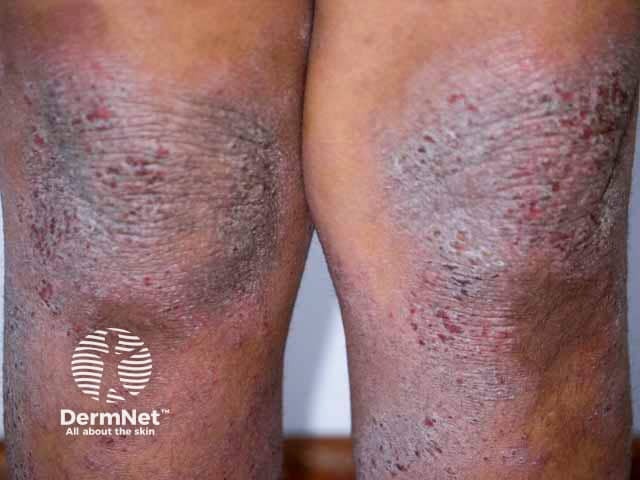

A large study or prenatal prebiotics in mothers with a strong history of atopy did not find that the intervention prevented atopic dermatitis.
Topical treatments can come in many forms. It is important that the correct formulation is used for the different patterns and distributions of atopic dermatitis.


The frequency of bathing does not seem to influence the activity of eczema and sufferers can bath as frequently or otherwise as they feel comfortable with.

See also: Complications of atopic dermatitis.
Approved datasheets are the official source of information for medicines, including approved uses, doses, and safety information. Check the individual datasheet in your country for information about medicines.
We suggest you refer to your national drug approval agency such as the Australian Therapeutic Goods Administration (TGA), US Food and Drug Administration (FDA), UK Medicines and Healthcare products regulatory agency (MHRA) / emc, and NZ Medsafe, or a national or state-approved formulary eg, the New Zealand Formulary (NZF) and New Zealand Formulary for Children (NZFC) and the British National Formulary (BNF) and British National Formulary for Children (BNFC).